
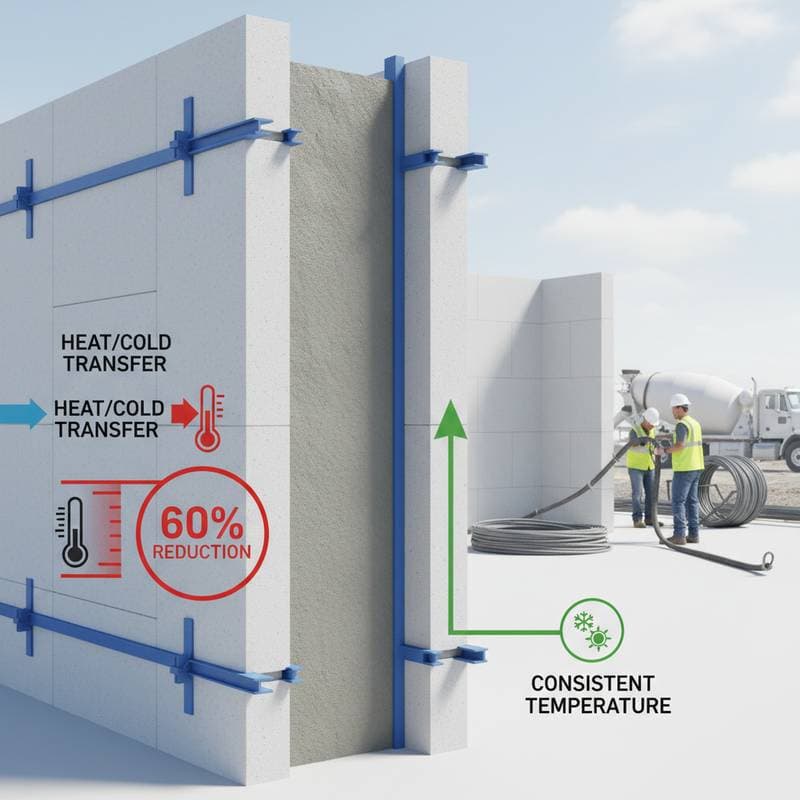
How Insulated Concrete Forms Reduce Heating and Cooling Costs by Up to 60%
Insulated Concrete Forms (ICF) represent a innovative construction method that integrates insulation directly into the building process. These forms consist of interlocking foam blocks filled with reinforced concrete, creating walls that offer superior thermal performance. Homeowners and builders increasingly turn to ICF for its ability to minimize energy loss, leading to substantial reductions in heating and cooling expenses.
The core advantage of ICF lies in its combination of high insulation value, airtight construction, and thermal mass. Traditional walls often suffer from thermal bridging, where heat escapes through studs or gaps. ICF eliminates these issues, maintaining consistent indoor temperatures with less reliance on HVAC systems.
Studies and real-world applications demonstrate that ICF homes can achieve energy savings of up to 60 percent compared to standard wood-frame constructions. This efficiency translates to lower utility bills and a smaller environmental footprint over the life of the structure.
Understanding Insulated Concrete Forms
ICF systems use expanded polystyrene (EPS) or similar foam materials molded into hollow blocks. Workers stack these blocks on-site, insert steel rebar for reinforcement, and pour concrete into the voids. The result is a monolithic wall that bonds the insulation to the concrete core.
This design provides an R-value typically ranging from 20 to 25 per inch of foam thickness, far exceeding the R-13 to R-19 of conventional insulated walls. The foam remains in place permanently, eliminating the need for separate insulation installation and reducing labor costs during construction.
Beyond insulation, ICF walls excel in soundproofing and disaster resistance. The solid concrete core withstands high winds, earthquakes, and impacts better than framed walls, adding long-term value to properties in various climates.
The Science Behind Energy Savings
Energy efficiency in ICF stems from three key properties: insulation, airtightness, and thermal mass. The foam layers trap heat in winter and block it in summer, while the concrete core absorbs and slowly releases heat, stabilizing indoor temperatures.
Airtightness prevents drafts and infiltration, which account for up to 40 percent of energy loss in typical homes. Blower door tests on ICF structures often reveal air leakage rates below 0.5 air changes per hour, compared to 4 to 6 in standard builds.
Thermal mass moderates temperature swings. In hot climates, the concrete absorbs daytime heat and releases it at night. In cold regions, it retains warmth from heating systems, reducing the frequency of HVAC cycles.
Independent research from organizations like Oak Ridge National Laboratory confirms these benefits. Homes built with ICF require 50 to 60 percent less energy for heating and cooling than code-minimum wood-frame equivalents, even in extreme weather zones.
Comparing ICF to Traditional Building Methods
Wood-frame construction with fiberglass batt insulation offers affordability but compromises on performance. Gaps in installation and settling over time degrade its effectiveness, leading to higher energy use.
Spray foam insulation improves airtightness but adds significant upfront costs and requires skilled application. ICF combines the durability of concrete with built-in insulation, often at a comparable or lower total cost when factoring in energy savings.
Brick or block masonry provides mass but lacks inherent insulation without added layers. ICF integrates all elements into one system, streamlining construction and enhancing overall efficiency.
A side-by-side analysis reveals that ICF walls outperform these alternatives in longevity and maintenance. The seamless design resists moisture, pests, and decay, potentially extending the home's service life by decades.
Planning an ICF Project: Key Considerations
Selecting the right ICF system involves evaluating foam density, block size, and concrete mix. High-density foam offers better impact resistance for exterior walls, while lighter options suit interior partitions.
Site preparation plays a crucial role. Ensure a level foundation to support the stacked forms. Engineers should design rebar placement to meet local seismic and wind load requirements.
Budget for professional involvement early. ICF installation demands precision; certified contractors prevent common errors like misalignment or incomplete concrete pours. Expect initial costs 3 to 5 percent higher than framed construction, offset by long-term savings.
Incorporate complementary features for maximum efficiency. Pair ICF walls with high-efficiency windows, proper ventilation, and energy-efficient appliances to amplify the 60 percent reduction potential.
Step-by-Step Guide to ICF Construction
-
Design and Permitting: Collaborate with an architect experienced in ICF to create blueprints. Submit plans to local authorities for approval, highlighting energy code compliance.
-
Foundation Work: Pour a reinforced concrete slab or stem wall. Install waterproofing and anchor bolts to secure the first course of ICF blocks.
-
Stacking Forms: Begin at corners and work outward, interlocking blocks with plastic or metal ties. Use alignment tools to maintain plumb and level as stacks reach full height.
-
Reinforcement and Bracing: Insert vertical and horizontal rebar through the ties. Brace walls temporarily to withstand concrete pressure during pouring.
-
Concrete Pouring: Pump concrete in lifts of 4 to 8 feet, vibrating to eliminate voids. Allow curing for at least 24 hours before removing braces.
-
Finishing: Attach furring strips or drywall directly to the foam. Apply exterior finishes like stucco or siding over the foam surface.
This process typically takes 20 to 30 percent less time than framed construction due to fewer steps and on-site fabrication.
Realizing Long-Term Savings and Comfort
Homeowners report noticeable improvements in indoor comfort with ICF. Even temperatures eliminate hot and cold spots, enhancing livability without constant thermostat adjustments.
Utility savings accumulate quickly. A 2,000-square-foot ICF home might save $1,500 annually on energy bills in a moderate climate, recouping the premium in 5 to 7 years.
Resale value increases as buyers seek energy-efficient features. Certifications like ENERGY STAR or LEED become attainable, appealing to eco-conscious markets.
For renovations, ICF suits additions or basements, retrofitting existing structures for better performance. Consult structural engineers to integrate with current foundations.
Maximizing Benefits in Your Build
To achieve the full 60 percent savings, focus on whole-home efficiency. Seal all penetrations during construction and opt for radiant barriers in attics.
Monitor performance post-occupancy with energy audits. Adjust HVAC sizing downward, as ICF reduces load demands by up to 50 percent.
ICF construction delivers enduring value through reduced operational costs and enhanced durability. Builders and homeowners alike benefit from a structure that performs reliably across seasons, fostering sustainable living with minimal environmental impact.