
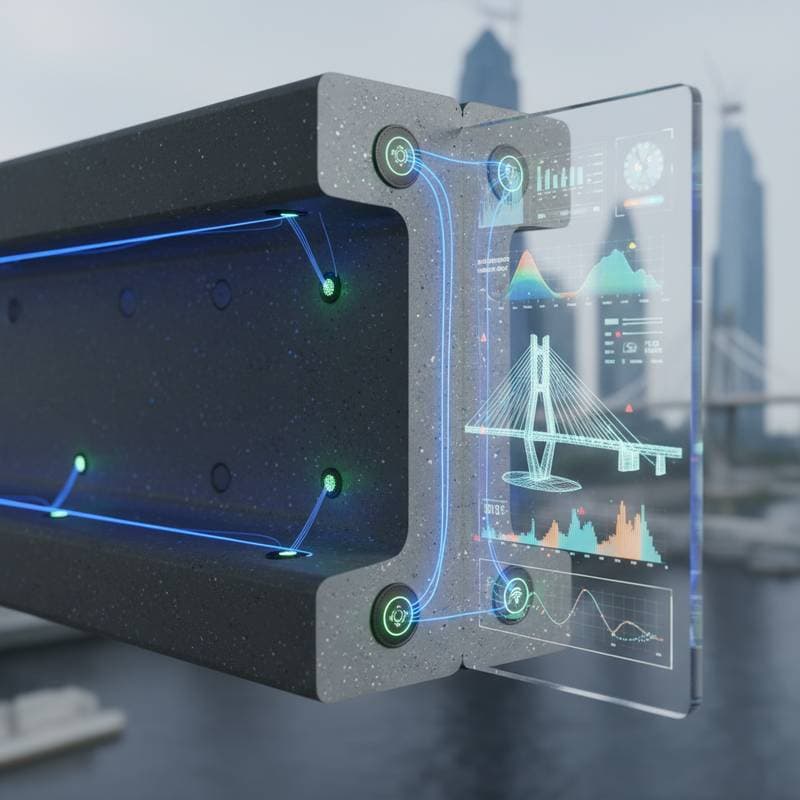
Understanding Smart Concrete Sensors
Smart concrete sensors represent a significant advancement in construction technology. These devices integrate Internet of Things (IoT) capabilities directly into concrete mixtures during the building process. By embedding sensors that monitor factors such as stress, temperature, and moisture, engineers gain continuous insights into structural health.
This technology shifts maintenance from reactive to proactive strategies. Traditional inspections often occur at fixed intervals, potentially missing early signs of deterioration. In contrast, smart sensors provide real-time data, allowing for timely interventions that prevent costly failures.
The Mechanics of Smart Concrete Monitoring
At the core of smart concrete are tiny, durable sensors woven into the material. These sensors detect subtle changes in the concrete's internal environment. For instance, they measure strain levels that indicate potential cracking or corrosion.
Data from these sensors transmits wirelessly to centralized systems. Cloud-based platforms analyze this information using advanced algorithms. Such analytics predict issues before they escalate, enabling precise maintenance scheduling.
Integration with broader IoT networks enhances functionality. Sensors connect to building management systems, alerting teams to anomalies via mobile applications or dashboards. This seamless connectivity ensures that infrastructure remains under vigilant watch around the clock.
Proven Benefits for Infrastructure
One primary advantage lies in substantial cost reductions. Studies show that smart concrete sensors can cut maintenance expenses by 15 to 30 percent. This savings stems from avoiding emergency repairs and optimizing resource allocation.
Structures equipped with these sensors often enjoy extended lifespans. Predictive maintenance can increase service life by up to 30 percent. Bridges and buildings endure longer without major overhauls, reducing the need for frequent reconstructions.
Safety improvements stand out as well. Real-time monitoring minimizes risks associated with structural weaknesses. For urban areas prone to heavy traffic or seismic activity, this technology fosters greater public confidence in infrastructure reliability.
Environmental gains add another layer of value. By extending the usability of existing structures, smart concrete reduces material waste and lowers the carbon footprint of construction projects. Sustainable practices become more achievable through data-driven decisions.
Costs and Investment Considerations
Initial implementation requires an upfront investment. Adding smart sensors typically increases project costs by 10 to 20 percent. Factors such as sensor density and data system complexity influence this figure.
Over time, these costs prove worthwhile. Return on investment materializes through diminished long-term expenses. Organizations that adopt this technology often recoup their outlay within a few years via savings on repairs and downtime.
Budgeting should account for ongoing elements. Maintenance of the sensor network and software updates represent minor annual fees. Selecting scalable solutions ensures adaptability as infrastructure needs evolve.
Steps to Implement Smart Concrete Sensors
Begin with a thorough assessment of your project. Evaluate the structure's exposure to environmental stresses and usage demands. This step identifies optimal sensor placement for maximum effectiveness.
- Select appropriate sensor types based on monitoring needs, such as fiber-optic for strain or wireless for moisture detection.
- Collaborate with certified suppliers to integrate sensors during concrete pouring, ensuring uniform distribution.
- Establish a data management platform that supports real-time analytics and user-friendly interfaces.
- Train maintenance teams on interpreting sensor outputs and responding to alerts.
- Conduct pilot tests on smaller sections to validate performance before full-scale deployment.
Regular calibration keeps the system accurate. Periodic reviews of data trends refine predictive models, enhancing overall efficiency.
Achieving Long-Term Structural Resilience
Adopting smart concrete sensors transforms how we approach infrastructure durability. These tools empower builders and maintainers with actionable intelligence that safeguards investments. As technology advances, the potential for even greater efficiencies grows.
Projects incorporating this innovation not only save costs but also contribute to safer, more sustainable communities. Consider integrating smart sensors in your next endeavor to realize these enduring benefits. Forward-thinking planning today yields resilient outcomes for tomorrow.