
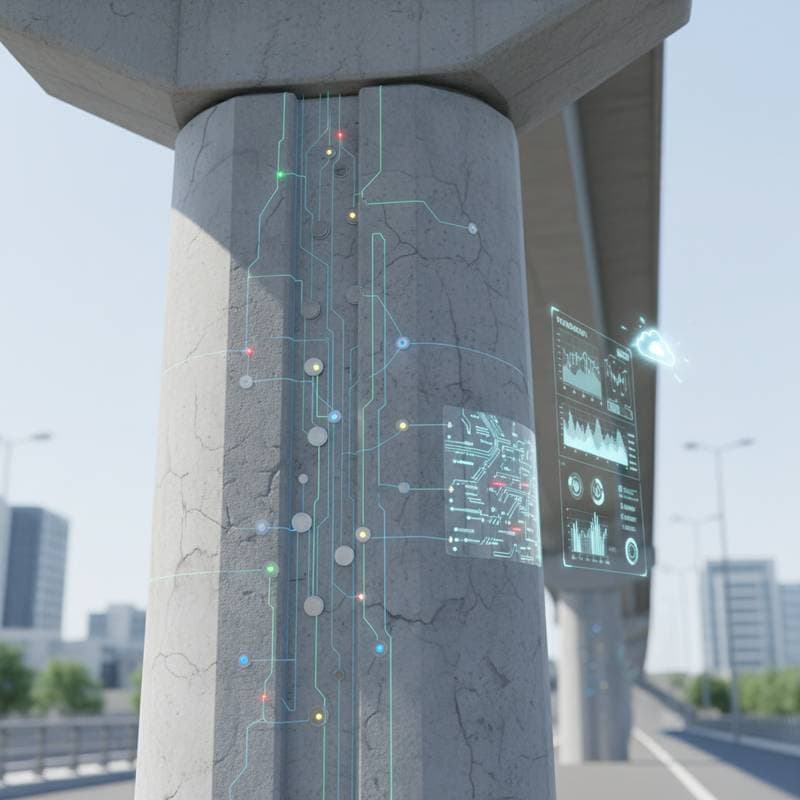
Smart Sensors Detect Concrete Damage Before It Shows
Concrete endures significant stress over time, yet it remains vulnerable to internal degradation from moisture, mechanical loads, and chemical processes. These factors lead to expanding cracks, corroding reinforcement, and surface deterioration. Visible signs often indicate advanced damage, escalating repair expenses substantially. Smart sensors provide engineers and property managers with the ability to identify these issues early, well before safety risks emerge.
Smart concrete monitoring integrates compact sensors, wireless transmission, and cloud-based analysis. These components track essential parameters such as temperature, humidity, strain, vibration, and corrosion activity within the material. The resulting data enables precise predictions of maintenance requirements, averting unexpected failures that endanger lives and assets.
How Smart Concrete Monitoring Functions
A smart concrete sensor consists of a small electronic unit designed to gather environmental data from inside or on the surface of concrete elements. Engineers embed these during new construction or attach them to established structures like bridges, buildings, or roadways. Each device focuses on specific indicators:
- Temperature and humidity levels within the concrete
- Strain and stress from applied forces or settling
- Corrosion risks to embedded steel bars
- Moisture movement and chloride ingress
- Crack dimensions or vibrational responses
Sensors relay information to a central gateway, which forwards it to a cloud platform for processing. Advanced algorithms evaluate the data against established benchmarks. Anomalies trigger notifications to responsible personnel, facilitating prompt assessments and interventions that contain problems at their inception.
Advantages and Limitations
Advantages
- Identifies concealed damage prior to surface appearance
- Lowers expenses related to routine inspections and operational interruptions
- Prolongs the operational duration of concrete installations
- Bolsters overall safety and regulatory adherence
- Supports maintenance strategies grounded in empirical evidence
Limitations
- Involves greater initial investment compared to conventional methods
- Depends on reliable network connectivity and energy sources
- Demands accurate calibration and strategic positioning
- May require ongoing fees for analytical services
- Certain models prove unsuitable for aggressive chemical settings
Cost Considerations
Pricing for smart concrete sensors fluctuates according to capabilities and connectivity options.
- Basic units for temperature and humidity: 50 to 150 dollars per unit
- Advanced models for corrosion or strain: 200 to 600 dollars per unit
- Gateways and installation equipment: 500 to 1,500 dollars per location
- Cloud analytics subscriptions: 10 to 50 dollars per sensor monthly
For a typical mid-sized installation, total costs range from 5 to 15 dollars per square foot of covered surface. Factors such as increased sensor quantity, extended transmission distances, or enhancements for extreme conditions like saltwater or freezing cycles elevate these figures.
Durability and Upkeep
Embedded sensors typically operate for 10 to 20 years, aligning with the initial phase of the host concrete's service life. Battery-dependent models endure 5 to 10 years based on data upload frequency. Systems utilizing energy harvesting or direct wiring offer potentially unlimited functionality.
Essential maintenance tasks encompass:
- Quarterly verification of signal integrity and power levels
- Analysis of data patterns for deviations
- Substitution of malfunctioning components
- Clearance of gateways from obstructions or moisture
Software platforms require infrequent updates. During major renovations, opportunities arise to refresh or augment the sensor array.
Key Specifications for Selection
Prior to purchase, evaluate these critical attributes:
- Operational ranges for strain, temperature, and humidity
- Precision levels, expressed in percentages or millivolts
- Protection ratings, such as IP67 for exterior applications
- Transmission distances and update intervals
- Power duration or supply method
- Integration with current software ecosystems
- Housing materials resistant to corrosion
In reinforced applications, ensure capability for assessing half-cell potential or resistivity to gauge rust progression.
Preparation Strategies
Examine architectural plans to pinpoint vulnerable zones, including high-load areas, moisture-prone sections, or sites exposed to salts. Prioritize bridges, elevated parking, and seaside foundations.
Preparation involves:
- Evaluating access for sensor deployment.
- Mapping power and communication routes, ensuring unobstructed wireless paths.
- Outlining data flow to networks or cloud services.
- Collaborating with engineers to avoid compromising structural integrity or coverage standards.
- Recording precise placements for ongoing reference.
Installation Procedures
Methods vary by project stage.
New Construction:
- Position sensors along rebar or within molds pre-pour.
- Secure wiring or nodes in safeguarded enclosures.
- Pour concrete methodically to preserve sensor alignment.
- Test functionality as curing progresses.
- Seal entries and mark monitored regions.
Retrofit Applications:
- Core small holes or affix external units.
- Apply sealants to block water around insertions.
- Link to gateways for data collection.
- Establish baselines through initial calibrations.
Adhere to all safety protocols, including protective gear for drilling and cable management.
System Configurations
Available setups include:
- Embedded arrays: Integrated during casting, optimal for fresh builds like spans or foundations.
- Surface attachments: Bolted or adhered for upgrades, simplifying retrofits.
- Combined approaches: Blending internal and external monitoring for comprehensive coverage.
- Battery-free RFID: Reader-activated, cost-effective but with sparse updates.
- Active networks via Bluetooth or LoRaWAN: Real-time, long-range transmission for expansive areas.
Select based on objectives and existing infrastructure.
Installation Choices: DIY Versus Professional
For minor home projects like driveways, user-friendly sensors connect via mobile apps to observe curing or initial flaws. These prove straightforward for non-experts.
Engage specialists for:
- Load-bearing or vehicular supports
- Integration with automated controls
- Prestressed or tensioned elements
- Challenging access points
- Safety-critical evaluations
Experts guarantee calibration, verification, and documentation compliance.
Troubleshooting Common Issues
Monitor for:
- Signal loss: Adjust antennas, swap batteries, or relocate hubs.
- Inconsistent data: Inspect connections, probe integrity, or interference sources.
- Baseline shifts: Recalibrate or retire aged units.
- Moisture breaches: Reinforce seals on cables and boxes.
Maintain reserves and logs for efficient resolutions.
Climate-Specific Adaptations
Environmental factors shape degradation and system efficacy.
- Cold climates with freezing: Select subzero-rated, waterproofed models.
- Marine environments: Opt for salt-resistant enclosures.
- Dry heat: Emphasize shrinkage and evaporation tracking.
- Wet regions: Promote drainage to shield hardware.
Align with regional codes on protections and checks.
Complementary Methods
Budget constraints may favor alternatives:
- Portable tools for spot checks on moisture or rust, though intermittent.
- Thermal imaging for subsurface flaws, operator-dependent.
- Sound-based tests for active fractures under load.
- Optic fibers for detailed readings, albeit complex to install.
Sensors excel in persistent oversight, yet pairing with scheduled reviews optimizes efficiency.
Leveraging Data for Proactive Care
Ongoing data collection reveals behavioral norms for each asset. Algorithms detect deviations signaling risks like escalating strain or humidity spikes.
This informs timely actions such as sealing fissures or inhibiting rust, minimizing long-term outlays and disruptions. Dashboards aggregate insights across portfolios, aiding risk prioritization, regulatory needs, and asset assessments.
Safety Protocols and Regulations
Prior to work:
- Scan for utilities and reinforcement using detectors.
- Secure necessary approvals for modifications.
- Preserve minimum reinforcement coverings.
- Employ protective equipment during concrete handling.
- Adhere to electrical guidelines to mitigate hazards.
Isolate any currents from adjacent systems.
Implementing Effective Monitoring
Accessible technology now suits diverse scales, from public facilities to private lots. Weigh initial costs against failure repercussions.
Target high-stakes areas first. Engage experts for tailored selections matching material, conditions, and timelines. Initiate with a trial zone, analyze outcomes over time, and scale accordingly.
Through smart sensors, concrete evolves into an informative asset, enabling preemptive measures that safeguard durability and security.