
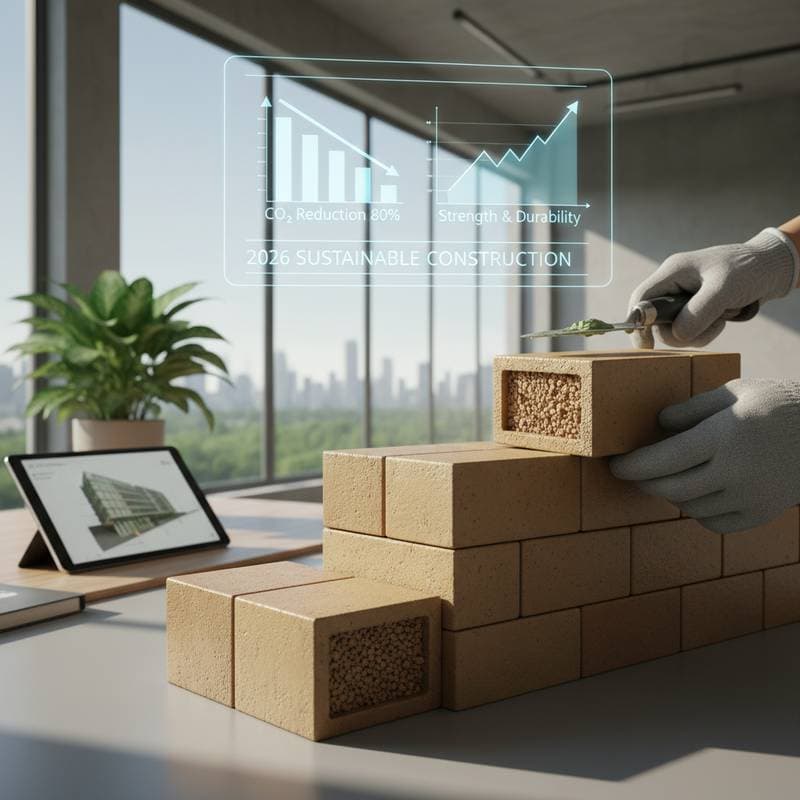
Zero-Cement Bricks: Revolutionizing Masonry by 2026
Sustainable construction has evolved from an optional choice to an essential practice. Builders, architects, and homeowners now prioritize materials that minimize environmental harm without sacrificing performance. Zero-cement bricks, crafted through geopolymer technology, stand out as a leading option for replacing traditional masonry. This guide covers their fundamentals, effective implementation strategies, and potential to reshape building practices in the coming years.
Key Takeaways
- Average cost range: $6 to $12 per square foot installed, with materials accounting for 55 percent, labor 35 percent, and equipment 10 percent
- Compressive strength: 4,000 to 8,000 PSI, aligning with or surpassing standard concrete benchmarks
- Curing time: 7 to 14 days, influenced by mix formulation and environmental conditions
- Environmental benefit: Reductions in CO₂ emissions up to 80 percent relative to Portland cement alternatives
- Decision factors: Availability of local resources, regional climate, aesthetic preferences, and load-bearing needs
Planning a Zero-Cement Masonry Project
Thorough preparation forms the foundation of any successful zero-cement brick project. Evaluate critical elements to guarantee both structural reliability and financial viability.
Permit and Code Requirements
Building regulations in many areas lack specific provisions for geopolymer masonry. Compliance with broader structural and fire safety norms remains mandatory. Consult local authorities early, and prepare documentation of test data showing compressive strength and fire endurance that match or exceed those of conventional materials.
Cost Considerations
Initial expenses for zero-cement bricks exceed those of clay or concrete varieties by a modest margin. A standard wall installation might incur 10 to 20 percent higher upfront costs. Over time, benefits such as shorter curing periods, lower upkeep demands, and superior insulation properties deliver substantial returns.
Material Selection
Opt for regionally available inputs to cut transportation-related emissions. Essential components include:
- Fly ash: A byproduct of coal burning, perfect for achieving robust mixes
- Ground granulated blast furnace slag: Provides added density and bolsters resistance to chemicals
- Calcined clay: A viable choice in areas lacking industrial waste streams
- Alkaline activators: Mixtures of sodium hydroxide and sodium silicate, dosed precisely per the recipe
Building with Zero-Cement Bricks
The assembly process for geopolymer bricks mirrors standard masonry techniques, with adjustments for adhesives and setting methods.
Mortar and Bonding
Select geopolymer mortar formulated to complement the bricks. This ensures bonding integrity and prevents issues from uneven expansion. Standard joint thickness measures 3/8 inch.
Laying Technique
- Start at the corners and establish reference lines with a level and plumb line.
- Spread mortar in thin, uniform layers, minimizing added water.
- Offset joints between rows to create interlocking stability.
- Verify straightness after every three to four courses.
Curing After Installation
Geopolymer systems demand less aftercare than cement-based ones. A brief misting over 24 hours supports optimal hydration. Extended moist environments prove unnecessary.
Troubleshooting Common Issues
- Uneven color: Stems from irregular blending or fluctuating temperatures. Source consistent batches of inputs.
- Cracking during curing: Arises from swift drying or poor compaction. Control moisture levels and apply firm pressure during forming.
- Weak bonding: Occurs with mismatched mortar or off-ratio activators. Refine the chemical balance and conduct trials.
Long-Term Maintenance and Durability
These bricks demand little ongoing care. Their compact structure wards off salt deposits, fungal growth, and corrosive elements. Perform yearly checks on outer walls, focusing on expansion gaps and seals. Use gentle soap solutions for cleaning, steering clear of harsh acids.
DIY or Professional Installation
Experienced hobbyists can manage modest endeavors, such as retaining walls or outdoor platforms, provided they gather tools and protective equipment. Self-installation cuts labor expenses by 25 to 40 percent. For load-bearing elements, multi-story structures, or critical partitions, engage certified experts. Seek masons versed in geopolymers, complete with licensing and coverage.
Advancing Sustainable Building Practices
Zero-cement bricks mark a significant advancement in eco-conscious design. They deliver comparable strength, heat retention, and emission reductions that challenge Portland cement dominance. With refining production methods and updating regulations, adoption will accelerate. Equip yourself with knowledge of their makeup, capabilities, and handling to integrate them into forward-thinking projects that balance innovation and stewardship.