
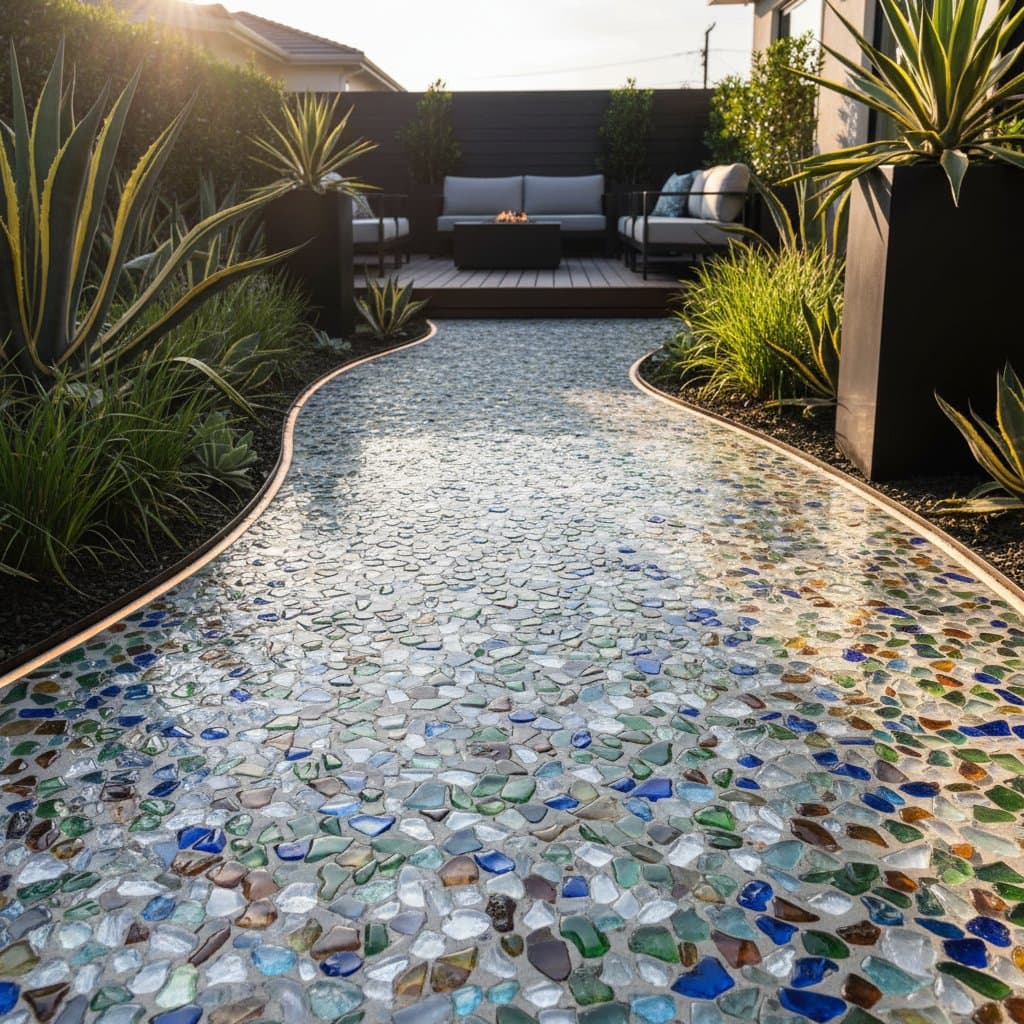
Why Recycled Glass Pavers Dominate Modern Landscaping
Recycled glass pavers consist of post-consumer glass melted and molded into durable paving units. These pavers resemble translucent stone and capture light in unique ways that concrete cannot match. Homeowners and designers select them for patios, walkways, pool decks, and garden accents. Their appeal continues to rise as individuals seek methods to minimize waste while enhancing outdoor visual interest.
What Recycled Glass Pavers Are
The production process begins with crushed glass that undergoes cleaning, mixing with binders, and heating to fuse into solid blocks. This yields strong, nonporous units capable of withstanding foot traffic and weather exposure. Certain pavers contain only glass, whereas others incorporate concrete or resin for enhanced strength. Translucent surfaces appear in clear, tinted, or reflective chip varieties to produce sparkle.
Pros and Cons
Pros
- Derived from recycled materials that divert glass from landfills
- Nonporous surfaces resist stains and mold growth
- Vibrant colors and light reflection enable striking designs
- Extended service life with minimal color fading
- Reusable or recyclable at the end of their lifecycle
Cons
- Elevated initial cost compared to standard concrete or clay pavers
- Potential slipperiness when wet without texturing
- Restricted availability in certain regions
- Substantial weight necessitates careful installation handling
- Requirement for specialized tools during cutting
Cost Overview
Material costs typically range from 8 to 15 dollars per square foot for basic units. Textured, colored, or thicker variants for driveways may cost 15 to 25 dollars per square foot. Installation expenses generally fall between 18 and 40 dollars per square foot, influenced by site preparation, design complexity, and accessibility.
Factors that increase costs include custom colors, embedded lighting, curved layouts, extensive excavation for unstable soil, and challenging site access. Expenses decrease with level, well-drained sites, straightforward rectangular patterns, minimal cuts, and standard sizing without custom elements.
Lifespan and Maintenance
With adequate base support, recycled glass pavers endure 50 years or longer. Their nonporous nature minimizes stains and salt damage. Routine cleaning involves rinsing with water and mild detergent, avoiding harsh acids or abrasive brushes. Annual joint inspections address settling or sand loss; reseal penetrating sealers every few years to preserve shine and prevent dulling.
Key Specifications to Verify
Prior to purchase, evaluate these essential attributes:
- Compressive strength: Minimum 6,000 psi for pedestrian applications
- Slip resistance: Wet coefficient of friction exceeding 0.6
- Thickness: 1 to 2 inches for patios, 3 inches for driveways
- Freeze-thaw rating: Appropriate for local climate conditions
- Color stability: UV-resistant pigments or integral coloring
Request documentation on recycled content percentage and manufacturing certifications to substantiate sustainability assertions.
Planning and Preparation
Effective planning averts cracking and heaving issues. Assess these site conditions prior to material procurement:
- Base depth: Minimum 4 inches of compacted crushed stone for walkways, 8 inches for driveways
- Slope: At least 1 inch drop per 8 feet to facilitate drainage
- Soil: Eliminate organic matter and soft clay prior to base placement
- Edge restraint: Incorporate metal or concrete edging to secure units
- Utility verification: Locate buried lines before excavation
For areas prone to water pooling after rainfall, enhance drainage using gravel trenches or perforated pipes before paver placement.
Installation Process
- Define the layout. Employ stakes and string lines to outline edges and slopes.
- Excavate the area. Remove soil to accommodate base, bedding, and paver depth.
- Compact the base. Layer crushed stone in 2-inch increments and use a plate compactor for firmness.
- Level the bedding. Distribute and screed 1 inch of sand or fine gravel.
- Place the pavers. Begin from a straight edge, maintain uniform joints, and tap gently with a rubber mallet.
- Secure edges. Fasten restraints firmly to inhibit shifting.
- Fill joints. Introduce polymeric sand into gaps and mist lightly with water.
- Final cleaning. Rinse the surface and allow complete drying before sealing or adding furnishings.
Cut glass pavers using a wet saw equipped with a diamond blade, and don proper eye and respiratory protection. Glass dust poses risks to skin and lungs.
Design Patterns and Options
Popular arrangements encompass:
- Running bond: Straight rows ideal for narrow walkways
- Basket weave: Paired alternations providing visual texture
- Stack bond: Grid layout suited to modern patios
- Herringbone: Interlocking pattern for driveway stability
- Mixed glass and stone: Blends sparkle with natural elements
Opt for textured or frosted surfaces near pools to improve traction. Pair clear or translucent pavers with LED lighting for enhanced nighttime illumination.
DIY Installation Versus Professional Services
DIY suits small patios or paths under 300 square feet on level ground without vehicle traffic. Required tools include a compactor, wet saw, and edging implements.
Engage professionals for:
- Vehicle-bearing or heavy-load areas
- Unstable or steeply sloped soil
- Integration of lighting or drainage systems
- Precise curves or borders
Experts ensure compliance with local codes for base work and stormwater control.
Addressing Common Issues
Surface dulling: Results from accumulated dirt or minerals; remedy with mild detergent and a soft brush, steering clear of wire brushes.
Joint washout: Stemming from heavy rain or inadequate compaction; replenish with polymeric sand and mist until set.
Heaving or settling: Often due to poor base or frost; excavate, recompact, and reinstall affected pavers.
Cracking: Infrequent, yet possible from concentrated loads or faulty bedding; replace individual units, retaining spares for matching.
Regional and Climate Considerations
In freeze-thaw areas, select pavers rated for exterior cycles, with thorough base compaction and drainage. Coastal zones demand periodic rinsing and salt-resistant sealers to counter dulling. Hot climates benefit from light colors to reduce heat retention. Snowy regions require plastic blades or brooms to avoid scratches during removal.
Environmental Advantages
These pavers diminish landfill contributions and preserve raw resources, repurposing multiple bottles per square foot. Manufacturing demands less energy than virgin glass production from sand and soda ash. Some facilities utilize renewable energy or heat recovery. Their durability reduces replacement frequency, and end-of-life units can be crushed for reuse in aggregates.
Aesthetic Versatility
Glass pavers excel in color and light dynamics, shimmering by day and glowing when backlit at night. Designers apply them in accents or strips for emphasis rather than full coverage. Clear or aqua shades harmonize with water elements, while amber or green tones enhance foliage. Frosted variants diffuse light and conceal imperfections better than clear options.
Alternatives Comparison
Concrete pavers offer affordability, availability, and cuttability but succumb to stains and fading. Clay bricks provide timeless strength with limited colors and moss-prone maintenance. Natural stone delivers unique textures at higher weights and installation costs. Porcelain pavers ensure durability and slip resistance yet lack color depth and recyclability.
Recycled glass merges porcelain-like endurance with glass tile vibrancy, distinguished by its sustainable profile.
Purchasing Guidelines
Acquire 5 to 10 percent extra materials for cuts and breakage. Ensure uniform thickness for level installation. Confirm ASTM compliance via packaging. Validate recycled content certifications. Examine units for chips or edge flaws pre-installation.
Inquire about wet-area slip ratings and verify color consistency across batches, noting minor variations from recycled sources.
Ongoing Maintenance Practices
Monthly sweeping removes abrasive grit. Wash accumulated dirt with mild soap and water. Replenish joint sand periodically to stabilize the surface. Reseal when water no longer beads on the material.
For damaged pavers, lift with flat pry tools, refresh bedding, and insert spares. Glass maintains color integrity, facilitating seamless replacements.
Expert Recommendations
Integrate permeable bases to bolster drainage and curb runoff. Employ rubber pads on compactors to safeguard surfaces. Perform all cuts wet to manage dust and heat. Pre-install lighting conduits for future enhancements. Store spares indoors against chipping.
Realizing Lasting Outdoor Appeal
Recycled glass pavers deliver robust performance alongside captivating aesthetics. They convert discarded materials into enduring surfaces that amplify light and ingenuity. Initial investments yield returns through resilience, allure, and ecological merits. Prioritize meticulous base preparation, drainage adherence, and skilled installation for optimal results.