
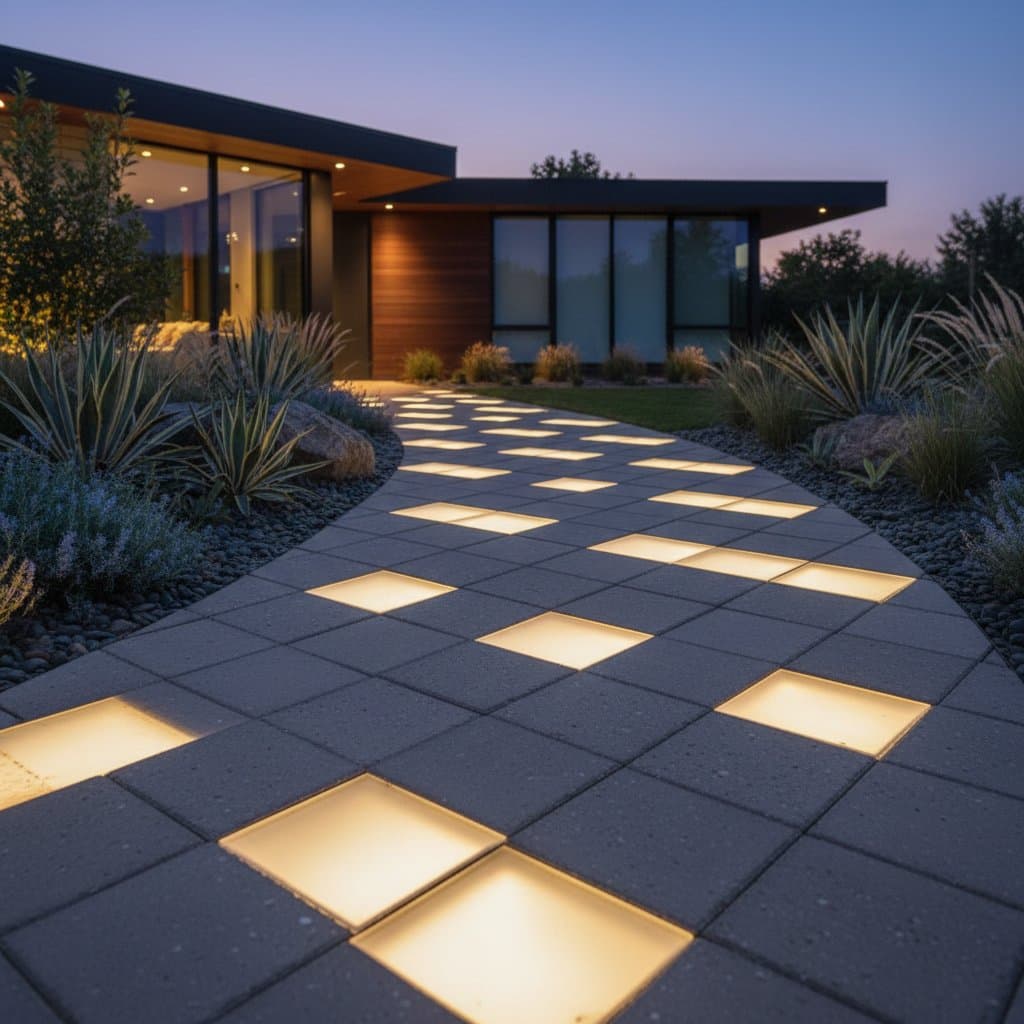
Solar Pavers: Effortless Illumination for Outdoor Paths
Solar pavers merge the timeless appeal of stone pathways with cutting-edge solar technology. These units harness sunlight throughout the day to power integrated lights that activate automatically at dusk, offering secure and attractive navigation without the need for electrical connections or ongoing energy expenses. Homeowners value this approach for its blend of environmental responsibility, enhanced visibility, and design versatility. The following sections outline the mechanics of solar pavers, essential planning steps, detailed installation guidance, and strategies for sustained performance.
Essential Insights
- Cost Breakdown: Expect $20 to $40 per square foot for full installation, with materials accounting for 55 percent, labor for 35 percent, and equipment for 10 percent.
- Installation Specifications: Embed pavers 2 to 3 inches deep over a 4- to 6-inch compacted gravel base to ensure stability.
- Timeline Expectations: Complete small projects under 150 square feet in 1 to 2 days, depending on site conditions and crew size.
- Energy Capacity: Individual pavers feature photovoltaic cells delivering 2 to 4 watts, sufficient for consistent evening illumination.
- Selection Criteria: Evaluate sunlight availability, pathway configuration, soil permeability, and material resilience to local weather patterns.
- Lifespan Projections: Quality units maintain functionality for 10 to 15 years with proper care, including periodic battery replacements.
Site Evaluation and Preparation Essentials
Conduct a thorough assessment of your chosen area before proceeding with solar paver installation. These pavers demand direct sunlight exposure for a minimum of 6 hours each day to charge effectively; areas with heavy shade or northern orientations might yield dimmer results, necessitating tree pruning or path realignment for better solar access.
Evaluate soil composition and drainage to prevent water pooling, which could damage the base layer. Test for level ground and mark boundaries using stakes and string lines to visualize the final layout. Factor in foot traffic volume and aesthetic integration with surrounding landscape elements.
Navigating Permits and Local Rules
In most areas, installing solar pavers qualifies as routine landscaping and bypasses the need for formal building permits. However, consult municipal guidelines if your project involves excavation deeper than 12 inches or integration with existing electrical systems for battery backups. Homeowner associations may impose additional restrictions on visible lighting or material choices, so verify compliance early to avoid delays.
Budgeting for Your Project
For a standard 100-square-foot pathway, anticipate total expenses of $2,000 to $4,000 when hiring professionals. Opting for a do-it-yourself approach can trim labor costs by 25 to 40 percent, though renting tools like plate compactors and wet saws for precise cuts might add $100 to $200 to the tally. Premium options, such as those with tempered glass tops and high-efficiency LEDs, command up to $50 per square foot, whereas budget-friendly polymer composites begin at $15 per unit.
Allocate an extra 10 percent of your budget for unforeseen needs, including spare batteries, joint sealants, and minor adjustments during setup. Compare quotes from multiple suppliers to secure bulk discounts on pavers and accessories.
Detailed Installation Guide
Follow these structured steps to achieve a professional-grade result with solar pavers. Gather all materials in advance, including pavers, gravel base, sand bedding, edge restraints, and compaction tools, to streamline the process.
Step 1: Establish the Base Foundation
Excavate the path area to a depth of 6 to 9 inches, removing grass, roots, and debris. Spread and compact layers of gravel in 2-inch increments using a plate compactor until reaching the required 4- to 6-inch thickness. This stable sub-base supports weight and facilitates drainage.
Step 2: Position and Level the Pavers
Begin placement from one end of the path, laying pavers in your selected pattern with 1/8-inch joints between units. Tap each piece gently with a rubber mallet to embed it 2 to 3 inches into a 1-inch layer of coarse sand. Employ a level and straightedge across multiple pavers to verify even alignment.
Step 3: Optimize Solar Orientation
Align the photovoltaic panels on each paver to face southward for maximum sunlight capture in the northern hemisphere. Adjust positions as needed during dry fitting to avoid shadows from adjacent structures or plants. This orientation ensures reliable charging and uniform lighting output.
Step 4: Integrate Connections if Applicable
For systems with interconnected pavers that share power via low-voltage wiring, adhere strictly to the manufacturer's schematic. Secure waterproof junctions with silicone sealant to protect against moisture ingress. Most standalone models require no connections, simplifying the setup.
Step 5: Secure Perimeter and Fill Joints
Anchor the pathway edges with metal or plastic restraints, driving stakes into the ground at 12-inch intervals for firm hold. Sweep polymeric sand into the joints, then activate the plate compactor with a plywood buffer to vibrate the surface without damaging the pavers. Repeat sand application until joints reach full capacity, preventing weed growth and erosion.
Step 6: Initial Testing and Activation
Expose the installed pavers to full sunlight for 24 hours to prime the batteries. At nightfall, observe the automatic sensor activation and assess glow consistency across the path. Address any inconsistencies by repositioning or cleaning affected units.
Ensuring Quality and Resolving Issues
After placement, sweep a straightedge along the surface to detect and correct any uneven sections, which often stem from unstable base areas. Lift and reinforce problematic spots with additional gravel before resetting pavers. This step prevents tripping hazards and promotes longevity.
Should lights fail to engage, confirm that manual switches remain in the active position and wipe solar surfaces with a microfiber cloth dampened in soapy water to clear obstructions. Batteries typically last 500 to 1,000 cycles; test voltage with a multimeter and replace units showing less than 80 percent capacity. Persistent dimness may indicate insufficient charging, prompting a review of site shading.
Maintenance Practices for Enduring Performance
Solar pavers demand little daily intervention, yet regular checks preserve their efficiency and appearance.
Standard Upkeep Routine
- Wipe solar panels with mild detergent and lukewarm water every 2 to 3 months to eliminate pollen, dirt, or bird droppings that reduce charging efficiency.
- Examine for surface cracks, shifted edges, or joint erosion following storms or temperature fluctuations.
- Verify that dusk sensors trigger reliably and that LED outputs remain even in brightness.
- Swap out rechargeable batteries every 2 to 3 years, or sooner if runtime shortens noticeably, using manufacturer-recommended types.
Adapting to Seasonal Challenges
During winter in cold regions, clear snow with plastic-edged tools to avoid gouging the surfaces; apply a breathable cover if prolonged ice cover threatens seals. In wetter climates, flush drainage paths quarterly to deter moss or algae accumulation, which can obscure lights. Store rarely used cleaning supplies nearby for quick access.
Choosing Between DIY and Professional Services
DIY installation suits experienced gardeners with access to basic tools and a weekend timeframe, offering substantial savings and hands-on satisfaction. Beginners benefit from professional crews, who handle complex grading, precise cuts, and warranty assurances, completing larger projects efficiently. Weigh your skill level, project scale, and budget; for paths exceeding 200 square feet or irregular terrain, expert involvement minimizes risks and ensures code adherence.
Maximizing Results with Expert Strategies
Achieve superior outcomes by dry-laying the full pattern prior to permanent setting, allowing adjustments for visual harmony and light distribution. Maintain a stock of 5 to 10 percent extra pavers to accommodate future repairs without color mismatches. Blend solar and conventional pavers strategically to control expenses while highlighting key areas.
Select LED tones thoughtfully: warm whites evoke cozy ambiance for residential strolls, while cool whites suit contemporary exteriors. Prioritize ongoing vegetation management, trimming branches within 5 feet to safeguard sunlight access. These practices not only extend the system's life but also amplify the joy of illuminated evenings in your outdoor haven.