
Introduction to Mycelium Bricks
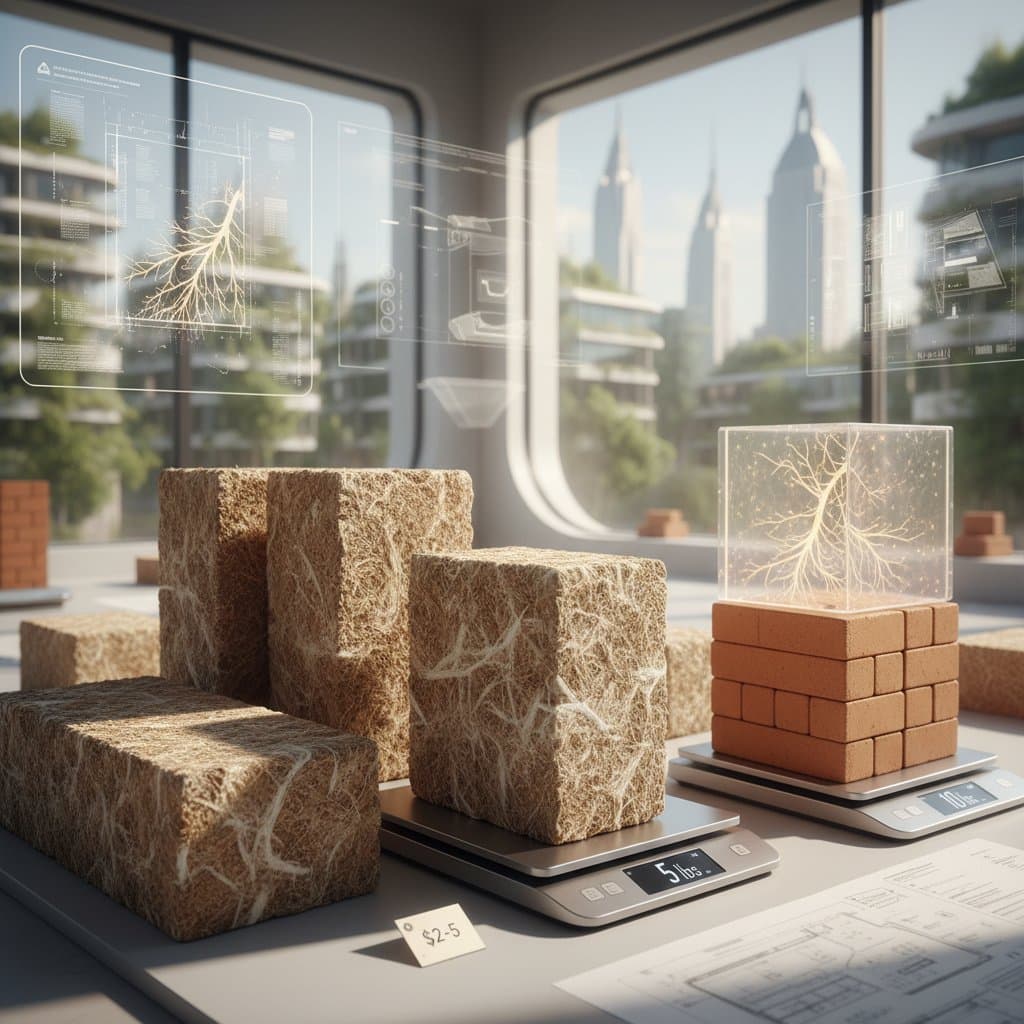
Mycelium bricks represent a breakthrough in sustainable construction materials. These innovative blocks consist of fungal networks grown on agricultural waste, resulting in lightweight structures that weigh approximately half as much as traditional clay bricks. At a production cost of two to five dollars per brick, they offer an affordable, eco-friendly alternative that reduces carbon emissions and supports circular building practices.
Builders appreciate the bricks' compressive strength, which rivals conventional materials, while their biodegradability ensures minimal environmental impact at the end of a project's life. By 2026, widespread adoption could transform urban development into more resilient and green initiatives. This guide explores the composition, production, and practical use of mycelium bricks to equip architects and DIY enthusiasts with essential knowledge.
Essential Components
Mycelium bricks rely on a simple yet effective combination of natural elements to form durable, organic structures. Each component plays a critical role in achieving the desired strength and sustainability.
- Mycelium culture: The fungal strain that permeates the organic filler, creating a natural binding network similar to roots in soil.
- Agricultural substrate: Materials such as straw, wood chips, or corn stalks that supply volume, nutrients, and a carbon-rich base for growth.
- Molds or forms: Custom shapes that define the brick dimensions, commonly eight by four by two point five inches, allowing for standard integration into existing builds.
- Drying chamber: A controlled environment that halts biological activity and enhances structural integrity through gradual dehydration.
- Protective coatings: Applications like natural resins or limewash that provide resistance to weather while maintaining breathability.
These ingredients highlight the bricks' low-tech appeal, requiring no synthetic additives or high-energy processes.
Step-by-Step Production Process
Producing mycelium bricks involves a straightforward sequence of steps that emphasize efficiency and minimal resource use. This method occurs at ambient temperatures, contrasting sharply with the energy-intensive firing of clay bricks.
-
Prepare the substrate: Begin by cleaning and pasteurizing organic waste to eliminate contaminants. Maintain a moisture level of sixty to seventy percent to foster optimal fungal development without excess water that could lead to decay.
-
Inoculate with mycelium: Introduce the fungal culture by mixing it thoroughly into the substrate. Uniform distribution prevents uneven bonding and ensures the final product achieves consistent density throughout.
-
Molding and incubation: Compress the inoculated mixture into molds and position them in a dark, humid setting at around seventy-five degrees Fahrenheit. Allow five to ten days for the mycelium to colonize the substrate fully, forming a cohesive, solid mass.
-
Drying and finishing: Extract the bricks from molds and dry them in a chamber at one hundred twenty to one hundred fifty degrees Fahrenheit until moisture drops below ten percent. This phase deactivates the fungus and locks in the brick's form and strength.
-
Surface treatment: Coat the dried bricks with a breathable sealant to shield against moisture ingress. Such treatments extend usability in varied climates without compromising the material's natural properties.
Throughout production, attention to environmental controls minimizes waste and maximizes yield, making the process scalable for both small workshops and large facilities.
Quality Assurance and Performance Testing
Rigorous evaluation ensures mycelium bricks meet building standards for safety and reliability. Manufacturers conduct visual inspections for uniformity in texture and dimensions across each batch.
Density checks confirm the material's compactness, while compressive strength tests verify load-bearing capabilities suitable for walls, partitions, or facades. For indoor uses, additional assessments maintain moisture below twelve percent to avoid any fungal resurgence.
These protocols not only uphold quality but also build confidence among users, demonstrating that mycelium bricks perform comparably to fired clay in real-world applications.
Resolving Production Challenges
Challenges may arise during fabrication, but targeted solutions keep operations smooth. Awareness of potential issues empowers producers to refine their techniques proactively.
- Uneven growth: Monitor and adjust temperature and humidity during incubation to promote balanced mycelium expansion.
- Weak bonding: Boost the inoculation ratio or prolong the growth phase to strengthen the fungal network's adhesion.
- Mold contamination: Enhance pasteurization methods and improve airflow to deter unwanted microbial interference.
By addressing these promptly, producers achieve higher success rates and consistent output quality.
Durability and Ongoing Care
Mycelium bricks exhibit impressive longevity when shielded from constant dampness, with lifespans reaching twenty-five to forty years based on site conditions and protective measures. Annual inspections for cracks or fading help identify needs early.
Damaged units can integrate back into ecosystems through composting, unlike traditional bricks that contribute to landfill accumulation. This closed-loop approach underscores the material's role in fostering sustainable building cycles.
Integrating Mycelium Bricks into Projects
Architects and builders can incorporate mycelium bricks into diverse designs, from hybrid walls that enhance insulation to acoustic panels for noise reduction. For hands-on creators, home setups with basic tools enable experimentation on a small scale.
These applications not only lower construction weights and costs but also advance energy-efficient architecture. Embracing mycelium bricks positions projects at the forefront of green innovation, delivering structures that harmonize with the environment.