
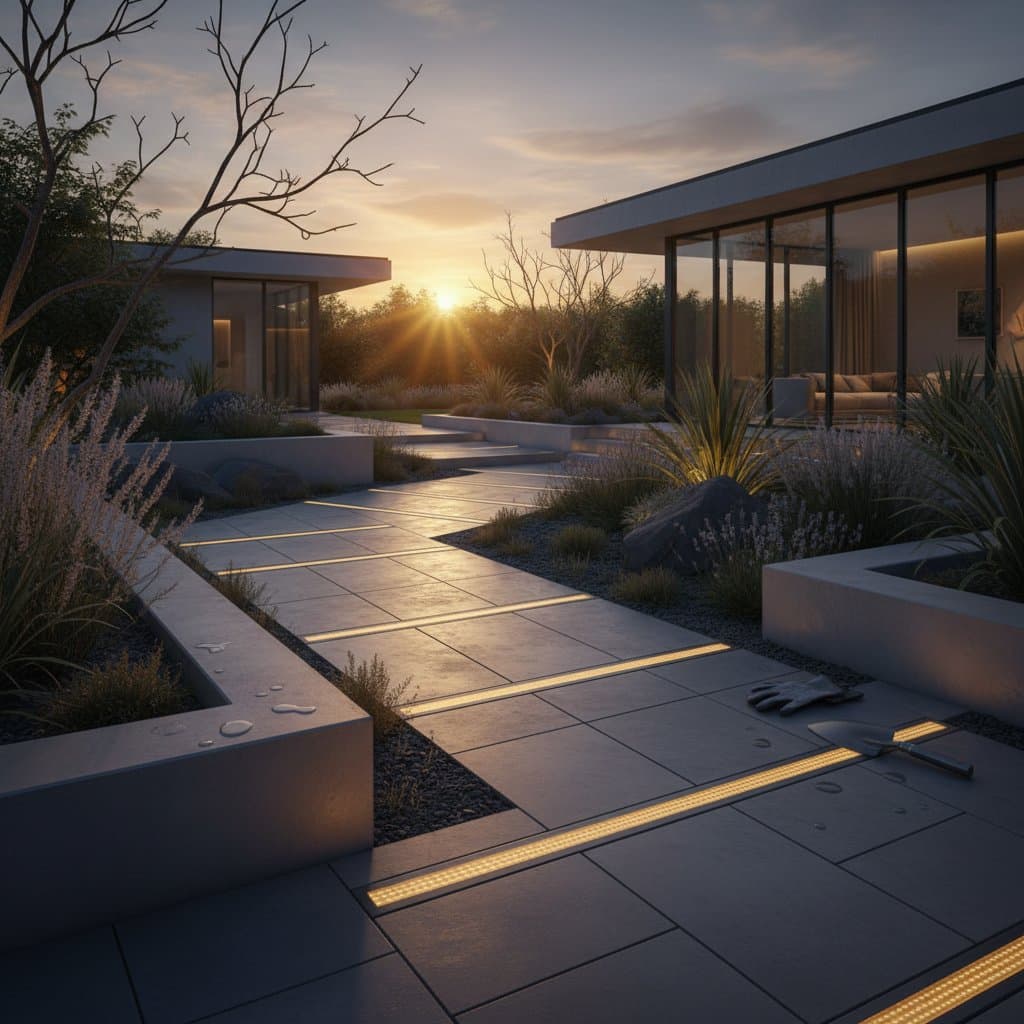
Quick Overview
Solar pavers absorb solar energy throughout the day to activate integrated LED lights at night. These systems eliminate extensive wiring, lower electricity expenses, and create secure pathways and driveways. Primary concerns involve moisture penetration, improper setup, and reduced efficiency in shaded locations. Factors influencing costs encompass solar cell quality, battery storage capacity, and the overall paved area configuration.
Essential Inspections
Begin inspections with visible and tactile assessments. Traverse the pathway or driveway at various times during the day to evaluate direct sunlight coverage. Identify obstructions such as tree canopies, roof overhangs, or high fences that limit light access. Solar pavers require unobstructed sunlight for the majority of daylight hours to achieve full charge.
Observe lighting performance after dark, noting areas with insufficient or irregular illumination. Isolated dim spots may indicate faulty or soiled panels. Gently wipe the surface of several pavers with a soft cloth. If grime accumulates rapidly, the location demands regular cleaning routines.
Examine pathway borders and joints closely. Dislodged pavers or excessive gaps permit water entry, which risks short-circuiting components or undermining the foundation. Test for instability or shifting under weight. A firm base supports effective drainage and electrical integrity.
For existing installations, listen for unusual sounds when lights activate. Buzzing or crackling noises suggest internal moisture or contact corrosion. A subtle hum occurs in certain LED drivers, yet pronounced or erratic sounds require attention.
Critical Warning Signs
- Ongoing water pooling on or adjacent to the pavers
- Intermittent light flickering or varying intensity within the same area
- Fogged or separated solar lenses
- Unsecured electrical connections or visible wiring at junctions
- Fractured casings permitting debris or salt ingress
- Substantial shading from unprunable trees or buildings
- Expanded or leaking battery units beneath the surface
These indicators reveal underlying issues like concealed damage or inadequate drainage. Prioritize resolutions for moisture and shading, followed by component substitutions if necessary.
Common Repairs and Estimated Expenses
Routine cleaning proves straightforward and economical. Apply a gentle detergent with a soft brush to eliminate residue, using supplies available in most households. Refrain from high-pressure washing, as it forces water past protective seals.
Persistent low output signals potential cell damage or battery degradation. Substituting single solar pavers typically ranges from 25 to 45 dollars per unit, varying by model and luminosity. Renewing larger sections escalates to 300 to 700 dollars per 100 square feet, incorporating labor and foundational adjustments.
In regions experiencing freeze-thaw conditions, paver displacement may fracture wiring pathways or impair drainage. Restoring level or resetting the base costs 5 to 10 dollars per square foot. Water reaching connections necessitates comprehensive rewiring, potentially doubling labor charges.
Surface sealants offer temporary relief for cracks but fail long-term by masking problems and retaining moisture. Effective repairs involve elevating impacted pavers, drying the substrate, and reinstalling with appropriate incline and perimeter support.
Anticipate expanded work if the sub-base proves unstable or drainage proves insufficient. Exposing the surface often uncovers blockages or waterlogging, requiring extra gravel layers or drainage lines.
Deciding Between Repair and Replacement
Solar Modules and LEDs
Replace units only when casings fracture, lenses cloud over, or batteries fail to retain charge. Thorough cleaning and resealing frequently revive functionality.
Base and Bedding Layers
Opt for regrading or resetting over full replacement unless widespread settling or frost upheaval misaligns the entire area.
Wiring and Connections
Substitute corroded or loose elements. Localized fixes suffice for isolated circuits.
Control Units and Sensors
Attempt repairs first. Replacement warrants action solely for communication failures or irreversible water damage to circuits.
Surface Aesthetics
Retain original patterns and hues if undamaged. Aesthetic overhauls seldom justify the investment.
Assembling the Right Team and Workflow
Select a landscape contractor experienced in solar paving installations. Conventional paver specialists often lack necessary electrical expertise. Engage an electrician for low-voltage wiring and grounding verification.
For comprehensive landscape overhauls, consult a designer or architect from the outset. They integrate lighting zones, drainage patterns, and gradients prior to commencement. Retrofitting solar pavers post-design frequently results in inconsistencies or additional labor.
A general contractor orchestrates multiple trades, managing excavation, wiring, and placement sequences. Projects involving retaining walls, driveways, or ancillary structures benefit from such oversight to prevent interferences. Management fees approximate 10 to 20 percent for intricate undertakings, mitigating delays and budget excesses.
Solicit three recent client references from prospective installers. Inquire about nighttime performance and winter reliability. Uniform illumination and consistent drainage mark superior installations.
Key Project Priorities
Allocate resources to features enhancing durability and security.
High-Impact Enhancements
- Establish proper grading and drainage prior to paver placement.
- Choose LED modules with superior efficiency and swappable batteries.
- Incorporate a centralized controller featuring dusk detection for optimized light duration and intensity.
- Employ warm white illumination for pathways to elevate visibility and ambiance.
- Embed conduits for potential future electrical expansions, even if unused initially.
Low-Value Changes
- Overhauling complete areas merely for color consistency.
- Introducing ornamental lights before resolving core illumination gaps.
- Placing solar pavers in persistently shaded patios or tree-covered zones.
Maintain stable bases and edge restraints to avoid unnecessary expenses without performance gains.
Planning Budget and Work Sequence
Sequence tasks based on interdependencies, with each phase enabling the subsequent.
- Evaluate sunlight patterns to pinpoint shaded regions and assess trimming or repositioning feasibility.
- Remedy drainage issues by reshaping soil and incorporating gravel foundations ahead of electrical or paving activities.
- Position conduits and wiring, ensuring sealed joints and elevated connections away from moisture-prone areas.
- Set pavers after compacting the base to minimize shifts.
- Verify lighting output for evenness and adequacy before joint filling.
- Apply final seals and clear debris to protect solar surfaces.
Budgets vary significantly. Compact walkways using basic modules begin around 1,500 dollars. Expansive driveways with intelligent controls and robust cells surpass 10,000 dollars. Sustained savings arise from diminished energy consumption and reduced upkeep following system stabilization.
Sustaining Long-Term Performance
Solar pavers thrive under clean, dry conditions. Schedule periodic upkeep to maximize longevity. Regularly sweep away debris and rinse surfaces before residues harden on lenses. Post-rainfall, inspect for pooling or reduced light output to preempt electrical faults.
Conduct quarterly checks on connections for corrosion signs. Substitute brittle gaskets promptly. Internal rechargeable batteries endure several years, though damp or shaded environments accelerate wear. Battery swaps cost less than full module replacements; monitor sectional outputs and phase in updates progressively.
Consistent care ensures reliable operation, yielding ongoing benefits in safety, savings, and aesthetic appeal.