
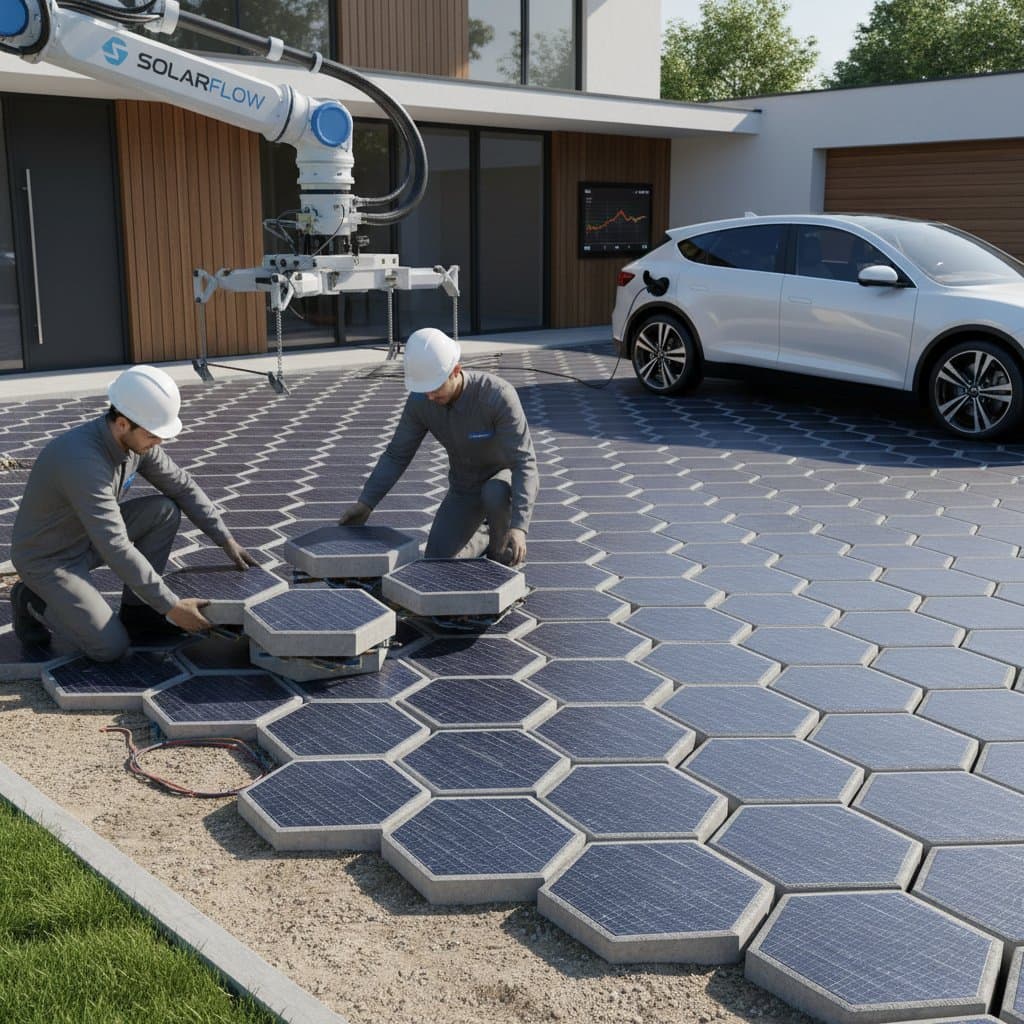
Solar Pavers: Driveways That Generate Electricity for Your Home
Solar pavers function as robust hardscape elements that merge concrete or stone durability with embedded solar cells. These units resemble conventional driveway pavers yet harness sunlight to produce electricity for residential use. Each paver operates like a compact solar panel, interconnecting to create a load-bearing surface capable of supporting vehicles and enduring harsh weather conditions.
This integration unites renewable energy production with practical paving, converting driveways or patios into functional components of a home energy strategy. Sunlight absorption occurs on the surface, with subsurface wiring directing electricity to an inverter that connects to the household electrical grid. Consequently, the driveway performs dual roles: accommodating traffic while contributing to reduced electricity expenses.
Advantages and Disadvantages
Advantages
- Multifunctional Design: Produces electricity alongside providing a sturdy, pedestrian- and vehicle-friendly surface.
- Renewable Power Source: Diminishes reliance on grid electricity and minimizes carbon emissions.
- Design Versatility: Offered in various neutral tones, textures, and layouts that harmonize with traditional pavers.
- Long-Term Durability: Features tempered glass surfaces and weatherproofed electronics designed for exterior conditions.
- Expandable Installation: Permits phased implementation in targeted areas, allowing additions as funds become available.
Disadvantages
- Elevated Expenses: Materials and labor surpass those of standard pavers or asphalt installations.
- Electrical Integration Challenges: Necessitates professional wiring connections beyond typical homeowner capabilities.
- Reduced Output Efficiency: Yields less power per unit area than traditional rooftop solar arrays.
- Sunlight Dependency: Efficiency declines in areas obstructed by trees or buildings.
- Maintenance for Repairs: Individual unit replacement requires wiring disconnection, complicating fixes.
Installation Costs
Materials for solar pavers generally range from $20 to $40 per square foot. Complete installations, encompassing site preparation, wiring, and electrical connections, typically cost $40 to $70 per square foot.
Key factors influencing expenses include:
- Accessibility for excavation and wiring pathways.
- Capacity of the inverter and monitoring equipment.
- Extent of foundational work to support vehicular weight.
- Degree of customization for patterns or edge detailing.
- Fees for electrical permits and inspections.
Projects covering a modest driveway segment or pathway may begin at several thousand dollars, whereas full driveways often total tens of thousands, varying by scale and material quality.
Expected Lifespan and Upkeep
Solar pavers typically endure 20 to 25 years, aligning with conventional solar panel lifespans. The underlying concrete or stone foundation can persist longer when properly drained and compacted.
Essential maintenance includes:
- Cleaning surfaces with mild detergent and soft brushes to preserve clarity.
- Refraining from pressure washing or abrasive chemicals that might damage the glass.
- Annual examination of joints for erosion, vegetation, or subsidence.
- Periodic review of electrical links and energy production via system applications or displays.
- Periodic resealing of surrounding non-solar pavers to maintain uniformity.
Should a unit cease functioning, professionals can diagnose through connector voltage tests and replace the faulty component.
Essential Specifications to Evaluate
Prior to selection, verify these attributes:
- Load Capacity: At least 20,000 pounds to accommodate driveways.
- Traction Rating: Surface finish compliant with regional wet-weather standards.
- Water and Dust Resistance (IP Rating): IP68 or superior for comprehensive protection.
- Conversion Efficiency: Between 10 and 15 percent under standard conditions.
- Structural Strength: Minimum 6,000 psi to bear vehicle stress.
- Thermal Tolerance: Resilience to subzero temperatures and extreme heat without fracturing.
- Safety Certifications: UL-listed or comparable for solar electrical elements.
Inquire about warranties covering structural and electrical aspects, noting potential variances.
Site Preparation Essentials
Solar paver projects demand thorough site assessment akin to traditional driveway construction, augmented by electrical considerations.
Conduct these evaluations:
- Track daily sunlight exposure to identify optimal zones.
- Map underground utilities to prevent disruptions.
- Ensure adequate drainage slope, ideally 1 inch per 8 feet.
- Design wiring conduits from the surface to the inverter and main panel.
- Assess soil bearing capacity and compaction needs.
- Accommodate equipment access for digging and inspections.
A firm foundation and precise grading prove vital; accumulated water undermines efficiency and accelerates deterioration.
Installation Process
The procedure merges conventional paving techniques with photovoltaic wiring.
Follow this sequence:
- Outline the pattern and establish alignment guides.
- Dig to 8 to 12 inches depth suitable for driveways.
- Layer and compact crushed stone for support and drainage.
- Embed electrical conduits prior to the top base course.
- Spread a leveled sand or gravel bedding.
- Position pavers along straight edges with uniform spacing.
- Link inter-paver wiring per manufacturer guidelines.
- Secure perimeter restraints against movement.
- Apply polymeric sand to joints.
- Integrate with the inverter, test functionality, then finalize sealing.
All electrical joins require waterproofing and burial-rated materials. Regulations often mandate licensed electricians for inverter and grid connections.
Layout and Configuration Choices
Available in formats compatible with common hardscaping:
- Complete Surface: Full solar coverage for maximum generation, at premium cost.
- Hybrid Arrangements: Solar elements in strips or edges amid regular pavers for cost-energy balance.
- Focused Areas: Compact zones adjacent to entrances powering landscape illumination.
- Interchangeable Modules: Liftable tiles facilitating isolated servicing.
Select configurations optimizing sunlight access and visual harmony; linear placements ease wiring and reduce modifications.
Homeowner Installation versus Professional Service
Solar paver projects rank high in complexity for self-installation.
DIY applies when:
- Scope limits to small, foot-traffic areas.
- Power output serves isolated uses like pathway lights.
- Prior experience includes paver placement, soil compaction, and alignment.
Engage experts for:
- Vehicle-supporting surfaces.
- Home grid integrations.
- Extensive trenching or conduit extensions.
- Jurisdictional photovoltaic permitting.
Professional involvement safeguards warranties and code adherence.
Potential Issues and Resolutions
Anticipate these challenges to avert major expenses:
- Diminished Production: Address via surface cleaning and vegetation control.
- Surface Instability: Recompact base, then reposition and refill affected sections.
- Joint Deterioration: Reapply and activate polymeric sand.
- Glass Fractures: Promptly substitute impact-damaged units.
- Connection Corrosion: Apply protective compounds and renew gaskets against moisture or salts.
Conduct inspections biannually to manage emerging concerns.
Climate-Specific Considerations
Environmental factors influence output and durability.
In colder climates:
- Choose freeze-thaw resistant models.
- Prioritize drainage in base layers to avoid uplift.
- Steer clear of corrosive de-icing agents.
In arid, high-sun areas:
- Anticipate elevated yields amid thermal expansion risks.
- Incorporate flexible joints and restraints.
- Opt for reflective hues to mitigate heat buildup.
Near coastlines:
- Employ rust-proof wiring and hardware.
- Shield connections from airborne salts.
In wet regions:
- Confirm effective runoff.
- Remove organic growth swiftly for safety and performance.
Comparable Solutions
Beyond solar pavers, consider these integrations of surfacing and sustainability:
- Roof-Mounted Arrays: Superior efficiency with straightforward setup, lacking ground-level aesthetics.
- Shaded Carports: Dual shade and generation, though prominent and expensive.
- Conventional Pavers with Future-Proofing: Embed conduits during initial paving for later solar additions.
- Water-Permeable Surfaces: Emphasize infiltration over electricity, suiting runoff priorities.
Align selections with terrain, objectives, and finances; hybrid rooftop and paver setups yield both utility and ornamentation.
Power Generation Expectations
Yield varies by efficiency, coverage, and insolation. A 200-square-foot installation might deliver 700 to 1,000 kilowatt-hours annually, offsetting select household loads.
Factors reducing performance encompass:
- Over 20 percent daily shading.
- Accumulated grime or obstructions.
- Transmission inefficiencies from extended wiring.
Utilize integrated monitoring tools to track production against regional benchmarks, enabling timely interventions.
Safety and Regulatory Compliance
Prioritize electrical integrity throughout.
Initiate with:
- Utility location services.
- Verification of photovoltaic permits.
- Wet-location-rated cabling and fittings.
- Inverter site adherence to airflow standards.
- Non-slip surfacing.
- Accessible enclosures.
During fabrication, protect against dust and debris with appropriate gear and tools.
Procurement Guidelines
When sourcing, specify:
- Textured finishes for grip.
- Tones matching existing features.
- Durable edge profiles.
- Minimum 2.75-inch thickness for driveways.
- User-friendly connectors.
- Surplus units for adjustments and spares.
Obtain technical documentation upfront for precise planning.
Strategies for Optimal Results
- Route wiring pre-compaction to avoid rework.
- Orient groups uniformly for streamlined circuits.
- Sustain even gradients against water retention.
- Mark wiring paths for diagnostics.
- Photograph configurations pre-jointing.
These practices streamline ongoing management.
Preserving System Performance
Blend structural and technological care for sustained efficacy.
Perform:
- Weekly debris removal in high-fall seasons.
- Quarterly glass wiping with gentle solutions.
- Monthly yield assessments for anomalies.
- Joint replenishment as required.
- Annual restraint evaluations.
For winter, employ non-abrasive tools; eschew metallic implements and salts.
Implementing Your Solar Driveway
Solar pavers elevate driveways to active energy contributors, demanding greater initial investment than basic materials yet yielding enduring efficiencies and style. Ideal for sun-rich sites undergoing resurfacing, they advance both utility and ecological aims.
Assess insolation, hydrology, and finances first. Solicit bids from specialists in paving and photovoltaics, reviewing portfolios and client outcomes. Post-installation, enjoy a surface that powers your home daily, easing grid dependence amid routine demands.