
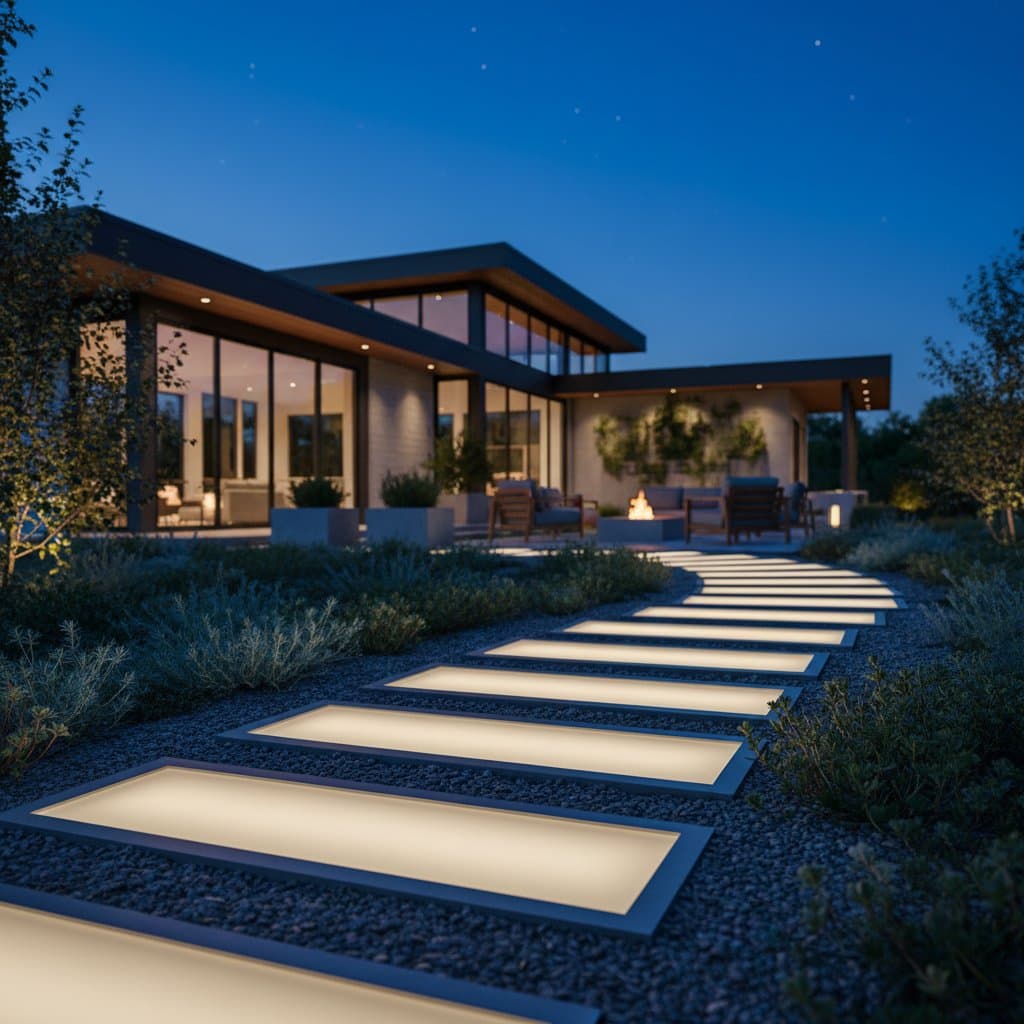
Solar-Charging Pavers: Effortless Yard Illumination
Well-designed outdoor lighting extends beyond mere visibility. It bolsters security, outlines walking routes, and elevates the overall ambiance of your property. Solar-charging pavers merge advanced technology with eco-conscious principles, offering a refined, easy-to-maintain option that harnesses solar power for nighttime landscape enhancement. This comprehensive guide details their mechanics, installation planning, and ongoing care to achieve optimal, enduring results.
Essential Insights
- Cost Breakdown: Expect $15 to $30 per square foot, allocating roughly 60 percent to materials such as pavers and batteries, and 40 percent to labor for excavation and placement.
- Installation Duration: Projects for standard pathways or patios typically require one to two days, depending on site size and complexity.
- Power Storage: Built-in lithium batteries range from 600 to 1000 mAh, supporting eight to twelve hours of steady light output per charge.
- Dimensions to Consider: Common sizes include 4 by 8 inches or 6 by 6 inches, with a uniform 2-inch thickness to accommodate solar components.
- Key Selection Criteria: Factor in local climate, daily sunlight hours, weight-bearing needs, and desired light distribution patterns for best performance.
- Lifespan Expectations: Quality units last five to ten years with proper care, resisting weather elements like rain and frost.
How Solar-Charging Pavers Function
These innovative paving stones incorporate photovoltaic panels and energy-efficient LED lights directly into their structure. By day, the embedded solar cells absorb sunlight and convert it into electrical energy, which charges an internal battery. As dusk falls, built-in sensors detect low light levels and trigger the LEDs, casting a gentle, uniform glow over surfaces like walkways, decks, or entryways without any wiring or external power sources.
This self-sustaining system reduces energy bills and minimizes environmental impact. Users appreciate the automatic operation, which eliminates manual switches or timers. For larger areas, multiple pavers create a cohesive network of light, enhancing both aesthetics and practicality.
Varieties and Ideal Uses
Solar-charging pavers come in several configurations to suit diverse needs.
- Surface-Mounted Options: These attach atop existing surfaces, making them perfect for quick upgrades in low-traffic zones like garden paths or balconies.
- Load-Bearing Integrated Models: Engineered for durability, they withstand vehicle traffic and suit high-use areas such as driveways or garage aprons.
- Ornamental Accent Types: Featuring artistic patterns or colors, they highlight borders, steps, or seating zones, adding visual interest alongside functionality.
Selecting the right type involves assessing traffic volume and design goals. For instance, integrate accent pavers sparingly to avoid overwhelming a minimalist layout.
Site Assessment and Preparation
Success begins with a thorough evaluation of your yard's conditions. Optimal performance demands at least six hours of direct sunlight daily; partial shade from overhangs or foliage may cut charging time by half, leading to shorter light durations.
Conduct a sunlight audit by observing shadow patterns throughout the day. Tools like a solar pathfinder app can help map exposure accurately.
Regulatory Considerations: Local authorities often treat these as non-electrical landscape features, bypassing permits. Verify zoning laws or homeowner association rules to prevent issues, especially for driveway installations.
Choosing Durable Materials: Prioritize pavers with shatter-resistant tempered glass covers, IP65 water resistance ratings to handle heavy rain, and textured tops for slip prevention in wet conditions.
Layout Strategy: Sketch your design on paper or software, aiming for 18- to 24-inch spacing along paths to ensure even coverage without dark spots. For broader patios, cluster units in a grid pattern. Use temporary markers like string or spray paint to outline the area before digging.
Detailed Installation Guide
Follow these steps for a stable, professional-grade setup. Gather tools including a shovel, tamper, level, and broom ahead of time.
- Prepare the Foundation: Clear four to six inches of topsoil and debris. Compact the exposed earth using a plate compactor for stability.
- Layer two inches of coarse gravel, then compact again to create drainage.
- Top with one inch of fine sand, screeding it level with a straight board.
- Position the Pavers: Arrange units per your blueprint, ensuring edges align precisely.
- Intersperse solar pavers with plain ones to distribute light evenly and control costs.
- Insert plastic spacers between pieces to achieve uniform 1/8-inch joints.
- Stabilize the Surface: Fill gaps with polymeric sand, sweeping excess away. Lightly spray water to set the binder, allowing 24 hours to cure.
- Refrain from walking on the area during this period to prevent shifting.
- After a full day of sun, verify each paver activates at nightfall.
For complex sites with slopes, add retaining edges or consult a landscaper to maintain levelness.
Ensuring Reliability and Resolving Issues
Monitor performance closely in the initial weeks. Weekly checks confirm batteries hold charge through full cycles. Dim output often stems from debris buildup; gently wipe panels with a soft, damp cloth and mild soap, avoiding abrasives that could scratch the surface.
Batteries typically require replacement every two to three years, a simple process involving unscrewing the base. Persistent failures may indicate seal breaches allowing water entry; inspect for cracks and apply silicone sealant if needed. In cold climates, store spare units indoors during winter to extend usability.
Sustaining Long-Term Performance
Regular upkeep preserves both appearance and efficiency. Annually inspect for loose joints or faded finishes, re-sanding as necessary. Trim nearby vegetation to prevent shading, and reposition pavers if landscaping changes alter sunlight access.
Invest in protective covers for winter storage in harsh regions. This proactive approach minimizes repairs and maximizes the return on your investment, keeping lights bright season after season.
Choosing Between DIY and Expert Help
Intermediate homeowners with excavation experience can tackle installation independently, saving approximately 30 percent on expenses. Rent equipment like compactors to match professional results. However, for extensive projects or uneven terrain, hire certified landscapers to guarantee structural integrity and warranty compliance.
Weigh your skill level against project scale; a small path suits DIY, while a full driveway benefits from pros.
Strategies for Optimal Results
Orient pavers southward to capture peak solar rays, boosting charge by up to 20 percent. Layer with traditional spotlights for dramatic effects in entertaining spaces. Stockpile a few extra units for prompt replacement after storms, ensuring uninterrupted glow.
By integrating these elements, your yard gains a sophisticated, energy-independent lighting system that enhances daily enjoyment and property value.