
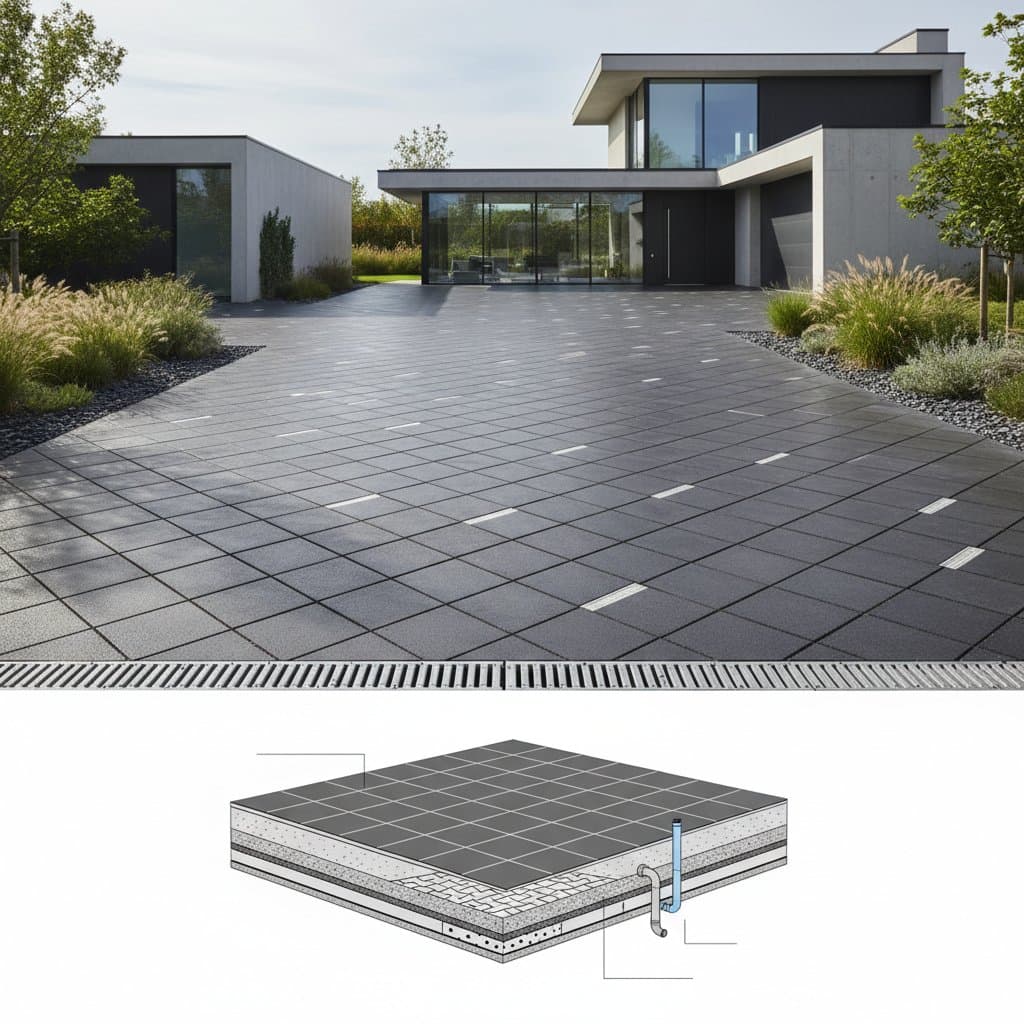
Understanding Smart Solar Pavers for Driveway Enhancement
Smart solar pavers represent an innovative fusion of paving materials and solar-powered lighting, designed to illuminate driveways without the need for extensive electrical infrastructure. These units capture sunlight during the day to power LED lights that activate at night, guiding vehicles and pedestrians while minimizing energy consumption. Beyond aesthetics, they contribute to safety by reducing accidents in low-visibility conditions. However, their performance relies heavily on environmental factors, particularly drainage, which must be addressed before any design or installation begins.
Initial Assessment: Evaluating Your Driveway's Current State
Before selecting solar pavers, conduct a thorough inspection of the existing driveway. Observe the surface after dark to identify areas where visibility poses risks, such as sharp turns or abrupt elevation changes. During rainfall, monitor water movement to detect pooling or inadequate runoff, as these conditions can undermine the pavers' foundation over time.
Key elements to examine include:
- Shadows or reflective glare from current surfaces that could interfere with lighting effectiveness.
- Low-lying areas near edges or seams where water accumulates.
- Signs of instability, such as cracked concrete or shifting sections indicating underlying movement.
- Overall slope direction, ensuring it channels water away from structures like garages or homes.
- Daily sunlight exposure, noting shaded zones from trees or overhangs that might limit solar charging.
To simulate nighttime conditions, use a portable light source to test reflections on the surface. This step reveals opportunities to position solar pavers strategically, achieving even illumination without hotspots or dark patches.
Identifying Potential Issues: Red Flags in Driveway Preparation
Certain indicators suggest underlying problems that could compromise solar paver longevity. Persistent water accumulation beyond a brief period post-rainfall signals drainage deficiencies, potentially leading to erosion or frost damage in colder climates. Structural concerns, like wide fissures or uplifted sections from freeze-thaw cycles, point to base instability that demands correction.
Watch for these warning signs:
- Unstable elements, such as pavers that wobble when stepped on.
- Surrounding landscapes, including grass or mulch, that redirect water onto the driveway.
- Limited sunlight access beneath dense foliage or architectural features.
- Inferior products marketed as solar-compatible, often backed by short warranties and prone to early degradation.
Addressing these early prevents escalated expenses; for instance, overlooked drainage can extend project timelines and labor costs by twofold. Professional evaluation at this stage often uncovers issues invisible to the untrained eye, setting the foundation for a resilient installation.
Cost Considerations and Practical Solutions
The expense of smart solar pavers varies by configuration, from basic standalone LED-integrated bricks to advanced networks with centralized controls. Entry-level options, suitable for retrofitting existing surfaces, typically range from 15 to 25 dollars per square foot, including installation. More sophisticated setups incorporating sensors for automated adjustments, customizable colors, and remote monitoring may cost 40 to 60 dollars per square foot.
Preparation significantly influences the budget. Regrading or reinforcing the base adds 5 to 10 dollars per square foot, while hybrid systems requiring wiring introduce further outlays. Overlaying pavers directly on aged concrete appears economical but frequently results in failure as trapped moisture causes delamination within seasons.
Opt for permeable joint fillers like polymeric sand over impermeable sealants, which can impede water escape and accelerate LED wear from heat buildup. Homeowners often expand the project scope to include adjacent paths or patios; to control costs, map the entire layout upfront and procure materials in unified batches for consistency in output and appearance.
Deciding Between Repair and Full Replacement
For driveways with sound drainage and minimal surface flaws, targeted repairs suffice. Focus on replacing only high-risk segments where lighting enhances navigation, then stabilize adjacent areas by refreshing joints and compacting the sub-base prior to paver placement.
In cases of widespread cracking or uneven settling, opt for complete resurfacing. This approach allows seamless integration of solar pavers into a freshly prepared base, promoting uniform support and precise alignment. Select heat-resistant recessed fixtures for asphalt applications and thickness-matched units for concrete or natural stone to maintain a cohesive pattern.
Consistency matters: sourcing pavers from a single provider ensures uniform light output, color rendering, and compatibility, avoiding a disjointed visual result.
Assembling the Right Team and Installation Process
Engage a contractor experienced in modular or permeable paving systems, inquiring about their track record with solar-integrated projects. Electricians become essential for wired hybrids, while landscape professionals can refine designs involving transitional zones to gardens or walkways.
A skilled team verifies soil compaction levels, establishes proper drainage gradients, and sequences paver laying to minimize damage risks. Professional oversight typically increases costs by 10 to 20 percent but averts costly revisions from improper execution. Plan logistics carefully, timing material deliveries to avoid heavy machinery compacting completed areas, and retain packaging until full nighttime functionality is confirmed.
Strategic Planning: Prioritizing Key Elements
Safety takes precedence in placement decisions. Install lights along perimeters, curves, and access points to delineate paths clearly. Highlight material shifts, such as from loose gravel to solid pavers, using consistent illumination like neutral white or warm amber tones to avoid disorienting glare.
Incorporate aesthetic enhancements only after core safety features prove effective; dynamic color options seldom justify their premium for functional gains. Allocate resources toward robust solar panels and weatherproof enclosures rather than elaborate automation.
Design with longevity in mind by selecting modular systems featuring accessible batteries and interconnects. Such choices simplify isolated repairs, preserving the overall investment without necessitating wholesale overhauls.
Step-by-Step Implementation Guide
Follow this sequence to ensure a flawless outcome:
- Assess and adjust site drainage, establishing slopes that promote efficient water shedding.
- Rectify or renew the sub-base to support weight and facilitate percolation.
- Install any necessary conduits or wiring for enhanced system capabilities.
- Position solar pavers with uniform gaps and alignments for optimal performance.
- Verify illumination effectiveness under dark conditions prior to joint treatment.
- Complete perimeter edging and restraints as the final step.
Allow adequate time for curing and settling; premature use risks displacing components or weakening bonds before they achieve full integrity.
Ensuring Long-Term Durability and Value
As one seasoned paving expert from Ontario observes, 'Moisture and movement kill most solar pavers, not sunlight.' Proactive measures to exclude water and sustain base firmness extend service life well beyond standard guarantees. Regular inspections for joint integrity and solar panel cleanliness, combined with prompt addressing of minor shifts, safeguard the system's efficiency. This disciplined approach not only enhances daily usability but also delivers substantial returns through reduced energy bills and fewer interventions, transforming your driveway into a reliable, low-maintenance asset.