
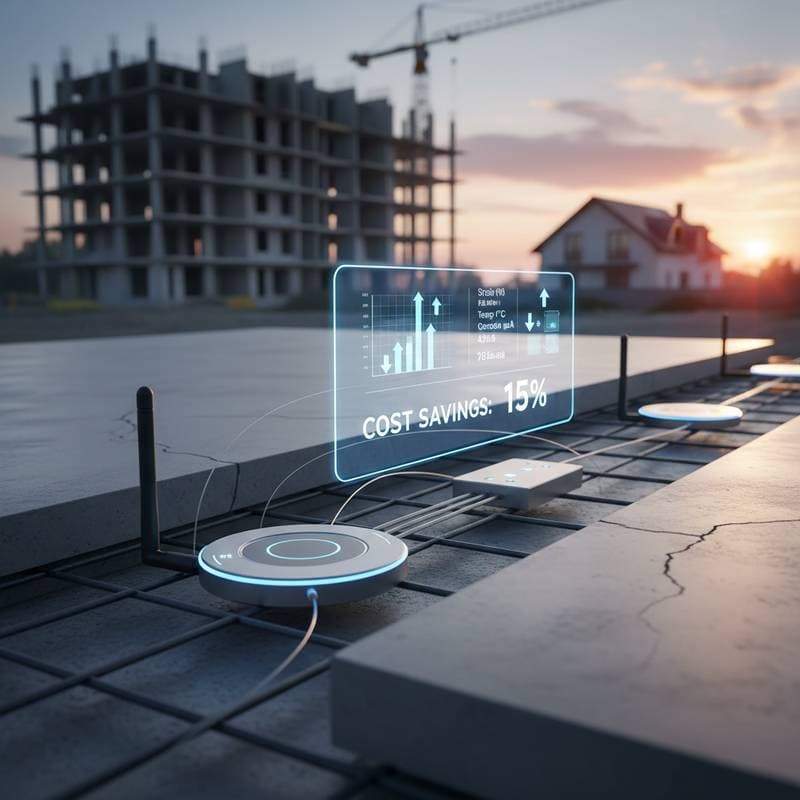
Smart Concrete with IoT Sensors for Structural Health Monitoring
Smart concrete integrates Internet of Things sensors directly into building materials. This technology enables continuous monitoring of strain, temperature, and corrosion. Builders and property owners receive real time data that supports early detection of structural issues. The approach improves safety while extending the service life of foundations, bridges, and other concrete elements.
Key Considerations
- Average installed cost ranges from 140 to 200 dollars per cubic yard, with sensors adding 12 to 18 percent to total project expense.
- Typical sensor density equals one unit per 6 to 10 cubic feet of concrete.
- Data transmission occurs every 1 to 10 minutes for active projects or hourly for long term tracking.
- Sensor placement adds 2 to 4 hours per 100 square feet during the pour.
- Project scale, site conditions, and data handling capacity determine overall feasibility.
Planning Requirements and Cost Factors
Evaluate the intended use of the structure and the specific performance data required before specifying smart concrete. Large infrastructure projects gain the greatest return, yet residential slabs and foundations can adopt smaller sensor arrays with similar benefits.
Permits and Compliance
Local authorities generally classify smart concrete under standard concrete permits. Wireless transmission components may trigger additional electrical or communications reviews. Confirm frequency ranges and power supply details with the building department prior to construction.
Cost Breakdown
Project expenses vary with sensor quantity, network coverage, and storage needs. A representative allocation appears below.
- Concrete and reinforcement: 100 to 130 dollars per cubic yard.
- Embedded sensors: 20 to 40 dollars per cubic yard.
- Installation and calibration: 15 to 25 dollars per cubic yard.
- Data hardware and software: 5 to 10 dollars per cubic yard.
Residential work typically increases overall cost by 10 to 20 percent. Commercial installations may reach 25 percent higher initial outlay, offset by reduced inspection and repair expenses over time.
Step by Step Installation Process
1. Design the Sensor Layout
Map sensor locations on structural drawings with emphasis on high stress areas such as joints and mid span locations. Maintain consistent spacing and verify network connectivity for each device.
2. Secure Sensors Before Pouring
Fasten sensors to reinforcement with non conductive ties. Position units at least 2 inches from exposed surfaces. Test signal strength prior to concrete placement.
3. Pour and Consolidate Concrete
Place concrete carefully around sensors and use vibrators no closer than 6 inches from sensor bodies. Maintain slump between 4 and 6 inches and record ambient conditions during the pour.
4. Calibrate the System
Record baseline readings after initial set. Allow 48 hours for stabilization before continuous logging begins. Confirm reliable transmission from every sensor to the central hub.
Ensuring Quality and Performance
Monitoring starts once concrete reaches design strength. Sensor data validates curing progress and identifies early deviations from expected behavior.
Curing and Validation
Curing periods range from 7 to 28 days. Internal temperature and moisture readings allow adjustments to curing methods and confirm strength development.
Inspection and Data Analysis
Automated alerts flag unusual strain or temperature changes. Monthly review of trends reveals settlement or corrosion risks before surface evidence appears.
Troubleshooting Common Challenges
Weak or Lost Signal
Install signal repeaters or wired gateways when concrete attenuates wireless transmission. Position antennas outside dense reinforcement cages.
Sensor Drift or Faulty Readings
Compare outputs across neighboring sensors to isolate anomalies. Replace affected units during scheduled surface maintenance when access is available.
Power Interruptions
Check battery levels quarterly on low power units. Solar powered gateways provide reliable supply for permanent installations.
Maintenance and Long Term Care
Smart concrete requires routine data review rather than frequent physical intervention. Accurate interpretation of sensor output drives timely repairs.
Regular Inspection Checklist
- Review strain and temperature trends monthly.
- Verify gateway power and connectivity quarterly.
- Examine surfaces annually for cracks exceeding 1/8 inch width.
- Recalibrate sensors on a five year cycle.
Lifespan and Durability
Properly maintained smart concrete structures achieve 50 to 75 year service lives. Sensor networks typically operate for 20 to 30 years before replacement through drilled access points.
Professional Involvement and Practical Next Steps
Most installations benefit from collaboration with engineers experienced in sensor integration. Begin with a limited test section to confirm connectivity and data quality. Cloud analytics platforms simplify visualization of stress patterns over time. Retain calibration records alongside structural drawings for future reference. Integrate sensor alerts into existing maintenance schedules to optimize repair timing.
Long Term Benefits of Smart Concrete
Continuous internal monitoring delivers early warnings that reduce emergency repairs and extend asset life. Property owners gain measurable reductions in maintenance costs while improving overall safety and reliability.