
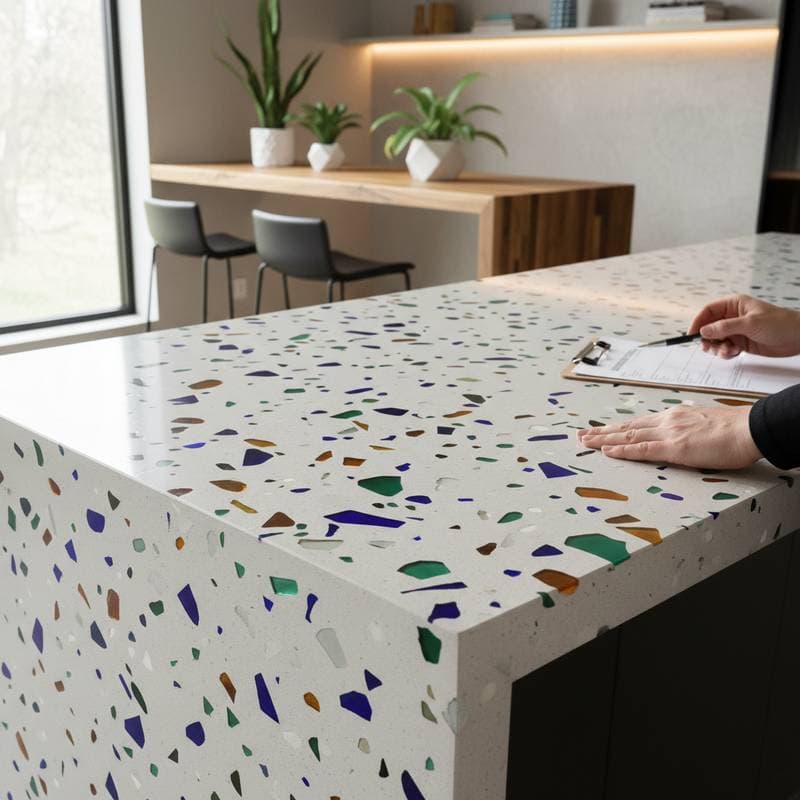
Quick Overview
Recycled glass concrete represents a shift toward sustainable materials in high-end interiors and construction projects. This innovative surface diverts glass from landfills, delivers the visual appeal of terrazzo with added sparkle, and achieves superior performance when properly formulated. Key challenges include ensuring mix consistency, preventing surface scaling, and managing polishing expenses to realize its full potential.
Essential Checks Before Specification
Examine samples thoroughly in a showroom or on-site to evaluate recycled glass concrete's suitability for your project. Lighting plays a critical role in revealing the material's true character.
- Observe samples under varied lighting conditions. Colors and densities in the glass particles alter noticeably with light changes.
- Glide your hand over completed slabs. The surface must exhibit even texture free of any sharp protrusions.
- Assess the binder's transparency. A hazy matrix typically indicates excessive cement paste or inadequate polishing.
- Inquire about the glass origin. Post-consumer sources differ in hardness; ungraded material risks pop-outs during use.
- Verify the sealer category. Penetrating options provide stronger resistance to stains compared to topical films.
Visiting the supplier in person yields insights beyond photographs. Step back to detect mottling or irregular sheen, which often stem from inconsistent grinding or improper curing processes.
Warning Signs to Avoid
Certain indicators signal potential problems with recycled glass concrete that could lead to higher costs and diminished durability.
- Edge chipping or cracking after minimal handling
- White powdery residue or dusting on hardened surfaces
- Air pockets exceeding the size of a pea
- Irregular glass particle sizes lacking proper gradation
- Color variations across panels from identical batches
- Excessive epoxy fillers masking voids or loose glass aggregates
Addressing these early prevents escalation. A substandard mix may require twice the effort during final finishing stages.
Common Repairs and Estimated Expenses
Installed costs for recycled glass concrete range from 15 to 40 dollars per square foot, influenced by polish degree and binder composition. Basic ground finishes fall at the lower end, while mirror-like polishes or bespoke color blends command premium pricing.
- For surface scaling, grinding followed by resealing costs 3 to 6 dollars per square foot.
- Pop-outs or voids require resin patching and regrinding, at 8 to 12 dollars per square foot.
- Uneven gloss results from suboptimal tooling; repolishing with graded grits adds 5 to 10 dollars per square foot.
Surface coatings may temporarily conceal flaws, but they fail over time. Focus on correcting the underlying mix and substrate for enduring results. Efforts to match colors across batches often expand project scope unexpectedly.
Deciding Between Repair and Replacement
Opt for repair when the bond between matrix and glass remains intact. Reginding and resealing restores functionality and appearance effectively.
Replace entire panels only if delamination or structural failure occurs. For legacy terrazzo surfaces, overlaying with recycled glass concrete demands caution. Adhesion relies on surface profiling and moisture management; conduct a test patch on a limited area prior to full application.
Assembling the Right Team and Workflow
Engage a concrete specialist experienced with recycled aggregates to oversee finishing. A general contractor handles coordination of curing environments and polishing timelines.
For projects emphasizing aesthetic value, consult an architect from the outset to guide aggregate selection and exposure levels. Specifiers should document mix ratios, glass gradations, and sealer formulations precisely. Vetting multiple suppliers in parallel minimizes compatibility issues. Professional oversight typically increases costs by 10 to 20 percent upfront but averts significant overruns downstream.
Strategic Priorities for Project Success
Focus on decisions that maximize environmental and performance benefits.
- Source local recycled glass to minimize transportation-related emissions.
- Minimize binder usage to lower cement volume and associated carbon emissions.
- Select matte or satin finishes, which conceal everyday wear more effectively than high-gloss alternatives.
Avoid elaborate decorative elements like inlaid borders or logos. Such features elevate labor demands without enhancing longevity.
Planning Budget and Installation Sequence
Integrate recycled glass concrete into the overall building envelope and finishing schedule from the beginning.
- Verify the condition of the structural slab or subbase.
- Pour the mix and allow curing in controlled humidity.
- Perform grinding and polishing once full strength develops.
- Apply sealant prior to installing adjacent elements like cabinetry.
Effective moisture management proves essential. Steer clear of placement over wet substrates or poorly ventilated areas. Unresolved water issues accelerate surface degradation.
Sustaining Long-Term Performance
Maintain the surface using pH-neutral cleaners and non-abrasive tools. Reapply sealant periodically based on foot traffic levels. Regularly examine joints and edges for signs of water ingress. Consistent care upholds the material's clarity, depth, and eco-friendly allure, ensuring it delivers lasting value as a premium sustainable choice.