
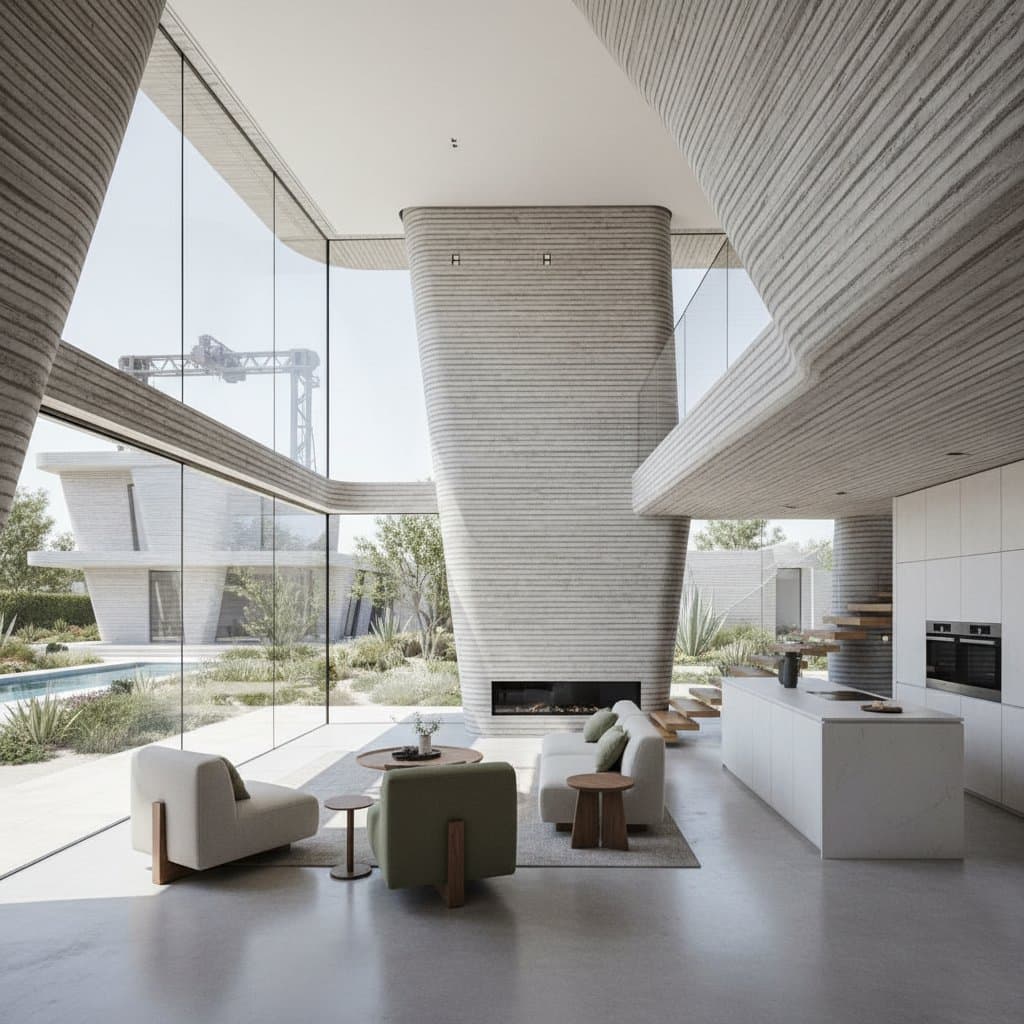
3D-Printed Concrete Homes Transform Suburbs in 2026
3D-printed concrete homes alter suburban expansion and provide families with viable affordable housing options. Specialized printers extrude a cement-based mixture layer by layer to construct these residences. The automated process ensures speed and uniformity while minimizing traditional manual labor in construction.
Understanding the Technology
A 3D-printed concrete home relies on a robotic printer that deposits concrete according to a digital blueprint. This method forms walls, foundations, and structural elements without formwork or framing. After the concrete cures, crews add roofs, doors, windows, and interior finishes in a manner similar to conventional builds.
Advantages and Challenges
Advantages
- Rapid Construction: Wall systems complete in days rather than weeks.
- Reduced Labor: Minimal workforce requirements cut expenses and timelines.
- Versatile Designs: Digital files enable curved walls and bespoke shapes effortlessly.
- Long-Term Strength: Concrete withstands fire, decay, and infestations.
- Eco-Friendly Practices: Precise material application generates less waste.
Challenges
- Surface Finishing: Printed exteriors require smoothing or cladding for aesthetic appeal.
- Site Constraints: Bulky printers struggle on compact suburban plots.
- Material Constraints: Flowable yet load-bearing mixes limit variety.
- Regulatory Hurdles: Building authorities adapt to inspection protocols for printed structures.
- Initial Investment: High equipment costs favor specialized firms.
Cost Breakdown
Wall materials for printed concrete typically cost $25 to $45 per square foot. Complete homes, including plumbing, roofing, and interiors, range from $150 to $250 per square foot. Factors such as design intricacy, printer model, regional wages, and site proximity influence final pricing. Basic single-story designs with nearby material access prove most economical, whereas multi-level or sculpted forms increase expenses.
Durability and Upkeep
Printed concrete walls endure 50 years or longer with basic maintenance. Protect surfaces from water penetration and fractures to preserve integrity. Inspect sealants near windows and doors annually, and repair minor cracks using flexible masonry sealants.
Routine cleaning involves low-pressure water and mild detergent rinses. Apply breathable sealers periodically to prevent staining and efflorescence.
Essential Specifications
Verify these details with builders prior to finalizing a printed concrete home:
- Compressive Strength: Minimum 3,000 psi for residential walls.
- Mix Composition: Inclusion of fibers or additives to mitigate cracking.
- Printer Accuracy: Layer precision within one-eighth inch.
- Thermal Performance: Integration of insulation inserts or foam cores in walls.
- Climate Suitability: Mix compliance with local freeze-thaw requirements.
Site Preparation Essentials
Even printed homes demand a sturdy foundation and thorough site readiness. Provide stable terrain, unobstructed access, and steady power for the printer. Maintain foundation levelness under a quarter-inch deviation.
Prioritize drainage with a minimum quarter-inch slope per foot from walls. In regions prone to frost, extend foundations below the frost line. Contact utilities before digging, and secure the printer's operational zone with fencing.
Step-by-Step Construction Process
- Digital Design: Architects develop 3D models using specialized printing software.
- On-Site Assembly: Position and calibrate the printer on a prepared, level surface.
- Mix Preparation: Load concrete into the pumping apparatus.
- Extrusion Phase: Deposit continuous layers to shape walls and apertures.
- Curing Period: Allow several days for the structure to harden.
- Completion Tasks: Install roofing, insulation, utilities, and finishes.
Inspect each phase for alignment, thickness, and curing quality.
Wall Pattern Choices
Various configurations suit different needs:
- Solid Construction: Offers maximum strength and straightforward execution.
- Hollow Cores: Accommodate insulation and conduits.
- Organic Contours: Enhance aesthetics while optimizing material use.
- Textured Surfaces: Retain visible layers for decorative effect.
Select patterns aligned with environmental demands and regional aesthetics. Smooth finishes convey modernity, whereas textured ones conceal small flaws.
Professional Installation Recommended
3D printing demands professional handling due to equipment complexity, mix formulation, and safety protocols. Owners may oversee design, finishing, or landscaping, but certified experts should manage the structural printing. Engage professionals for intricate designs, multi-story projects, or rigorous code evaluations. Limited DIY applications suit outbuildings like sheds, not primary residences.
Addressing Potential Issues
Cracking: Results from inconsistent curing or mix inconsistencies. Seal minor fissures with flexible mortar; assess major ones structurally.
Voids in Surfaces: Arise from poor layer adhesion. Repair with matching mortar prior to sealing.
Wall Irregularities: Stem from printer misalignment. Grind protrusions and re-level before proceeding.
Moisture Migration: Occurs without proper vapor barriers. Install capillary breaks or base epoxy coatings.
Adapting to Local Conditions
Printed concrete excels in arid climates, resisting ultraviolet damage and deformation. For freeze-thaw areas, incorporate air-entrained mixes and surface sealants to curb water uptake. Coastal settings require anti-corrosion reinforcements against salinity.
In high-wind or earthquake zones, integrate vertical steel or fiber reinforcements for enhanced stability. Ensure designs satisfy regional wind and seismic standards.
Comparable Building Methods
For those hesitant about printing due to novelty or approvals, explore these alternatives:
- Insulated Concrete Forms: Foam blocks filled with poured concrete, straightforward for inspections.
- Precast Panels: Site-delivered factory elements, quicker than framed builds yet transport-intensive.
- Structural Insulated Panels: Lightweight options with superior insulation but reduced mass.
- Masonry Blocks: Time-tested systems familiar to regulators, though labor-intensive.
These approaches balance velocity, expense, and established practices. Printed concrete delivers the swiftest custom shells on-site.
Protecting Your Printed Home
Post-construction, focus on moisture management and exterior safeguards. Maintain clear gutters and route water from foundations. Refresh sealers or coatings per builder guidelines. Consult print schematics before modifications to avoid compromising reinforcements.
Steps to Build Your Own
3D-printed concrete homes transition from innovation to reality, yielding resilient, cost-effective dwellings with reduced environmental impact. Identify qualified contractors, secure regulatory clearance, and arrange site logistics upfront. As adoption grows in suburbs, anticipate accelerated timelines, diminished expenses, and expanded creative possibilities. This precision-driven method equips families with sturdy, efficient living spaces.