
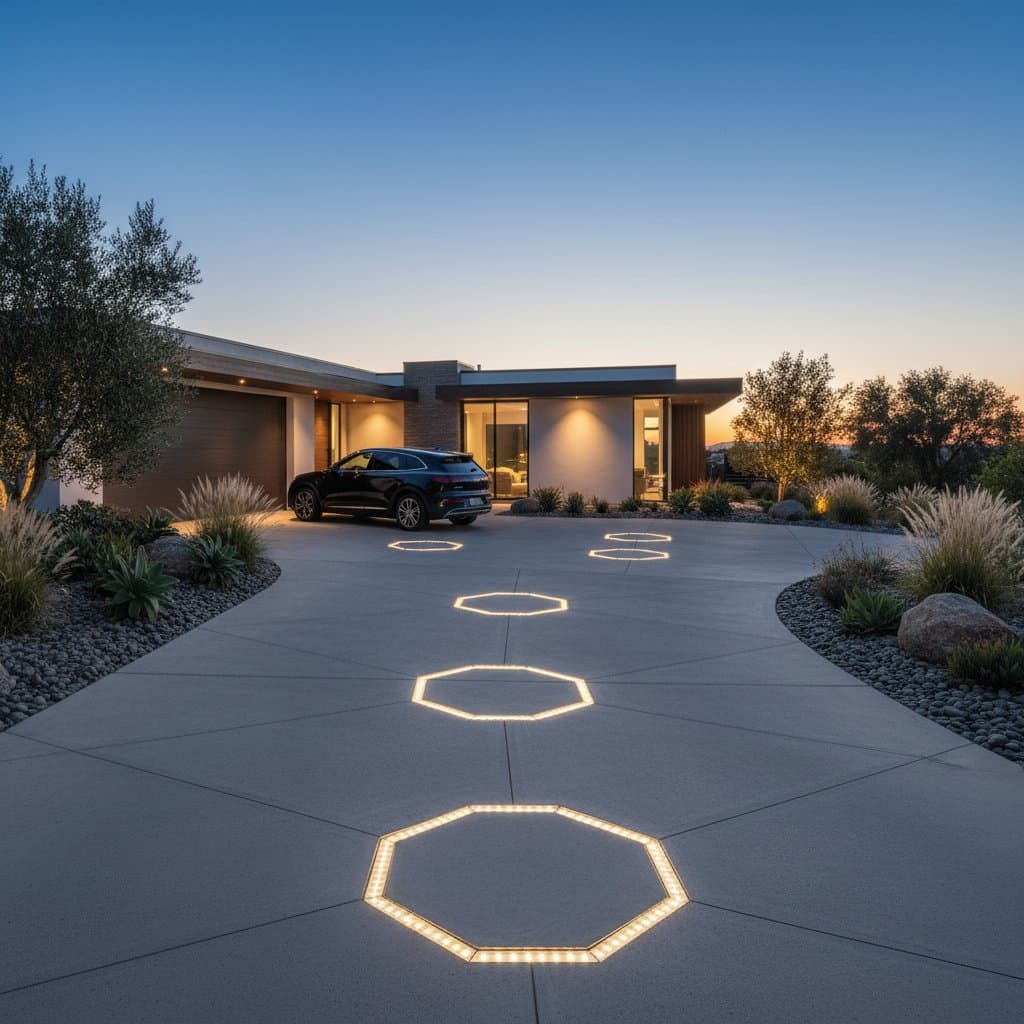
Solar Pavers: Effortless Nighttime Driveway Lighting
Solar pavers consist of paving blocks embedded with solar-powered LED lights. These units absorb sunlight during the day, store energy in compact batteries, and activate automatically at dusk. They deliver gentle, secure, and energy-independent illumination to driveways, patios, and pathways, eliminating the need for wiring or external electricity sources.
Each paver merges the resilience of conventional paving with intelligent lighting features. The blocks align with standard hardscape configurations, adhere to typical paver sizes, and support moderate vehicle traffic. Property owners gain a sturdy surface paired with illumination that operates solely on solar power.
Costs
The material expense for solar pavers generally falls between $20 and $45 per square foot, varying by aesthetic design, construction quality, and LED capabilities. Complete installation costs range from $30 to $60 per square foot, encompassing base preparation, edge restraints, and surface leveling.
Several elements can elevate expenses:
- Advanced LEDs with high output or color-shifting functions
- Thicker, reinforced models designed for vehicle weight
- Intricate patterns or blended layouts
- Challenging site conditions, such as limited access or substantial excavation
Projects on pre-existing, stable foundations often incur lower fees. Incorporating solar pavers selectively into an established driveway presents a budget-friendly method to introduce lighting.
Key Specifications to Evaluate
Prospective buyers must verify essential technical attributes prior to purchase:
- Load rating: Ensure compliance with standards for light vehicular traffic in driveway applications.
- Ingress Protection (IP) rating: Select IP67 or superior for robust defense against water and dust.
- Battery type: Opt for lithium iron phosphate (LiFePO4) due to its extended lifespan and thermal reliability.
- LED brightness: Assess in lumens, with 10 to 40 lumens per unit suitable for driveway illumination.
- Color temperature: Select warm white for a inviting ambiance or cool white for enhanced clarity.
- Size compatibility: Verify alignment with common paver measurements, such as 4x8 inches or 6x9 inches, and thicknesses from 2 to 3 inches.
Purchase additional units beyond requirements to account for potential damage and eventual replacements, preserving uniform aesthetics.
Installation Process
The placement of solar pavers mirrors that of traditional pavers, with targeted verifications to optimize performance.
- Design the layout and illumination scheme. Designate positions for lighted pavers to achieve balanced distribution.
- Excavate and ready the foundation. Clear soil to accommodate the base, bedding material, and paver depth.
- Compact the base material. Layer crushed stone in 3-inch increments and solidify each level thoroughly.
- Apply the bedding course. Distribute and level approximately 1 inch of sand for even support.
- Position the pavers. Commence from a fixed straight edge. Integrate solar and conventional pavers according to the plan.
- Verify alignment. Maintain uniform joint spacing and level surfaces throughout.
- Apply edge restraints. Fasten borders to inhibit movement.
- Joint filling. Introduce polymeric sand into crevices and consolidate lightly.
- Validate functionality. Allow complete solar charging under sunlight, then test each unit's operation.
- Final preparation. Clean the surface with a gentle rinse and refrain from sealing for one week if polymeric sand is used.
Absence of wiring obviates electrical permits, though verify if local regulations mandate inspections for solar installations.
DIY Installation Versus Professional Services
DIY projects suit scenarios where:
- The surface area measures less than 200 square feet.
- The design remains straightforward without vehicular demands.
- An existing base offers compaction and flatness.
- Essential equipment, including a plate compactor, level, and rubber mallet, is available.
Professional assistance is advisable when:
- The driveway accommodates vehicles or substantial loads.
- The ground features clay composition or inadequate drainage.
- Adjustments for slopes or boundary features are necessary.
- Integration with broader landscape illumination is desired.
Experts can assess soil compaction, evaluate drainage, and execute precise cuts for refined patterns.
Considerations for Regional Climates
Environmental conditions influence solar paver efficacy significantly.
- Cold climates: Batteries discharge more rapidly in subfreezing temperatures. Prioritize models certified for extreme low temperatures.
- Hot climates: Intense heat may degrade battery longevity. Lighter surface colors mitigate thermal accumulation.
- Coastal environments: Salt air accelerates corrosion on metal components. Choose stainless steel or composite enclosures.
- High-precipitation areas: IP67 or greater ratings safeguard against water infiltration.
- Snow-prone regions: Install pavers with slight recession to evade plow damage while ensuring light visibility.
Align product features with site-specific conditions during selection.
Maintenance Practices
Solar pavers demand minimal upkeep, yet routine care sustains optimal function.
- Periodic cleaning: Gently clean solar lenses using a soft cloth and mild soap solution to maximize energy capture.
- Battery renewal: Consult the manufacturer's instructions for accessing sealed compartments via screws or clips. Substitute with equivalent battery specifications.
- Surface protection: For mixed installations with standard pavers, apply sealant biennially to prevent discoloration. Exclude solar faces from sealant application.
- Debris management: Clear snow and obstructions promptly to facilitate solar exposure during daylight.
- Annual review: Examine all units at twilight to ensure reliable activation and sustained performance overnight.
Consistent attention guarantees enduring reliability and aesthetic appeal.
Expert Recommendations for Optimal Results
- Pre-installation testing: Fully charge and inspect each paver's illumination prior to placement.
- Brightness grouping: Account for minor production variances by clustering similar-output units.
- Initial charging: Expose new pavers to unobstructed sunlight for a full day before deployment.
- Spare inventory: Retain extras from the original production run to match replacements seamlessly.
- Safety protocols: Don gloves during handling, employ dust masks for any cutting, and adhere to equipment safety guidelines.
Thorough preparation minimizes corrections and promotes uniform lighting.
Implementing Your Solar Paver Project
Commence by surveying your driveway to pinpoint illumination priorities. Determine the quantity and placement of solar pavers for maximum impact. Evaluate options based on ratings, load tolerances, and lighting tones. Acquire a trial set to assess performance and compatibility prior to a comprehensive purchase.
This approach yields a secure, eco-conscious upgrade that elevates your property's nighttime usability and curb appeal.