
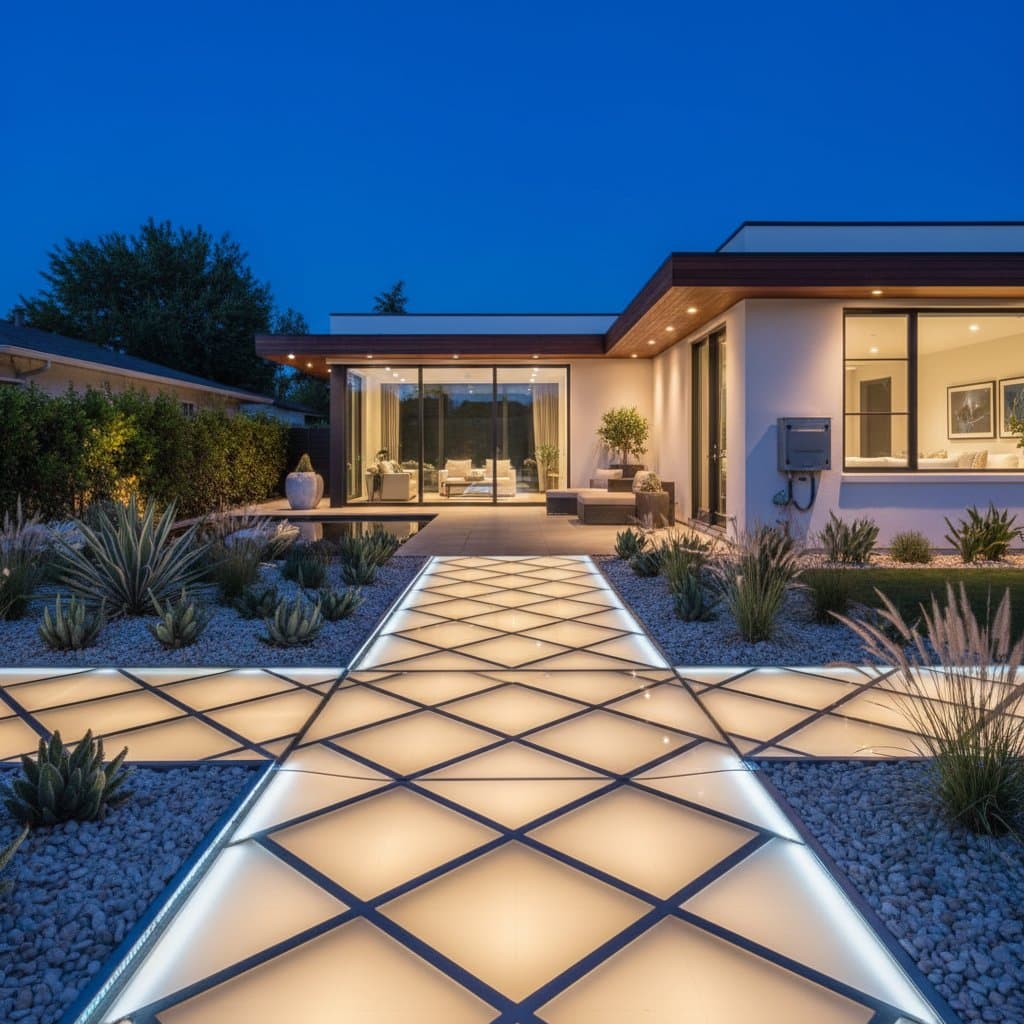
Solar Pavers: Walkways That Power Your Outdoor Yard
Skill Level: Intermediate
Building a solar paver walkway merges aesthetic appeal with renewable energy production. This project turns an ordinary path into a functional surface equipped with photovoltaic cells that capture sunlight. The generated electricity can illuminate outdoor spaces, charge tools, or integrate with your home's power system. This guide details the mechanics of solar pavers, evaluates DIY feasibility, and provides comprehensive steps for planning, construction, and upkeep to achieve a professional result.
Project Overview
Solar paver walkways feature interlocking units that blend robust materials with built-in solar technology. These pavers absorb sunlight throughout the day, store the energy in an attached battery, and distribute it to light fixtures or other low-energy elements. The outcome is a pathway that promotes safety, boosts visual interest, and minimizes reliance on traditional power sources.
Reality Check: This endeavor suits those with intermediate skills. Allocate several days for tasks ranging from site preparation to electrical setup. The work involves handling substantial weights, accurate measurements, and cautious electrical management. Enlist assistance for transporting materials and ensuring proper alignment. For any wiring that exceeds basic kits, consult a licensed electrician.
Understanding Solar Pavers
Solar pavers represent an innovative category of energy-producing landscapes. Individual units house compact solar cells protected by a durable layer. Sunlight striking these cells produces electricity, which activates embedded lights or transfers to a central hub and storage unit.
Types and Applications
- Integrated Lighting Pavers: These include self-contained LED illumination, forming a luminous trail after dark. They connect via low-voltage lines and prove straightforward for DIY projects.
- Power-Generating Pavers: Built for greater energy yield, they direct output to a communal battery or inverter. Such setups demand electrical expertise and typically warrant professional oversight.
- Hybrid Pavers: These merge pathway lighting with modest power creation. They excel in ornamental routes, patios, and entrances where subtle glow enhances ambiance.
Why Solar Pavers Matter
Conventional path lighting relies on buried cables or standalone solar units prone to displacement or malfunction. Solar pavers embed generation directly into the walking surface, safeguarding internals from harm and maintaining a seamless appearance. They eliminate excess cabling, improve visibility for safer navigation, and support eco-friendly landscaping.
Critical Decision Point
Opt for DIY if your setup involves low-voltage elements or ready-to-assemble kits with preset wiring. Systems linking to household circuits, accommodating sizable batteries, or necessitating protective conduits require an electrician's intervention. Likewise, designs with extensive foundational modifications or support walls benefit from expert assessment.
Planning Your Solar Paver Walkway
Thorough preparation forms the foundation of a high-performing, long-lasting installation. Address site conditions and material selections to align with your environment and goals.
Assessing the Site
Begin by examining key attributes:
- Sun Exposure: Select locations with four to six hours of unobstructed sunlight each day. Shadows from trees or structures diminish output significantly.
- Drainage: Steer clear of depressions that collect moisture. Electrical integrity hinges on keeping components dry.
- Slope and Soil: Mild inclines work well, though steeper areas call for boundary supports. Firm, well-compacted earth provides the ideal underlayer.
Measurements to Take
Determine the path's dimensions, including straight segments and bends. Outline contours using garden hose or taut string. Calculate paver quantities with a 10 percent buffer for adjustments and spares.
Environmental Factors to Consider
In zones prone to freezing and thawing, incorporate deeper foundations and superior water runoff. Arid regions demand materials that resist ultraviolet degradation to avoid discoloration. Seaside installations should use rust-resistant hardware to withstand salt exposure.
Choosing Materials
Option 1: Glass-Faced Solar Pavers
- Description: A clear, hardened glass overlay encases the solar elements.
- Pros: Optimal sunlight capture and elegant finish.
- Cons: Potential slipperiness in rain; demands gentle placement.
- Cost: Higher end.
- Skill Level: Intermediate to advanced.
Option 2: Resin Composite Solar Pavers
- Description: A tough resin coating integrates the solar components.
- Pros: Reduced weight, simple customization, enhanced grip.
- Cons: Marginally less efficient energy conversion.
- Cost: Moderate.
- Skill Level: Beginner to intermediate.
Option 3: Concrete-Based Solar Pavers
- Description: A solid concrete frame houses the solar insert.
- Pros: Exceptional durability and harmony with existing hardscapes.
- Cons: Increased heft and cutting difficulty.
- Cost: Budget-friendly.
- Skill Level: Intermediate.
Gathering Tools and Materials
Hand Tools
- Tape measure for precise marking
- Level to confirm evenness
- Rubber mallet to position units firmly
- Masonry chisel and hammer for edge shaping
Power Tools
- Circular saw fitted with a diamond blade for clean cuts
- Plate compactor, available for rent, to solidify the foundation
- Drill equipped with a masonry bit for securing borders
Materials List
- Solar pavers, including 10 percent surplus
- Aggregated gravel for the subbase and sand for leveling
- Perimeter restraints and fastening spikes
- Specified low-voltage cables or connectors
- Weed-barrier fabric for soil separation
Pro Tip: Acquire extra pavers to account for inevitable damage during handling and fitting.
Compliance Considerations
Verify municipal regulations and community guidelines regarding outdoor electrical and lighting additions. Contact utility services via 811 to map subsurface lines prior to excavation. Engage a qualified electrician for any home grid connections.
Step-by-Step Installation
Follow these sequential steps to construct a stable, efficient walkway.
- Excavate the Walkway Area. Clear topsoil to approximately 6 inches deep. Ensure uniform depth across the entire footprint.
- Install Landscape Fabric. Position the material to suppress vegetation and reinforce stability.
- Add the Gravel Base. Distribute 4 inches of gravel in lifts, compacting each layer thoroughly for load-bearing strength and water permeability.
- Add Bedding Sand. Apply a 1-inch layer of sand, leveling it flat with a screed board.
- Lay the Solar Pavers. Commence at a fixed point, adjoining each unit tightly while preserving uniform gaps.
- Check Alignment. Periodically assess rows with a string and level to maintain straightness and plumb.
- Make Cuts as Needed. Shape border pieces with a diamond-bladed saw for seamless integration.
- Install Wiring. For kit-based systems, link under-paver cables per the producer's manual, ensuring all junctions remain waterproof.
- Add Edge Restraints. Secure borders using spikes to prevent shifting.
- Fill Joints. Brush polymeric sand or fine filler into crevices, compacting to lock units.
- Compact the Surface. Pass a rubber-matted compactor over the area to embed pavers securely.
- Connect the Power System. Attach leads to the controller or battery as diagrammed. Activate and verify functionality prior to concealment.
When to Call a Professional
Delegate the project if your design incorporates high-voltage integration, extensive excavation, or custom electrical routing. Professionals ensure code adherence, structural integrity, and optimal energy performance, safeguarding your investment.
Maximizing Long-Term Performance
Routine maintenance preserves efficiency and appearance. Clear debris from surfaces quarterly to maintain solar exposure. Inspect seals and connections annually for wear, especially after severe weather. Reapply joint sand as needed to prevent erosion. With proper care, your solar walkway delivers years of reliable, green energy while elevating your outdoor space.