
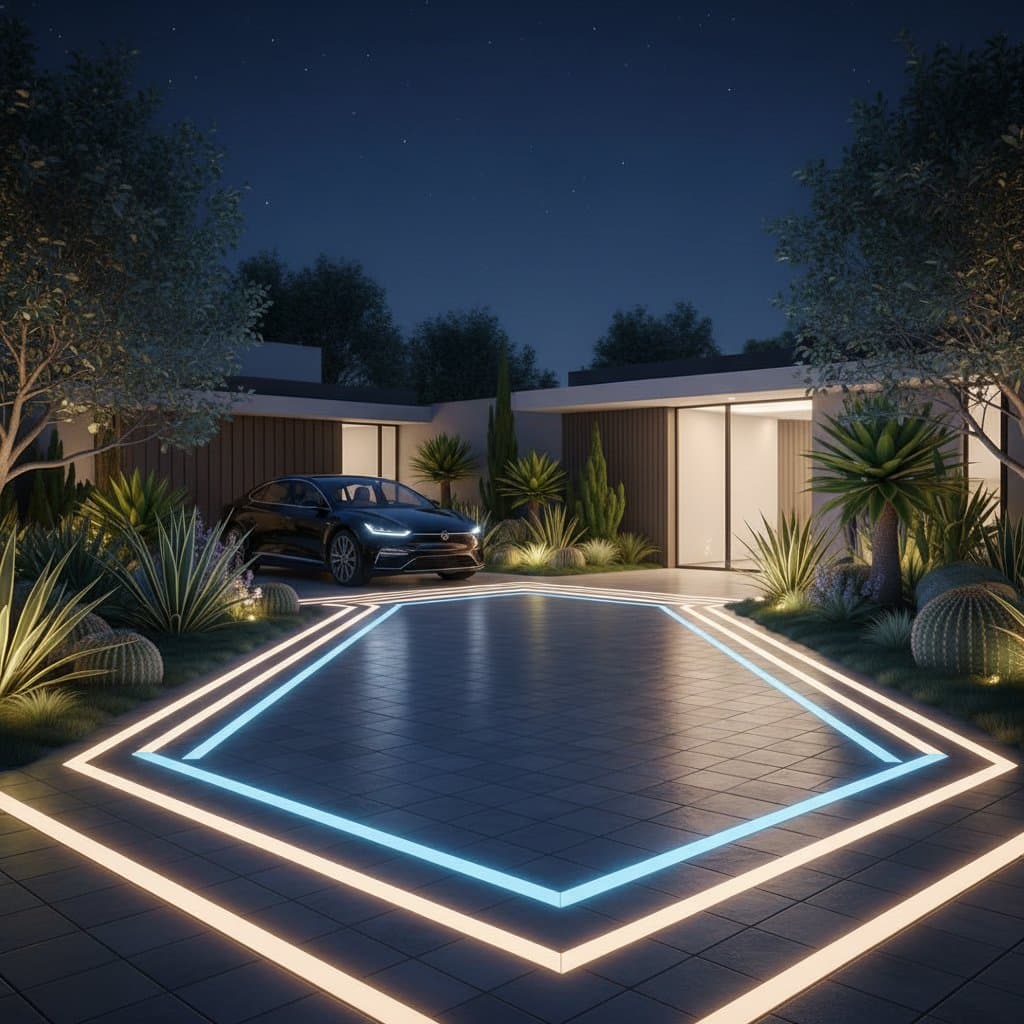
Solar Pavers Light Up Driveways Sustainably
Solar pavers represent innovative outdoor paving units embedded with solar-powered LED lights. These units absorb sunlight throughout the day and emit a steady glow at night, effectively delineating driveways, walkways, and patios. By leveraging renewable energy, solar pavers minimize reliance on traditional power sources and simplify installation by eliminating the need for extensive wiring.
Homeowners appreciate how these pavers combine practical illumination with aesthetic appeal. They create well-lit pathways that guide visitors safely while contributing to a cohesive landscape design. As sustainable alternatives gain popularity, solar pavers offer a forward-thinking solution for modern outdoor environments.
Pros and Cons
Pros
- Harness free solar energy to eliminate electricity costs for pathway lighting
- Require no electrical wiring or trenching, allowing for straightforward placement
- Improve safety by highlighting steps, edges, and curves in low-light conditions
- Operate independently during power outages, ensuring reliable visibility
- Feature low-voltage designs sealed against weather elements for long-term outdoor durability
Cons
- Produce softer light levels compared to high-wattage wired systems
- Experience reduced battery efficiency over time or in areas with limited sunlight exposure
- Face potential blockage from accumulated snow, leaves, or debris on solar surfaces
- Involve minor variations in brightness or color tone among replacement units
Costs
Material costs for solar pavers typically range from 8 to 20 dollars per square foot, influenced by factors such as material quality, LED brightness, and battery technology. Professional installation adds to the expense, bringing the total to 15 to 30 dollars per square foot for most projects. Premium options, including interlocking configurations or app-controlled variants, increase prices, though strategic use of illuminated accents within standard pavers can lower overall expenditures.
Budget-conscious buyers often select mid-range models that balance performance and affordability. For a standard 200-square-foot driveway border, expect to invest around 1,600 to 4,000 dollars in materials alone. These investments yield quick returns through avoided utility bills and reduced maintenance compared to wired alternatives.
Lifespan and Maintenance
Well-maintained solar pavers endure 10 to 15 years of service, with LED components often outlasting the integrated batteries by several years. Batteries generally require replacement every 3 to 5 seasons, depending on usage and environmental conditions. Regular upkeep preserves efficiency and extends the system's longevity.
Clean solar panels periodically to remove debris like leaves or pollen, using a soft brush and mild soap solution diluted in water. Avoid harsh chemicals or abrasive tools that could scratch surfaces. Inspect seals annually for wear, and test charging by observing activation at dusk; diminished output signals the need for battery or module replacement.
Specs to Check
Prioritize an IP rating of at least IP65 to ensure resistance to water ingress and dust accumulation, essential for driveway applications. Seek compressive strength ratings of 6,000 psi or greater to withstand vehicle loads without cracking. Opt for monocrystalline solar panels, which recharge more effectively in partial shade or overcast weather.
Battery capacity, expressed in milliamp-hours, determines runtime; aim for 1,000 mAh or higher for 8 to 12 hours of illumination per charge. Select surface textures with high slip resistance coefficients, particularly for regions prone to rain or frost. These specifications guarantee reliability across diverse installations.
Planning and Prep
Select sites exposed to at least 4 to 6 hours of direct sunlight daily, steering clear of heavy shade from trees, buildings, or overhangs. Evaluate terrain slope to facilitate proper drainage, preventing water accumulation that could damage electronics. Stable soil conditions support the pavers' foundation and prevent shifting over time.
For driveway projects, excavate to a depth accommodating a 6-inch compacted gravel base, topped with 1 to 2 inches of bedding sand. Account for local frost lines by extending the base deeper in colder climates to avoid heaving. These preparatory steps lay the groundwork for a stable, long-lasting surface.
Installation Overview
- Mark layout lines with string or chalk to outline the project area and lighting pattern.
- Excavate the site and compact the gravel base in 2-inch layers using a plate compactor.
- Spread and level bedding sand evenly across the prepared base.
- Place solar pavers alongside standard units, ensuring they align flush with tight, even joints.
- Secure the perimeter with edging restraints to maintain the overall layout.
- Activate each solar light unit prior to final adjustments.
- Sweep fine sand into joints and rinse the surface to set the material.
Allow the installation to cure for 24 to 48 hours before applying any sealant, ensuring the area remains dry and dust-free. This process suits most residential setups and minimizes disruptions.
Patterns and Options
Available in fully illuminated slabs or modular inserts compatible with conventional paver systems, solar pavers support versatile designs. Popular arrangements feature border lighting along edges, linear accents down the center, or subtle highlights at corners. Brighter, high-lumen models suit high-traffic vehicle zones, while dimmable options complement garden beds and softer landscapes.
Mix and match colors and sizes to match existing hardscapes, creating seamless transitions. For expansive driveways, integrate solar units sparingly to control costs without sacrificing coverage. These customizable elements allow for personalized illumination that enhances property value and curb appeal.
DIY or Pro Installation
DIY approaches work well for modest paths or patio edges, especially with pre-assembled plug-and-play modules. Gather basic tools like a shovel, tamper, and level for these tasks. However, full driveway installations demand professional expertise to achieve uniform compaction, optimal drainage, and precise patterning.
Contractors handle complex mixed-material layouts and ensure compliance with local building codes. Weigh the project's scale against your experience; pros provide warranties that safeguard against settling or misalignment issues. This decision impacts both immediate results and future performance.
Common Failures and Fixes
Gradual dimming often stems from aging batteries or soiled panels; recharge in sunlight or clean thoroughly to restore function. Moisture under the lens indicates compromised seals, necessitating full unit replacement to prevent short circuits. Shifting bases cause loose joints or uneven heights, resolved by re-excavating and recompacting affected areas.
Address these issues promptly to avoid widespread problems. Document installation details for easier troubleshooting, and keep spare parts on hand for quick swaps. Proactive monitoring keeps the system performing optimally year-round.
Regional and Climate Notes
In regions with heavy snowfall or frequent clouds, prioritize models equipped with oversized solar panels and lithium-ion batteries for superior cold-weather charging. These adaptations maintain output during extended low-light periods. Hot, sunny climates benefit from UV-stabilized casings that resist discoloration and material degradation.
Adapt selections to local conditions, such as selecting salt-resistant finishes for areas using de-icing agents. Consult regional suppliers for climate-specific recommendations that align with environmental demands.
Achieving Lasting Outdoor Illumination
Solar pavers elevate driveways into efficient, self-sustaining lighting networks that prioritize safety and sustainability. Proper site assessment, quality material choices, and routine care ensure these systems deliver consistent performance. Integrate them thoughtfully to realize energy savings, aesthetic enhancements, and reliable access that supports eco-conscious living.