
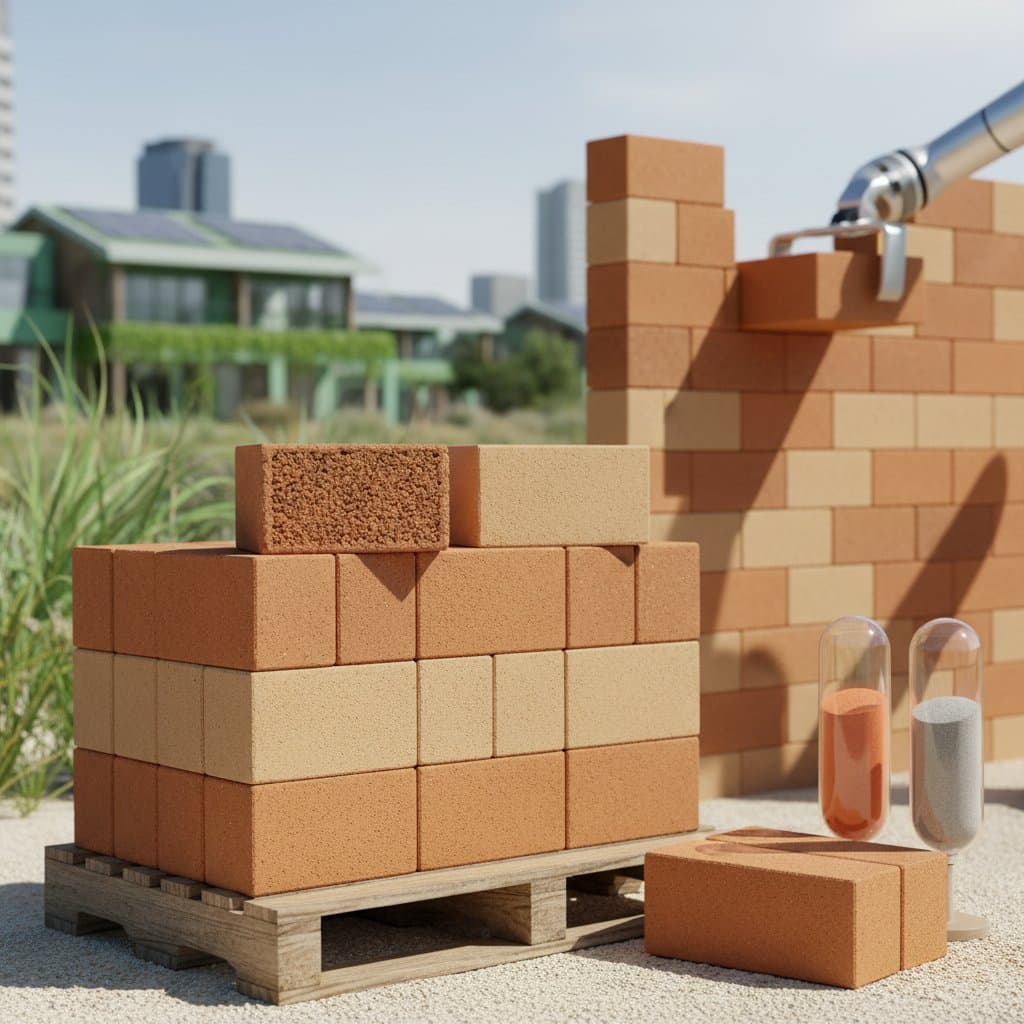
Zero-Cement Bricks: Pioneering Sustainable Masonry by 2026
Zero-cement bricks represent a significant advancement in construction materials. These bricks substitute traditional Portland cement with geopolymer binders derived from industrial byproducts, such as fly ash, slag, and calcined clays. The outcome yields robust bricks that mimic the appearance and functionality of conventional bricks while substantially reducing environmental impact.
Advantages and Disadvantages
Advantages
- Reduce carbon emissions by as much as 50 percent relative to cement-based bricks
- Incorporate recycled or waste minerals, thereby decreasing landfill contributions
- Deliver strength and fire resistance equivalent to fired clay or cement bricks
- Exhibit lower thermal conductivity, enhancing energy efficiency in buildings
- Cure at ambient temperatures, which conserves fuel and accelerates production
Disadvantages
- Face limited availability in certain regions
- Demand precise quality control throughout mixing and curing processes
- Display variations in color and surface texture across batches
- Require specialized testing for structural certification in select jurisdictions
- Possess fewer documented long-term performance records than cement alternatives
Cost Considerations
Material costs typically span from 1.20 to 2.00 dollars per brick, influenced by local sourcing and binder composition. Installation expenses range from 8 to 14 dollars per square foot for walls or paving applications. Expenses increase for custom shapes, colored finishes, or limited production runs. Costs decrease with access to local byproducts or on-site brick formation.
Durability and Upkeep
Properly installed zero-cement bricks endure for 50 years or longer, provided they remain shielded from prolonged moisture exposure. Conduct seasonal inspections of joints for cracks. Employ mild detergent and a soft brush for cleaning; refrain from using acids or high-pressure methods. Certain formulations benefit from application of a breathable sealant every few years to mitigate staining.
Key Specifications to Verify
- Compressive strength: Minimum 3,000 pounds per square inch for load-bearing wall units
- Water absorption: Less than 10 percent for outdoor applications
- Freeze-thaw resistance: Rated for severe weather conditions or comparable standard
- Dimensional accuracy: Adheres to standard brick tolerances to ensure uniform joints
Request a detailed test report from the manufacturer to validate these specifications. Structural applications may necessitate independent certification per local building regulations.
Preparation Guidelines
Evaluate foundation stability, soil load-bearing capacity, and drainage systems prior to commencement. Maintain a level and dry base. Incorporate caps or overhangs to direct water away from the structure. For pavement projects, compact a base layer at least 4 inches thick and incorporate a subtle slope for effective runoff. Contact utility services to mark underground lines before excavation.
Installation Procedures
- Sketch the layout and select the bond pattern in advance.
- Establish a code-compliant solid base or footing.
- Prepare the geopolymer binder following supplier instructions.
- Position bricks with uniform mortar joints, ensuring alignment of surfaces.
- Tool the joints to promote water runoff.
- Clean the surfaces after initial setting, and apply sealant as recommended.
Permit complete curing before subjecting the structure to significant loads.
Design Patterns and Variations
Standard bond patterns encompass running, stack, and Flemish bonds. Opt for running bond to maximize strength and installation efficiency, stack bond for contemporary aesthetics, and Flemish bond for ornamental exteriors. Certain zero-cement bricks feature interlocking designs, which minimize mortar requirements and expedite assembly.
Amateur versus Professional Installation
Amateur efforts suit minor projects like garden walls, edging, or small patios. Professionals should undertake load-bearing walls, multi-story constructions, or extensive retaining walls. Geopolymer mixtures solidify rapidly, underscoring the importance of precise timing and material handling.
Troubleshooting Common Issues
Efflorescence or soft areas frequently indicate inadequate drainage. Edge crumbling may result from excessive moisture during mixing or freeze-thaw cycles. Replace affected individual bricks instead of attempting repairs.
Adaptations for Regional Climates
In areas prone to freeze-thaw cycles, select bricks certified for severe exposure. In arid, high-temperature environments, cure bricks under shaded, humid conditions to avoid surface fissures.
Comparable Options
Should local availability prove insufficient, explore compressed earth blocks or lime-stabilized masonry units. These alternatives curtail cement dependency, though they often require additional moisture barriers.
Implementing Sustainable Building Practices
Zero-cement bricks enable the creation of resilient, visually appealing structures with minimized ecological footprint. Through meticulous planning, specification verification, and moisture management, these innovative materials can surpass traditional bricks in both performance and environmental benefits.