
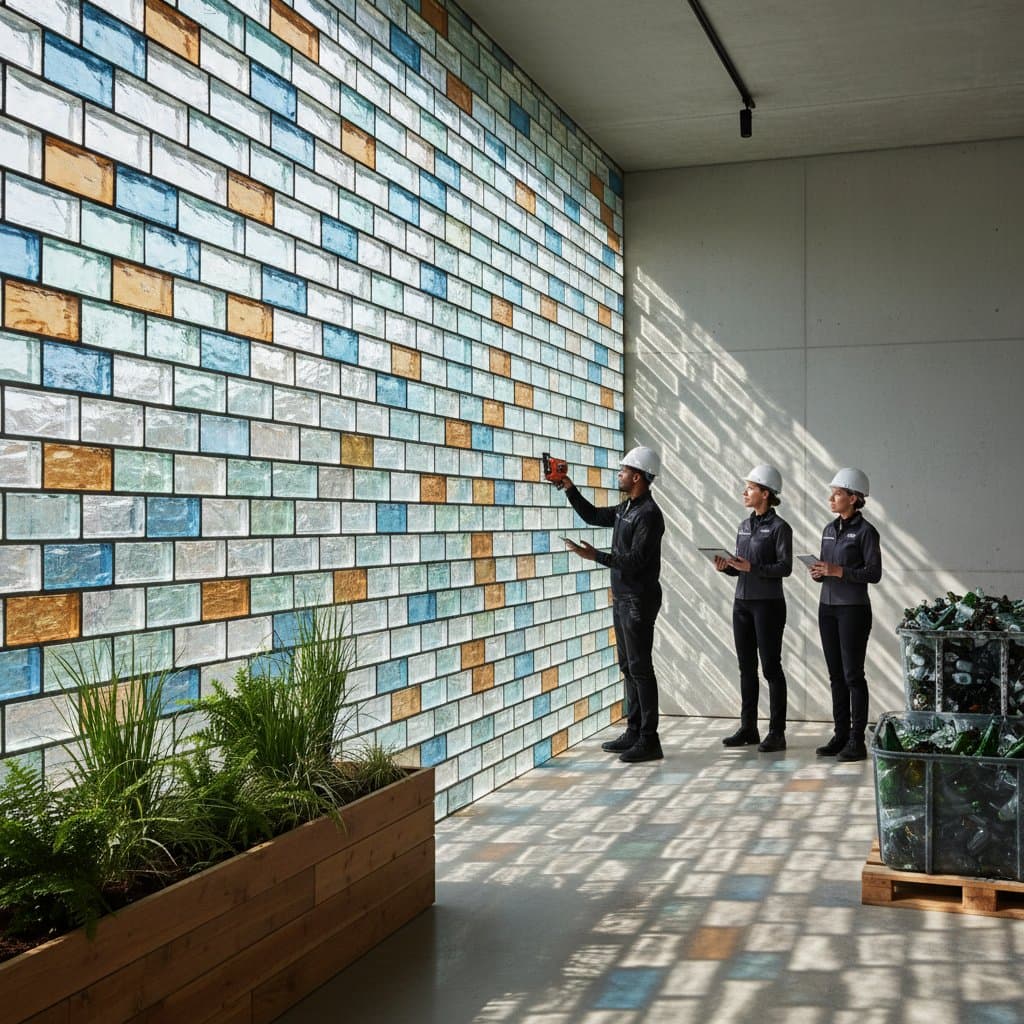
Recycled Glass: Zero-Waste Masonry Revolution
Quick Take
Recycled glass masonry moves beyond experimental applications to become a reliable construction technique. Key considerations include costs, durability, and environmental benefits over time. Production quality control poses the primary challenge, as inconsistencies can compromise strength and water resistance. The process involves curing and binding post-consumer glass into solid, modular blocks suitable for structural or decorative purposes.
Essential Quality Checks
Recycled glass masonry behaves differently from clay or concrete alternatives, yet standard field inspections apply. Inspect for even surface finish, solid edges, and uniform bond lines. Assess load distribution in the same manner as with traditional brick or block installations.
On-site evaluation of recycled glass blocks requires attention to these specific aspects:
- Surface finish: Verify density without chalkiness or brittleness.
- Color consistency: Aesthetic variations are acceptable, but cloudy inclusions indicate potential contamination.
- Weight and sound: Gently tap with a hammer handle; a dull sound suggests inadequate fusion.
- Bonding mortar: Select types that align with manufacturer guidelines, as standard Portland mortars often require modifiers for proper adhesion to glass.
- Drainage paths: Confirm that walls permit vapor release, since glass lacks the breathability of fired clay.
In retrofitting older structures with recycled glass components, ensure the new material avoids blocking moisture pathways or creating water traps behind non-porous surfaces.
Warning Signs of Defects
Specific indicators signal the need for remediation to address underlying problems:
- Clouded or streaked glass surfaces, resulting from improper firing or impurities.
- Cracks at joints, indicating mismatched thermal expansion.
- Efflorescence or mineral deposits on mortar, evidence of moisture movement.
- Loose or powdery bonding materials, typically from incompatible selections.
- Uneven unit dimensions, leading to increased labor and waste during assembly.
- Hairline fractures from corners, often due to handling or installation stresses.
When defects affect more than 5 percent of units, consider full replacement or reprocessing as more economical than partial repairs.
Repair Options and Estimated Costs
For minor projects such as accent walls or garden retaining structures, replacing faulty glass bricks costs approximately 15 to 25 dollars per square foot, including installation, comparable to mid-grade ceramic tile. Larger applications like structural walls or facades with glass aggregate concrete range from 10 to 18 dollars per square foot, varying by binder and finish choices.
Avoid inexpensive imports lacking proper heat treatment or using unrefined shards, as these fail under freeze-thaw conditions. Sealants applied over cracks merely conceal expansion issues without resolving them.
If bonding problems emerge after the first season, regrouting with flexible, polymer-modified mortar typically resolves the issue. Structural concerns from inadequate curing or binder mismatches necessitate complete replacement. Water infiltration risks moderate scope expansion, potentially affecting nearby framing or sheathing.
Deciding Between Repair and Replacement
Hybrid walls combining existing masonry with recycled glass follow established decision criteria for conventional materials.
- Glass Blocks: Address minor chips using clear epoxy followed by polishing, provided structural soundness persists. Replace units only if cracks or looseness compromise integrity.
- Mortar Joints: Repoint gaps wider than one-eighth inch with flexible, low-shrink mortar. Steer clear of rigid Portland mixes prone to separation from smooth glass surfaces.
- Backing Structure: Examine framing or substrate for moisture damage prior to any glass repairs. Renew deteriorated sheathing before reinstalling blocks.
- Glazed Surfaces: Clean using pH-neutral solutions. Refrain from acids or abrasives that etch protective coatings on recycled glass.
Follow this principle: repair cosmetic damage when bonds remain secure; replace elements that threaten load-bearing capacity or moisture management.
Coordinating Teams and Processes
The unique chemistry of recycled glass masonry demands early collaboration among stakeholders.
Involve these key participants:
- Inspector: Select professionals experienced in composite or recycled systems to identify compatibility concerns promptly.
- Architect: Consult during initial design to confirm structural details and expansion joint placements.
- General Contractor: Include them prior to finalizing specifications for sample panel testing and workflow validation.
- Material Supplier or Fabricator: Require their technical experts to assess site conditions and mortar suitability before shipment.
Concurrent reviews prevent bids on incomplete specifications. Management fees for intricate recycled projects typically range from 10 to 20 percent, helping to avert overruns from inexperience.
Prioritizing Project Scope
Integrating recycled glass into renovations or new constructions requires ranking elements by performance gains and cost efficiency.
Focus on high-impact applications:
- Recycled glass aggregates in non-load-bearing slabs or pavers, enhancing both aesthetics and sustainability.
- Glass-brick walls for daylighting that cut energy use while maintaining privacy.
- Crushed-glass terrazzo flooring for enduring, easy-care surfaces.
De-emphasize low-value efforts:
- Complete facade overhauls on functional existing masonry.
- Decorative veneers in low-light or concealed locations where translucency offers no advantage.
- Intricate curved designs demanding extensive glass customization.
Retain performing traditional masonry and incorporate recycled glass selectively to boost functionality or reduce upkeep.
Budgeting and Installation Sequence
Approach recycled glass systems with the same diligence as moisture-sensitive or load-dependent assemblies. Proper sequencing safeguards investments and mitigates risks.
- Address water management first. Inspect flashings, weeps, and drainage layers before placing glass units.
- Verify structural support. Recycled glass adds weight akin to fired brick; strengthen framing or foundations accordingly.
- Lay base courses. Employ mockups to test alignment and joint performance across temperature changes.
- Incorporate adjacent systems. Align electrical conduits or lighting through translucent sections prior to grouting.
- Apply sealants and conduct tests. Use approved products post-cure and check small zones for moisture retention.
- Complete surrounding finishes. Shield glass edges during plaster or paint work to prevent haze or abrasions.
This order reduces rework opportunities and enables early detection of expansion or adhesion challenges.
Long-Term Maintenance Strategies
Recycled glass masonry excels in resisting rot, mold, and color loss compared to organic alternatives. Annual inspections for cracks, leaks, or movement ensure joint stability and dryness. Maintain clean gutters and flashings above glass walls to avoid discoloration.
A mason from the upper Midwest observed, “Glass holds up just fine if the water has somewhere better to go.” This insight underscores the importance of effective drainage for durability.
Monitor interfaces between new glass and older masonry for differential expansion that may create fine gaps. Employ mild detergents and soft brushes for cleaning to prevent reactions with binders or coatings.
Advancing Sustainable Builds
Recycled glass masonry complements rather than supplants traditional brick or stone, carving a niche in eco-friendly, low-maintenance designs. Success hinges on meticulous planning, precise cost monitoring, and grounded performance assessments.
Begin with pilot areas like garden walls or entryways to gauge installation and care requirements. Track moisture levels pre- and post-installation for informed adjustments.
Paired with robust construction methods, recycled glass delivers genuine zero-waste advantages, combining resilience, vibrant hues, and light diffusion unmatched by standard masonry.