
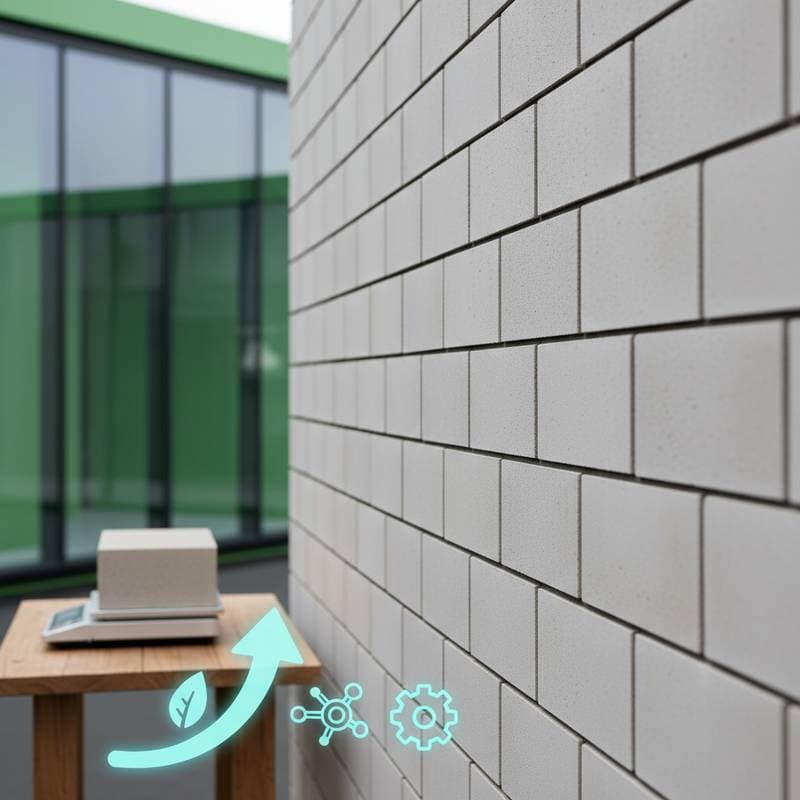
Understanding Geopolymer Bricks: A Cement-Free Revolution in Masonry
Geopolymer bricks represent an innovative class of masonry units produced without Portland cement. Manufacturers combine industrial byproducts such as fly ash or slag with alkaline activators to create a robust, stone-like binder. This process yields bricks that match or exceed the durability of conventional clay or concrete alternatives while significantly lowering carbon emissions.
These materials attract growing interest due to their exceptional compressive strength, inherent fire resistance, and reduced environmental impact. For individuals pursuing sustainable home construction, geopolymer bricks enable a meaningful reduction in embodied carbon without sacrificing structural integrity or aesthetic appeal.
Evaluating Costs and Budgeting
Geopolymer brick prices generally fall between $1.00 and $2.50 per unit, influenced by factors like dimensions, strength ratings, and surface finishes. When factoring in installation, expect costs of $9 to $18 per square foot for wall areas, covering mortar, labor, and any necessary reinforcements.
Expenses increase in scenarios involving custom pigmentation or textured surfaces, remote project locations that demand specialized transport, or intricate wall patterns requiring extensive on-site cutting. Conversely, economies arise from procuring bricks from nearby industrial byproduct sources or employing straightforward designs with standard running bonds to minimize waste.
In comparison, traditional clay bricks install at $6 to $12 per square foot, and concrete blocks at $8 to $14 per square foot. Geopolymer options align with premium, high-performance materials, offering value through longevity and sustainability.
Essential Specifications for Selection
Prospective buyers should verify several key technical attributes when selecting geopolymer bricks:
- Compressive strength: At least 5,000 psi to support load-bearing applications.
- Water absorption: No more than 10 percent to ensure suitability for outdoor exposure.
- Freeze-thaw resistance: Certification appropriate for the local climate to prevent degradation.
- Thermal conductivity: Reduced values enhance overall insulation effectiveness.
- Dimensional accuracy: Uniform sizing promotes precise joints and even alignments.
- Fire resistance: Documented hours of protection to meet building code requirements for firewalls or garage separations.
Suppliers must provide comprehensive test reports and independent certifications. Steer clear of products lacking validated performance metrics to avoid potential reliability issues.
Step-by-Step Installation Guide
Successful installation begins with thorough preparation and follows a systematic approach:
- Establish layout and reference points. Use chalk lines to mark courses and verify corner squareness.
- Prepare mortar mix. Select a geopolymer-compatible formulation or manufacturer-recommended high-adhesion adhesive.
- Position the base course. Place bricks on complete mortar beds, ensuring each is level and plumb.
- Construct subsequent courses. Offset vertical joints to enhance structural stability, while maintaining uniform joint thicknesses.
- Finish the joints. Tool them after initial setting to create a weather-resistant profile.
- Incorporate expansion joints. Position vertical separations every 20 to 25 feet to accommodate thermal expansion.
- Facilitate curing. Apply protective coverings like moistened burlap or plastic sheeting, as dictated by the specific mix.
- Perform surface cleaning. Employ gentle brushes and water once the structure has fully set.
For subsequent treatments such as sealants or finishes, allow complete drying and curing to occur first.
Deciding Between DIY and Professional Installation
Suitable Scenarios for DIY Projects
Geopolymer bricks suit do-it-yourself efforts in limited applications, including low garden walls, planters, or non-structural facades. These projects thrive on flat, stable substrates and access to pre-blended mortars alongside fundamental tools like trowels and levels.
Circumstances Requiring Professional Expertise
Engage certified masons for load-bearing walls, structural supports, multi-level builds, or retaining features. Complex sites involving soil excavation, improved drainage, or fortified bases also necessitate pros. Similarly, projects demanding tailored mix proportions or controlled curing environments benefit from specialized knowledge.
Precision in mixing and alignment proves critical for geopolymer success. While enthusiasts manage modest elements, substantial constructions demand expert execution and regulatory oversight.
Adapting to Regional Climates and Conditions
Local environmental factors play a pivotal role in product selection and handling:
- Cold climates: Prioritize bricks with proven freeze-thaw durability and minimal water uptake; shield newly laid walls from sudden temperature drops during curing.
- Arid, hot environments: Store and cure bricks in shaded areas with periodic light misting to prevent desiccation cracks.
- Coastal zones: Select low-permeability variants to withstand saline corrosion.
- High-precipitation areas: Integrate effective flashing and roof extensions; apply vapor-permeable sealers for added protection without trapping moisture.
- Regions with swelling soils: Extend foundation depths and add flexible joints to mitigate differential settlement.
Aligning specifications with site-specific demands from the outset maximizes long-term performance.
In-Depth Technical Considerations
Buyers evaluating options should examine these performance indicators:
- Density: Ranges from 120 to 150 pounds per cubic foot, comparable to concrete and denser than clay for enhanced solidity.
- Thermal mass: Substantial capacity moderates indoor temperature fluctuations, contributing to energy efficiency.
- Shrinkage control: Minimal contraction lowers the incidence of fissures relative to cement-based counterparts.
- pH profile: Near-neutral alkalinity reduces risks of corrosion on adjacent metals or incompatible finishes.
- Standard dimensions: Modular units measure 3 5/8 by 2 1/4 by 7 5/8 inches, with larger formats available for block-style uses.
Plan for a 5 to 10 percent surplus in orders to account for cuts and minor damages. Stack bricks on elevated pallets under protective tarps to maintain cleanliness and dryness prior to use.
Unlocking Environmental Advantages
Geopolymer production sidesteps the carbon-intensive calcination of limestone required in cement manufacturing. By repurposing waste streams like fly ash from coal plants, slag from steel production, or metakaolin from clay processing, it curtails landfill contributions and virgin resource extraction.
The process demands far less energy, relying on ambient or mildly elevated temperatures for activation rather than high-heat kilns. Resulting bricks exhibit chemical stability, facilitating straightforward recycling at demolition. For projects targeting carbon neutrality or certifications like LEED, these materials serve as a cornerstone of eco-responsible design.
Navigating Building Codes and Approvals
As an emerging technology, geopolymer bricks may encounter varying acceptance across municipalities. Consult local authorities early to verify compliance; many treat them as alternative systems needing substantiated engineering data on strength and fire performance.
Prepare documentation including material safety sheets and lab validations to streamline permitting.
Expert Strategies for Optimal Results
- Construct a test panel. Assemble a sample section to assess aesthetics, joint consistency, and material interactions prior to committing resources.
- Maintain mix uniformity. Adhere to fixed ratios of activators and aggregates across batches for consistent structural properties.
- Manage curing humidity. Balance moisture levels to avert cracks from aridity or weakened bonds from excess dampness.
- Employ specialized cutting tools. Diamond-tipped blades handle the material's hardness without rapid wear on equipment.
- Safeguard completed work. Apply temporary coverings to exposed tops until permanent caps or weatherproofing secure the structure.
Implementing Your Geopolymer Project
To bring a geopolymer masonry vision to fruition, start by identifying regional suppliers to align timelines. Secure detailed performance certifications covering strength, permeability, and endurance. Select masons with prior experience in alternative binders to ensure quality execution.
Anticipate weather influences on curing schedules, avoiding peak extremes. Monitor the installation's progress and document outcomes to inform maintenance and inspire future endeavors. This approach not only achieves resilient, low-impact builds but also advances broader sustainable practices in construction.