
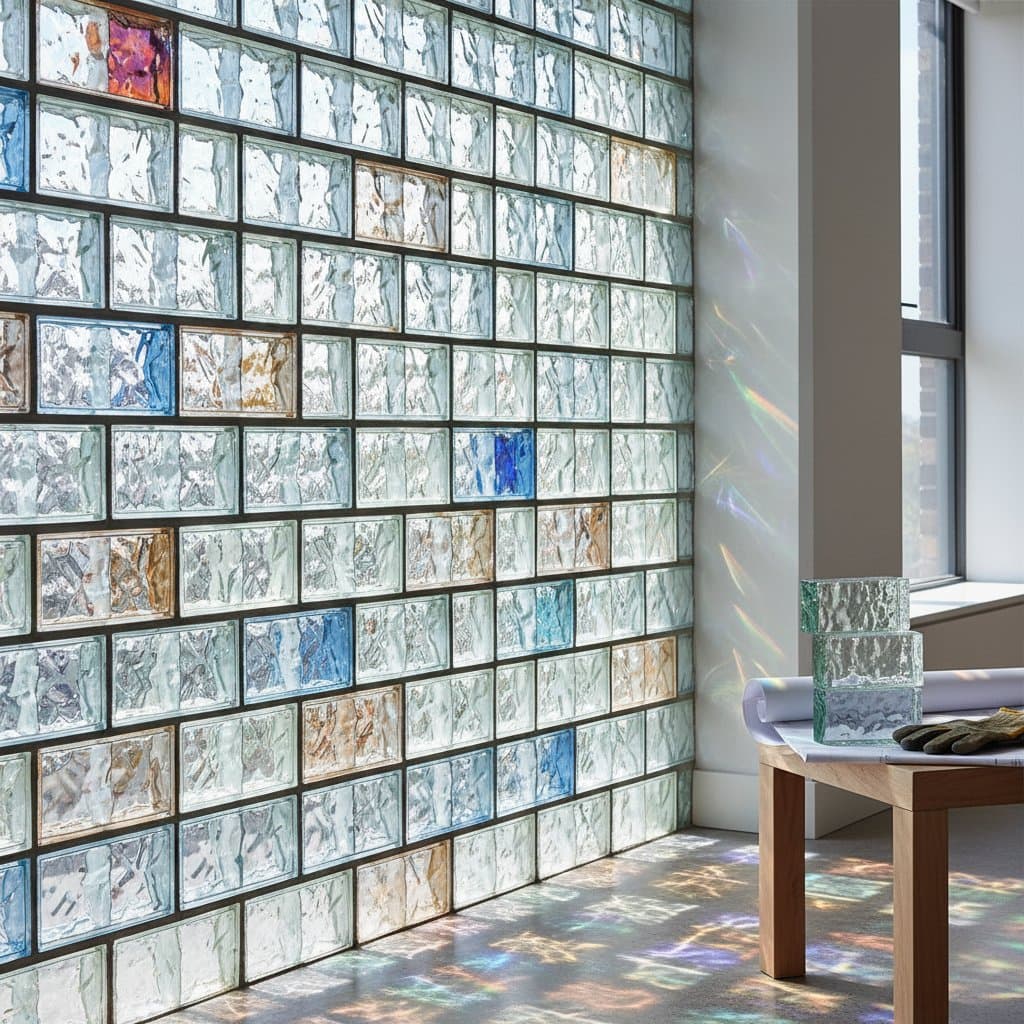
Introduction to Recycled Glass Bricks
Recycled glass bricks offer a innovative approach to masonry that merges environmental sustainability with aesthetic appeal. These blocks, crafted from post-consumer glass waste, provide the durability of traditional bricks while allowing natural light to filter through structures. Builders and homeowners appreciate their ability to create luminous walls that reduce the need for artificial lighting and enhance spatial openness.
This guide explores the types of recycled glass bricks available, their key benefits, and essential planning considerations. It then details a step-by-step installation process, complete with safety measures, pro tips, and maintenance advice. By the end, readers will understand how to incorporate these materials into projects that balance strength, style, and ecological responsibility.
Types of Recycled Glass Bricks
Recycled glass bricks come in several varieties to suit different design needs. Clear glass bricks maximize light transmission, ideal for interior partitions or feature walls. Frosted options diffuse light softly, providing privacy while maintaining brightness.
Colored bricks, made from tinted recycled glass, add visual interest and can coordinate with existing decor. Solid-core bricks incorporate denser glass for added strength in load-bearing applications. Each type undergoes rigorous processing to ensure uniformity and compliance with building standards.
Benefits of Using Recycled Glass Bricks
These bricks contribute to sustainable construction by diverting glass from landfills and reducing the demand for virgin materials. Their translucent nature lowers energy consumption through passive solar lighting, potentially cutting electricity costs by up to 20 percent in well-designed installations.
Structurally, they offer compressive strength comparable to concrete blocks, with resistance to weathering and fire. Aesthetically, they introduce texture and depth to spaces, transforming ordinary walls into dynamic elements. Long-term, their low maintenance requirements make them a practical choice for both residential and commercial projects.
Planning and Materials Preparation
Successful installation begins with thorough planning. Assess the project site for load requirements, light exposure, and integration with existing structures. Consult local building codes to confirm approvals for non-load-bearing versus structural uses.
Gather essential materials: recycled glass bricks, Type S mortar mix, plastic spacers, reinforcing rods if needed, flexible joint sealant, and a clear penetrating sealer. Tools include a trowel, level, jointing tool, damp sponge, and safety gear such as gloves, goggles, and dust masks. Calculate quantities based on wall dimensions, adding 10 percent extra for cuts and breakage.
Safety stands as a priority. Glass bricks can have sharp edges, so handle with care to avoid cuts. Work in well-ventilated areas to minimize dust inhalation, and secure scaffolds for elevated installations.
Step-by-Step Installation Guide
Follow these steps to construct a stable, visually appealing wall using recycled glass bricks.
1. Prepare the foundation
Lay a solid base using a concrete footing or existing slab. Mix mortar to a workable consistency, similar to thick peanut butter. Butter the bottom edges of the first course bricks and set them in place, ensuring alignment with a string line.
Pro tip: Dry-lay bricks beforehand to verify fit and pattern.
2. Apply mortar to joints
Spread mortar on the sides and ends of bricks for vertical joints. Press bricks firmly together without twisting to avoid misalignment.
Mistake prevention: Avoid overfilling joints, as excess mortar may squeeze into brick cavities and obstruct light passage.
3. Insert spacers or reinforcing rods
Position plastic spacers or thin rods between bricks to maintain consistent joint width, typically 3/8 inch, and ensure structural stability.
Pro tip: Refer to the manufacturer’s guidelines for spacing intervals and reinforcement placement, especially in taller walls.
4. Build successive courses
Apply mortar to the top surface of each completed course before laying the next row. Stagger joints similar to traditional bricklaying for strength, unless the design calls for aligned patterns. Verify level and plumb every two rows using a spirit level.
Quality checkpoint: Inspect vertical alignment from the side view; bricks should form straight lines. Correct any deviations immediately to prevent compounding errors.
5. Create expansion joints
Place flexible joint material at corners, door frames, and every 10 to 15 feet along longer walls. These joints accommodate thermal expansion and contraction.
What goes wrong if omitted: Fluctuations in temperature may lead to cracks in the glass bricks or mortar joints, compromising integrity.
6. Finish the joints
As the mortar begins to set, tool the joints with a concave or struck finish to seal them effectively and improve the overall appearance. Wipe excess mortar from brick surfaces using a damp sponge before it hardens completely.
7. Seal and cure
Once the wall achieves initial set, apply a clear sealant to expansion joints and perimeter edges to guard against moisture entry. Allow the structure to cure undisturbed for at least 48 hours, or longer in humid conditions, before adding loads or attachments.
Finishing Touches for a Professional Appearance
After curing, clean any residual haze or mortar spots with a mild, non-abrasive cleaner and a soft brush. Buff surfaces with a microfiber cloth to restore clarity and shine.
Enhance the installation by adding LED strip lights along the base or edges, which accentuate the bricks’ translucency during evening hours. Route wiring discreetly through channels or behind trim, ensuring it remains distant from mortar to prevent damage.
Integrate the wall seamlessly with its environment:
- Enclose interior installations with sleek metal or wood framing painted to match surroundings.
- Position potted greenery adjacent to exterior walls to introduce vibrant reflections and motion.
- Alternate frosted and clear bricks to create subtle patterns and depth.
- Incorporate recessed ceiling lights to highlight surface textures during the day.
Ideas to Enhance Functionality and Appeal
Elevate the design with practical and creative additions:
- Install embedded LED systems behind translucent sections for an illuminated accent wall.
- Construct benches or garden borders using glass bricks for durable, light-permeable outdoor features.
- Pair with reclaimed wood panels or metal accents to introduce material contrast and warmth.
- Cap the top edge with polished stone slabs for a refined transition to roofing or ceilings.
- Select mortar in subtle colors that harmonize with adjacent building elements.
When to Consult a Professional
Certain projects demand expert involvement to ensure safety and compliance. Engage a licensed mason or structural engineer for designs featuring curves, load-bearing elements, or connections to primary framing. They perform necessary calculations for weight distribution, joint spacing, and adherence to regulations.
For any embedded electrical components, such as internal lighting within the brickwork, hire a certified electrician. This step guarantees proper wiring, grounding, and avoidance of hazards like short circuits or fire risks.
Maintenance for Long-Term Durability
Routine care preserves the beauty and performance of recycled glass brick installations. Inspect annually for cracks or sealant degradation, reapplying protection as needed. Clean surfaces gently with soapy water and a soft cloth, avoiding harsh chemicals that could etch the glass.
In outdoor settings, monitor for vegetation overgrowth that might trap moisture. Address minor repairs promptly, such as repointing loose joints, to maintain structural soundness.
Building with Purpose and Light
Recycled glass bricks demonstrate how construction practices can advance sustainability without sacrificing quality or design. They illuminate interiors, minimize environmental impact, and endure through seasons of use. With meticulous execution, these installations become enduring testaments to thoughtful building that honors both innovation and the planet.