
Why Recycled Glass Bricks Dominate 2026 Masonry
Quick Overview
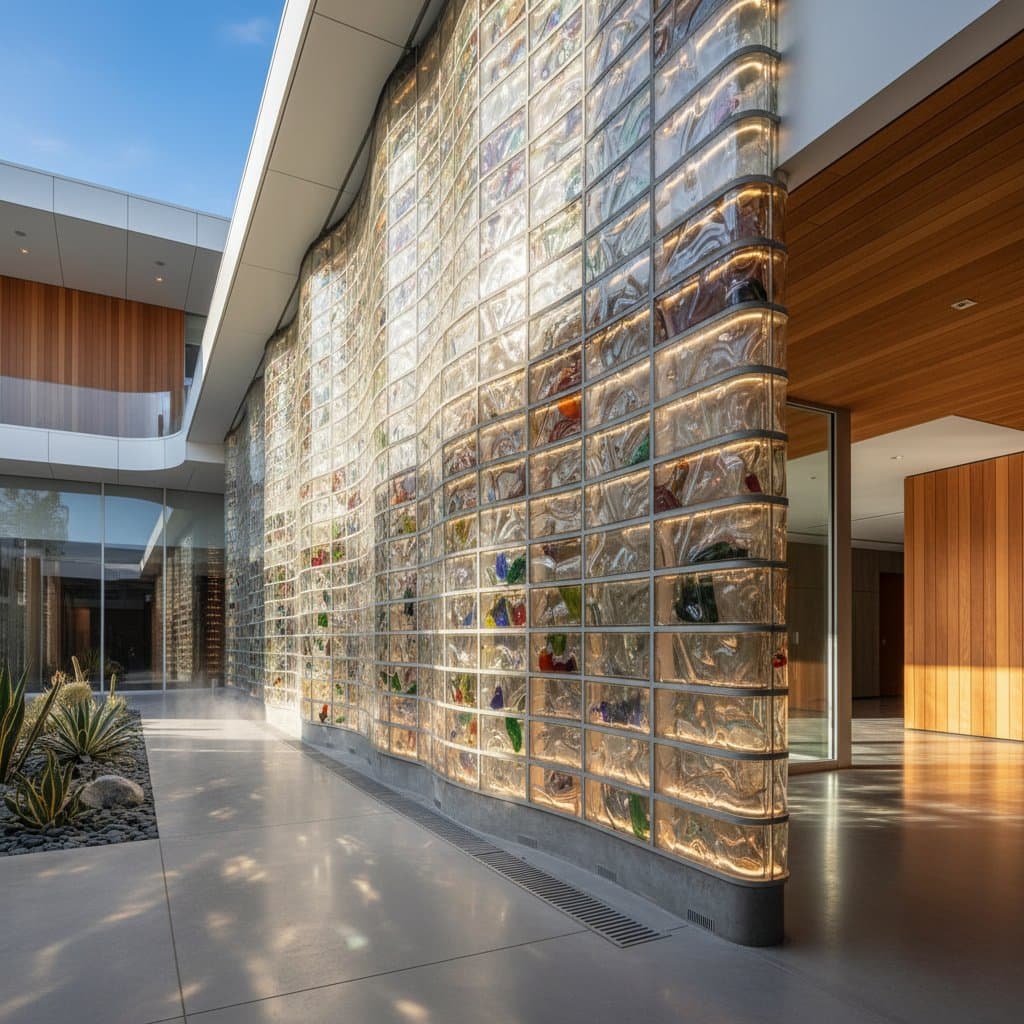
Recycled glass bricks transform masonry practices for builders and renovators. These materials merge light transmission with structural integrity, providing design versatility and environmental benefits. Production energy and installation accuracy represent primary expenses, yet long-term gains in durability and insulation deliver reliable returns.
Essential Field Checks
Simple on-site inspections reveal the condition of a recycled glass brick wall.
- Examine color uniformity and transparency. Inconsistent hues often indicate irregular firing or variable cullet composition.
- Gently tap each brick. A clear, resonant tone signifies effective annealing. A muffled sound suggests internal stresses or fractures.
- Inspect mortar joints for adhesion quality. Glass requires pliable mortar to accommodate thermal expansion.
- Search for moisture evidence along joints or edges. Such signs point to inadequate sealing or drainage flaws.
- Evaluate light diffusion across the wall. Opaque areas may result from delamination or air pockets within the bricks.
Warning Signs
- Chipped edges due to handling or imprecise cutting.
- Internal frosting or cloudiness within the brick structure.
- Overly stiff or cement-rich mortar, prone to fracturing the glass during expansion cycles.
- Absent or deteriorated expansion joints in extended wall sections.
- Persistent condensation within double-glazed modular units.
- Staining from mismatched sealants or harsh chemical treatments.
Practical Repairs and Estimated Costs
For minor joint repairs, apply flexible lime-based mortar, costing 20 to 30 dollars per square foot in limited zones. Cracked brick replacement typically ranges from 40 to 60 dollars per square foot, influenced by accessibility and color matching needs. Prefabricated panel systems demand more involved fixes, potentially up to 80 dollars per square foot.
Surface cleaning and refinishing averages 5 to 10 dollars per square foot. Test cleaning methods on inconspicuous spots to prevent surface scratches that impair transparency. In cases of moisture penetration, reseal joints and enhance flashing, with costs of 1,000 to 2,000 dollars for standard facade perimeters. Select compatible materials, as inferior silicone options degrade quickly and promote staining or trapped water.
Deciding Between Repair and Replacement
Glass Brick Assemblies: Retain intact walls where units show no damage and mortar remains secure. Proceed to replacement only if bonding integrity fails or cracks propagate across multiple bricks.
Mortar Applications: Address joint issues with lime or polymer-enhanced mortars for required flexibility. Full replacement becomes necessary following water infiltration or freeze-thaw degradation that compromises adhesion.
Support Frameworks: Maintain original metal or concrete elements absent signs of deformation or rust. Replace components exhibiting expansive corrosion or surface pitting that undermines load-bearing capacity.
Sealing Elements: Refresh gaskets and sealants upon detection of rigidity or detachment. Reuse only those that remain supple, free of debris, and uniformly applied.
Assembling the Right Team and Workflow
Engage a building envelope consultant versed in traditional masonry and contemporary composites. This professional verifies compatibility with local climate conditions and exposure risks.
Involve an architect from the outset to define spatial arrangements, illumination objectives, and integration specifics. Early design adjustments avert subsequent thermal or structural complications.
Consult a contractor experienced in glass-based masonry to assess budgets prior to final plans. Such expertise highlights potential hurdles, including weight management, joint alignment, and thermal constraints during installation.
For projects incorporating electrical or lighting elements behind translucent surfaces, coordinate with electricians during the design phase rather than post-framing.
Dedicated project oversight increases overall expenses by 10 to 20 percent but minimizes costly revisions. Sequencing misalignments, rather than material shortcomings, account for many glass masonry setbacks.
Prioritizing Project Scope
Focus on interventions yielding substantial benefits.
- Prioritize moisture control through unobstructed flashing and continuous weep systems.
- Enhance rear-wall insulation via breathable vapor barriers.
- Apply airtight seals at boundary joints.
- Design layered lighting to enhance brick translucency.
- Ensure effective drainage beneath window sills.
Defer non-essential modifications, such as tint applications that diminish light passage or intricate curves necessitating bespoke fabrication. Steer clear of robust framing that conceals the inherent luminosity of glass bricks, undermining their core appeal.
Retain existing units that align with the structure's aesthetic harmony and scale. Aesthetic-driven overhauls rarely justify the investment.
Budgeting and Phased Execution
Order tasks according to structural interdependencies, prioritizing function over aesthetics.
- Waterproofing Foundations: Validate roof runoff, gutter positioning, and wall flashings at the start.
- Structural Assessment: Verify anchors, supports, and expansion accommodations before cosmetic applications.
- Barrier Completion: Integrate seals and insulation with surrounding elements, including thresholds and reveals.
- Utility Integration: Install wiring pathways prior to placing permanent brick layers.
- Brick Placement: Position units with uniform joint gaps and complete mortar bedding.
- Final Treatments: Remove residues post-curing, employing gentle cleaning agents.
Progressive stages ensure stability. Premature advancement or omitted verifications invite moisture entrapment or differential settling.
The Advantages of Recycled Glass Bricks
These bricks originate from post-consumer glass, which undergoes melting and molding into standardized blocks. This recycling process diverts substantial glass waste from landfills, granting materials a renewed purpose.
Properly annealed units achieve compressive strength comparable to or surpassing clay bricks. They withstand chemical degradation, fire hazards, and ultraviolet radiation. Light diffusion properties soften glare while permitting natural illumination, thereby decreasing reliance on electric lights and enhancing occupant well-being in dense urban environments.
Installers value the predictable sizing and smooth finishes. Designers exploit opportunities for dynamic light and shadow effects. Property owners benefit from reduced upkeep, as glass resists spalling and water absorption unlike permeable stone alternatives.
Optimal thermal efficiency arises from pairings with insulating infills or air spaces. Certain variants feature dual shells joined by vacuum seals or low-conductivity media, achieving respectable insulation ratings without sacrificing visual permeability.
Avoiding Typical Errors
- Approaching glass masonry as conventional bricklaying, which overlooks demands for precise alignments and adaptable joints.
- Employing inflexible cement mortars susceptible to thermal fracturing.
- Neglecting boundary drainage and protective flashings, allowing concealed water accumulation to escalate into severe deterioration.
- Omitting prototype assemblies, leading to inconsistencies in final light distribution and appearance.
- Combining bricks from disparate production runs, where subtle shade differences disrupt visual coherence.
Sustaining Performance Over Time
Regularly clear and reseal joints. Conduct yearly reviews for fissures or gaps. Clean surfaces with pH-neutral solutions and non-abrasive tools. Refrain from acidic or gritty substances.
Monitor sealants at frames and bases. Renew any exhibiting brittleness or retraction. Detect internal condensation in cavity units as an indicator of seal failure.
Evaluate interfacing components. Keep metal fixings, flashings, and accents free from oxidation. Address emerging rust through prompt cleaning and protective coatings.
Routine care prolongs functionality well past initial cost recovery. With vigilant moisture oversight, recycled glass masonry endures as robustly as traditional counterparts.
Implementing Recycled Glass Bricks Effectively
Initiate with modest applications, such as privacy screens, interior cores, or illuminated entrances, to evaluate performance under site-specific conditions. Monitor factors like humidity buildup, light fidelity, and durability. Solicit insights from craftsmen and users prior to broader adoption.
Upon validation, extend to expansive exteriors or dividing walls. Synchronize masonry with HVAC and illumination infrastructure from the planning stage. Emphasize drainage, stability, and adaptability throughout.
Recycled glass bricks offer resilience, radiance, and ecological merit. Thoughtful preparation and meticulous implementation position them as enduring structural and aesthetic assets, requiring minimal intervention for generations.