
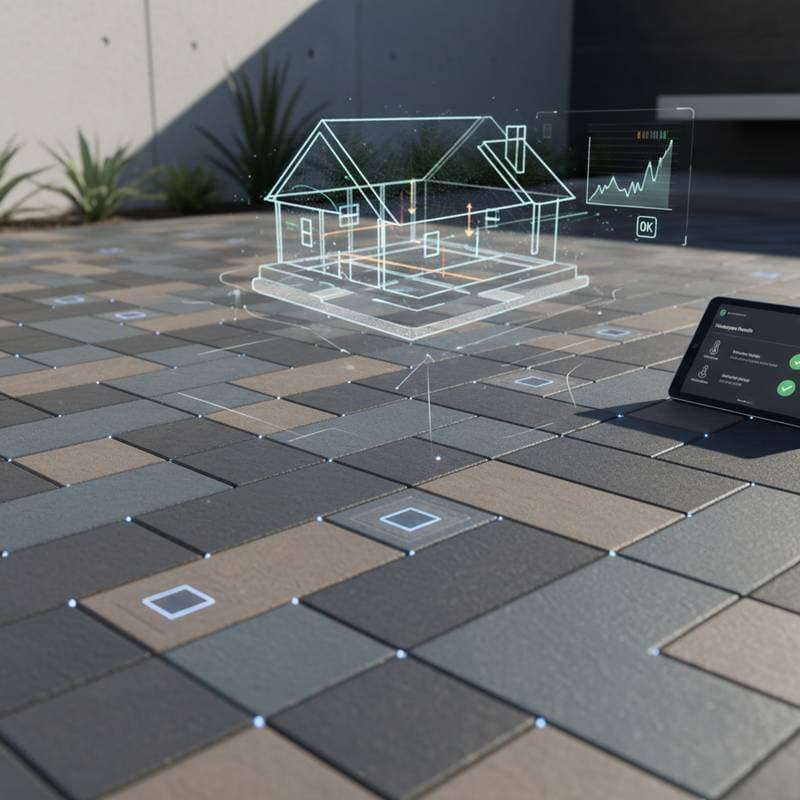
IoT Pavers That Identify Ground Shifts Before Damage Occurs
Smart paving systems transform the management of patios, driveways, and walkways for homeowners. Each IoT paver contains embedded sensors that continuously monitor ground movement, moisture levels, and temperature fluctuations. The system transmits this data to a dedicated mobile application or online dashboard, enabling users to detect early indicators of settling, frost heave, or drainage deficiencies prior to the formation of cracks or uneven surfaces.
This innovation falls within the broader domain of smart masonry, which combines enduring materials with precise digital oversight. Such integration not only averts substantial repair expenses but also promotes safer walking surfaces and enhances the overall longevity of hardscape installations.
Advantages and Disadvantages
Advantages
- Identifies ground movement at an early stage, prior to any visible structural damage
- Pinpoints drainage problems and frost-related concerns with speed and precision
- Lowers long-term expenses by facilitating timely interventions
- Integrates with conventional installation techniques and equipment
- Delivers immediate notifications to mobile devices or computers
Disadvantages
- Involves a greater initial investment compared to traditional pavers
- Demands careful attention to power sources and network configuration
- Sensor batteries require replacement every several years
- Data reliability hinges on consistent network connectivity
- Availability remains restricted in certain geographic areas
Expected Lifespan and Maintenance Practices
Properly maintained IoT paving systems endure for 20 to 30 years. The pavers themselves exhibit durability comparable to conventional options. Sensors reside within sealed, protective enclosures designed to withstand moisture exposure and physical impacts. Battery longevity spans 5 to 10 years, influenced by the frequency of data transmissions.
Key maintenance activities include:
- Conducting seasonal inspections of joints and edges to assess any movement
- Cleaning the surface biannually using a mild detergent and soft-bristled brush
- Verifying sensor connectivity through the application dashboard
- Replacing or recharging batteries upon receipt of low-power notifications
- Applying a sealant to the surface when the finish fades or joints show erosion
Preparation and Planning Steps
Begin the process by surveying the intended paving area. Identify slopes, existing drainage routes, and any current cracks or unstable soil patches. IoT pavers require a solid foundation, similar to other hardscape projects.
Essential site conditions to evaluate:
- Ensure the subgrade soil remains compact and permits effective drainage
- Account for local frost depth when determining excavation requirements
- Verify that the slope channels water away from structures
- Confirm accessibility for compaction machinery
- Assess coverage of power sources and network signals across the site
Excavate to accommodate the base material, bedding layer, and paver depth. Walkways typically demand 6 to 8 inches of compacted base material, while driveways necessitate 10 to 12 inches.
Design Patterns and Available Choices
IoT pavers conform to standard shapes and layouts, selected according to aesthetic preferences and structural demands.
- Running bond: Offers a straightforward arrangement, simplifies installation, and suits walkways effectively
- Herringbone: Provides enhanced interlocking strength, making it suitable for driveways
- Basket weave: Delivers a decorative pattern with moderate load-bearing capacity
- Random stone: Achieves a natural aesthetic, though it involves additional cutting
Certain systems permit the strategic placement of sensor-enabled pavers alongside regular units. This configuration lowers expenses while maintaining monitoring capabilities in critical areas.
Typical Issues and Resolution Strategies
Surface Settling or Irregular Joints
- Cause: Inadequate base compaction or subsequent soil settlement
- Resolution: Elevate the impacted section, recompress the base, and reposition the pavers
Inaccurate Sensor Notifications
- Cause: Signal interference or diminished connectivity
- Resolution: Relocate the central hub nearer to the sensors or add a signal booster
Moisture Warnings Without Apparent Water Accumulation
- Cause: Elevated humidity or subsurface condensation
- Resolution: Enhance drainage pathways and promote better airflow
Unresponsive Sensors
- Cause: Depleted batteries or compromised enclosures
- Resolution: Swap out the battery or the entire unit following manufacturer guidelines
Prompt resolution of these concerns sustains system performance and averts escalation of problems.
Alternative Solutions
For those finding IoT pavers prohibitive in cost or complexity, explore these alternatives:
- Conventional pavers paired with external soil sensors: Presents a more affordable option, albeit with reduced accuracy
- Permeable pavers: Controls water infiltration without electronic components, mitigating freeze-thaw cycles
- Stamped concrete featuring integrated strain gauges: Forms a seamless surface with minimal joints
- Modular deck tiles: Ideal for elevated spaces like rooftops or balconies, where soil shifts pose less risk
Each alternative balances factors such as resilience, surveillance features, and upkeep requirements differently.
Strategies for Optimal Installation
Order 5 to 10 percent additional material to cover cuts and spares. Mark sensor-equipped pavers during the layout phase to monitor their positions accurately. Establish the network hub prior to final compaction to test signal strength. Maintain dry joint sand throughout installation to achieve complete penetration. Review collected data on a monthly basis to identify subtle trends and preempt repairs.
Pairing smart masonry with routine care maximizes benefits. Regular cleaning, sealing applications, and inspections form the foundation of sustained performance.
Leveraging Data for Long-Term Durability
IoT pavers provide detailed insights into hardscape behavior under varying environmental conditions. Analyze this information to schedule maintenance, refine drainage systems, and outline future enhancements.
Responding to initial alerts allows correction of minor displacements before they evolve into fractures or safety risks. The result is a resilient, secure surface that preserves its appearance and utility over extended periods.
This technology empowers proactive oversight of foundational elements, ensuring stability one data point at a time.