
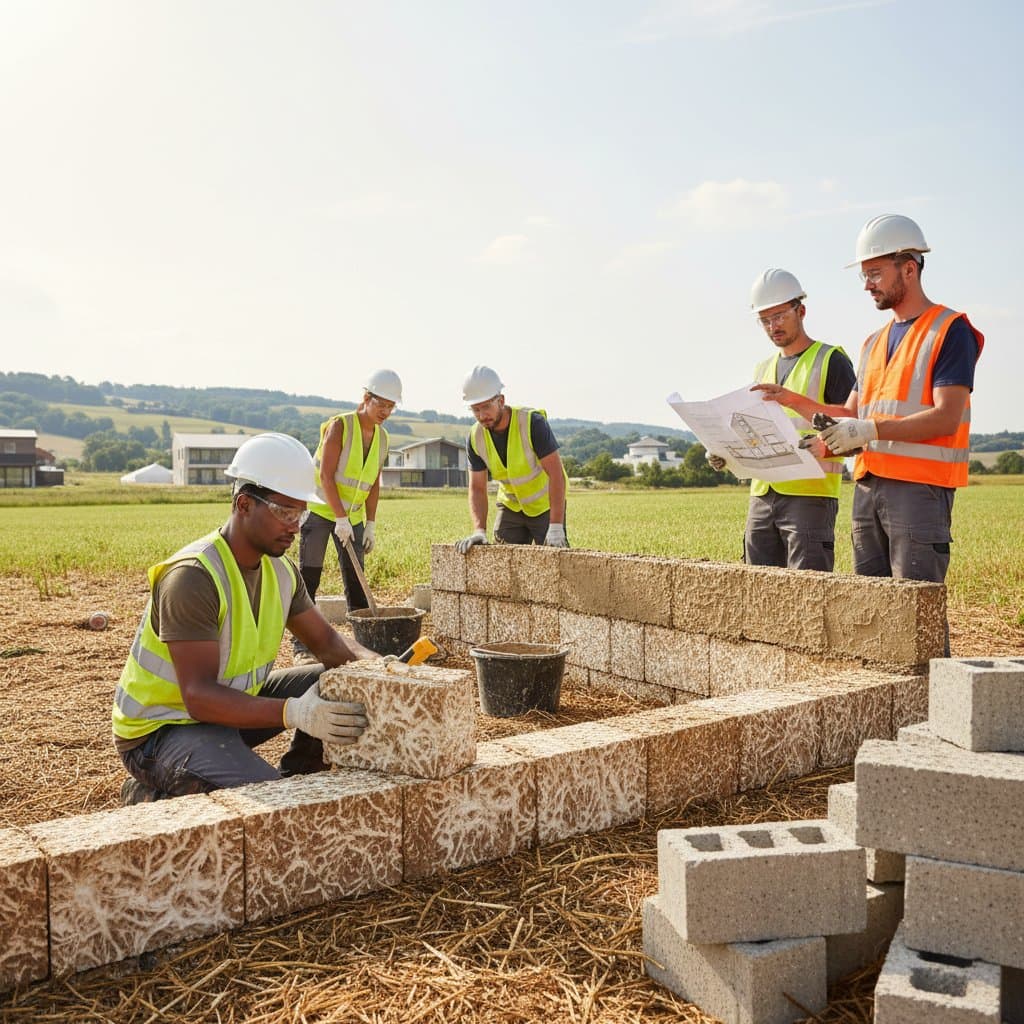
Essential Field Inspections for Mycelium Bricks
Mycelium bricks represent an innovative shift in sustainable construction. These bricks, cultivated from fungal networks and agricultural byproducts, provide a viable alternative to traditional clay bricks. Builders must conduct thorough field inspections to ensure quality and performance.
Initial Assessment
Mycelium bricks differ significantly from conventional materials due to their organic composition. They require careful evaluation for structural integrity and environmental suitability. Begin inspections with physical samples to identify potential issues early.
Key Inspection Points
Perform these checks on representative samples from each batch. Such evaluations help confirm the bricks meet standards for density, moisture content, and overall readiness.
- Surface Texture: The surface must feel firm, dry, and slightly fibrous. Avoid any samples that appear spongy or retain moisture.
- Color Consistency: Observe uniform coloration across the brick. Variations often indicate irregular growth conditions or moisture imbalances.
- Scent Evaluation: A subtle earthy aroma signifies proper maturation. Detect any musty or mold-like smells, which suggest inadequate drying.
- Edge Strength: Gently tap edges with a non-sharp tool, such as a screwdriver handle. Listen for a solid tone and check for absence of crumbling, indicating sufficient density.
- Weight Comparison: Mycelium bricks weigh considerably less than clay equivalents. This lightness influences structural calculations and installation techniques.
- Moisture Absorption Test: Apply a single drop of water to the surface. Absorption should occur gradually; rapid soaking reveals excessive porosity.
These steps verify that the bricks have achieved full maturity and curing. Neglecting them increases the likelihood of on-site failures and project delays.
Warning Signs of Defects
Certain indicators reveal problems in production or handling. Address these promptly to prevent integration of substandard materials into the build.
- Bricks that feel damp or yield to thumb pressure, signaling incomplete curing.
- Presence of white fuzz or active fungal growth on surfaces.
- Visible cracks or internal voids resulting from uneven drying processes.
- Sticky residues along edges or joints.
- Pronounced mildew scents or dark discoloration spots.
- Variations in dimensions that hinder uniform alignment.
- Absence of quality certifications or production documentation.
Such issues stem from lapses in quality assurance. In bio-based systems, a single compromised batch can undermine the entire assembly.
Remediation Options and Associated Costs
Early detection allows for targeted corrections. However, severe defects often necessitate full replacement to maintain reliability.
- Additional Drying: For minor moisture excess, controlled re-drying incurs low per-unit costs but risks dimensional changes.
- Protective Sealants: Breathable mineral-based coatings enhance water resistance at a moderate expense per square foot.
- Complete Replacement: Bricks failing density or compression tests require substitution, potentially doubling material expenses given supply constraints.
- Hybrid Integration: Combine mycelium with traditional bricks for cost efficiency, using bio-materials for non-load-bearing infill.
- Appropriate Finishes: Options like limewash or silicate paints safeguard fibers while permitting vapor transmission, at reasonable per-square-foot rates.
Avoid non-breathable treatments such as acrylics, which can encapsulate moisture and promote internal degradation. Mycelium requires airflow akin to wood products.
Strategies for Repair and Replacement
Approach repairs with the material's porous nature in mind. Decisions depend on damage extent and structural implications.
- Minor Surface Damage: Use clay patches or lime putty for abrasion; replace only if core fibers become exposed.
- Moisture Intrusion: Remove and substitute saturated units, as they lose load-bearing capacity.
- Color Alterations: Brush away dry surface mold; investigate persistent discoloration for underlying moisture traps.
- Fracture Management: Fill superficial cracks, but replace bricks with significant delamination.
- Load Compromise: For wall instability, incorporate supportive conventional elements rather than isolated bio-brick swaps.
Opt for repairs in cases of superficial issues with intact cores. Replacement proves necessary when damage penetrates deeply.
Essential Team Roles and Workflow
Incorporate specialized expertise from project outset to navigate mycelium's unique properties.
- Material Specialist or Supplier: Confirms curing metrics, density profiles, and suitability data.
- Architectural Designer: Modifies details to accommodate reduced weight and vapor dynamics.
- Engineering Professional: Validates load capacities and interfaces with standard structures.
- Construction Lead: Oversees protected storage, sequencing, and moisture safeguards during installation.
- Environmental Analyst: Assesses vapor flow, condensation risks, and drainage configurations.
Coordinated involvement minimizes errors. Inexperienced teams may overlook nuances in handling or fabrication. Allocate ten to twenty percent of the budget for oversight on intricate installations.
Prioritization for Implementation
Focus efforts on elements that maximize durability and efficiency.
- Weather Barriers: Position mycelium within protected envelopes, such as behind rain screens or beneath eaves.
- Water Management: Ensure site and roof drainage diverts flow from bio-material walls.
- Thermal and Air Control: Pair with permeable insulations like cellulose for seamless, breathable systems.
- Prototype Testing: Construct test panels and monitor through multiple moisture cycles for stability.
- Coating Selection: Limit to vapor-permeable products; prohibit sealing paints.
Steer clear of unprotected exterior applications or ground-level placements prone to splash-back. Such errors generate upkeep expenses that counteract environmental gains.
Project Planning and Timeline
Sequence activities to preserve material integrity, as mycelium sensitivity to conditions demands precision.
- Secure Storage: Elevate bricks off ground level under protective covers to avert reactivation.
- Site Preparation: Finalize foundations and drainage prior to bio-material introduction.
- Structural Setup: Erect primary framework before inserting lightweight components.
- Assembly Phase: Install during dry periods using vapor-friendly lime mortars.
- Protective Applications: Coat surfaces post-curing completion.
- Interior Completion: Proceed with humidity monitoring throughout.
Savings arise from low-energy production, not reduced inputs elsewhere. Disruptions leading to rework can nullify these benefits; integrate safeguards from planning stages.
Ongoing Preservation Practices
Sustain performance through routine vigilance rather than intensive interventions.
- Clear gutters and redirect downspouts to avoid wall contact.
- Annually review coatings for integrity breaches.
- Preserve flashings and edges to block water entry.
- Monitor perimeters of openings for softening or staining.
- Regulate interior moisture via ventilation systems.
Dry conditions ensure longevity spanning decades. Primary concerns involve moisture retention, not material fatigue.
Enduring Advantages
Mycelium bricks excel in resource efficiency and lifecycle benefits. Derived from waste materials without high-heat processing, they sequester carbon throughout use. At decommissioning, composting returns them to soil, bypassing waste streams.
Early adopters highlight logistical perks: diminished transport demands from reduced mass and streamlined assembly with less mortar. These factors cut on-site energy and labor strain. Challenges include production pace and uniformity, impacting availability.
A Vermont-based structural engineer notes, “Treat it like a living material until it dries, then handle it like softwood.” This perspective underscores the transition: mycelium aligns with renewable fibers, demanding designs that honor its responsive qualities.
Steps to Successful Integration
To incorporate mycelium bricks effectively, start with supplier collaboration for batch verification. Develop detailed specifications emphasizing protection and testing. Monitor installation closely, adjusting for site-specific conditions. Such diligence unlocks the full potential of this forward-thinking material in eco-conscious builds.