
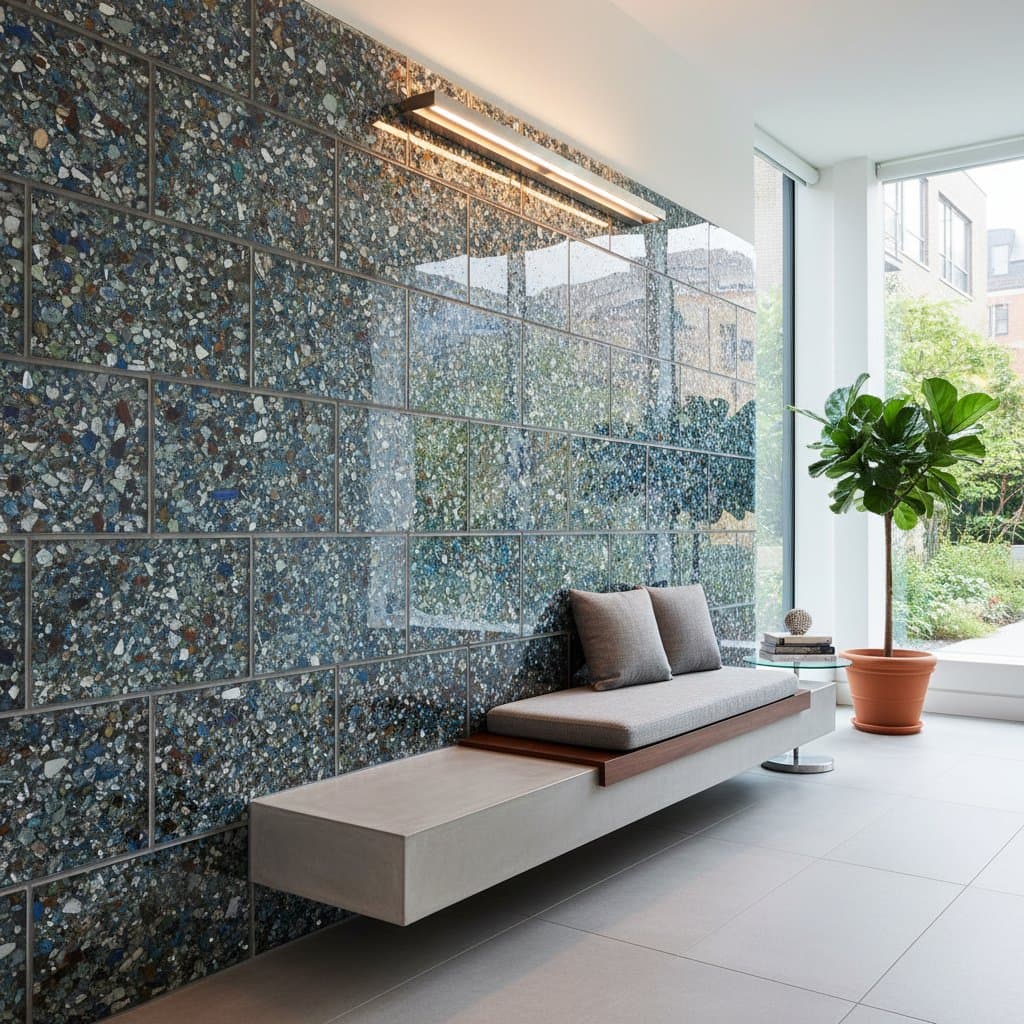
Understanding Recycled Glass Masonry
Recycled glass masonry emerges as a prominent choice in sustainable building practices, integrating ecological awareness with innovative aesthetics. Manufacturers process discarded glass bottles and panes by crushing them into aggregates that serve as substitutes for conventional sand or gravel in concrete, mortar, and ornamental units. This method yields a sturdy material that diminishes waste volumes and preserves finite natural resources.
Within masonry applications, recycled glass takes diverse forms, such as fine particles in mortar blends, exposed elements in polished concrete surfaces, or key ingredients in glass blocks and terrazzo-inspired pavers. These variations deliver distinctive textures and light-reflecting properties unmatched by standard stone. Professionals appreciate the material's dual advantages: environmental stewardship paired with the capacity to manipulate light and color for artistic outcomes.
Projects incorporating recycled glass masonry thrive in modest to moderate scopes. Consider decorative walls, patios, garden paths, or focal features. For structural or load-bearing elements, secure input from engineers and conduct specialized tests to verify performance.
Skill level: Intermediate. Precise attention to mixing proportions and finishing methods proves essential.
Physical demand: Moderate. Prepare for lifting and blending tasks.
Helper needed: Advisable when managing substantial loads.
The Significance of Recycled Glass in Masonry
Incorporating recycled glass in place of traditional aggregates lessens the environmental footprint of quarrying operations and material transport. Each mix diverts glass waste from landfills and curtails the depletion of natural stone deposits. The glass's sleek surface promotes denser concrete finishes when integrated properly, while its reflective nature brightens surfaces and infuses vitality without relying on supplementary pigments.
Design versatility complements these ecological gains. Options in clear, tinted, or matte glass fragments enable effects ranging from understated elegance to bold statements, contingent on surface exposure techniques. Once polished or sealed, the glass captures illumination to impart depth, fostering contemporary styles for both indoor and outdoor settings.
Engaging Professionals for Complex Projects
Projects featuring structural walls, load-bearing components, or large-scale concrete pours necessitate collaboration with structural engineers or seasoned masons. These experts assess blend compositions, thermal expansion behaviors, and material interactions. Since glass behaves distinctively with cement compared to natural aggregates, preliminary testing safeguards enduring stability. Homeowners can handle decorative paths, walkways, or minor borders independently, provided they exercise caution and employ appropriate equipment.
Planning a Recycled Glass Masonry Project
Site Evaluation
Begin with a thorough inspection of soil composition, terrain gradient, and water management systems. Recycled glass aggregates perform optimally on firm, compacted ground equipped with effective drainage. Steer clear of zones susceptible to pooling water, which might undermine mortar integrity. Locate and mark subsurface utilities prior to excavation, and verify compliance with municipal regulations or community guidelines.
Material Quantification
Determine the overall area and intended depth of the masonry layer. Compute the volume by multiplying these dimensions, then incorporate a 10 percent buffer for contingencies and irregularities. Recycled glass substitutes for portions of sand or gravel on a weight basis, so adhere strictly to supplier-specified proportions.
Material Selection
Option 1: Crushed Glass Aggregate
- Pros: Superior light diffusion, extensive color palette
- Cons: Potential for alkali-silica reactions without pretreatment
- Cost: Moderate
- Skill level: Intermediate
Option 2: Recycled Glass Tiles or Blocks
- Pros: Effortless maintenance, polished appearance
- Cons: Restricted load-bearing capacity
- Cost: Higher
- Skill level: Beginner
Option 3: Glass-Infused Concrete Mix
- Pros: Robust consistency, adaptable application
- Cons: Prone to fissures if blending lacks uniformity
- Cost: Moderate
- Skill level: Intermediate to advanced
Essential Tools and Supplies
Manual Implements
- Mason's trowel to apply mortar uniformly
- Brick jointer for precise joint formation
- Rubber mallet to position units without damage
Powered Equipment
- Concrete mixer to achieve homogeneous blends
- Angle grinder fitted with a diamond blade for edge refinement
Construction Process
- Foundation Preparation. Smooth and densify the soil base. Install a 4-inch gravel bed to facilitate drainage.
- Material Blending. Merge cement, sand, and recycled glass aggregate per guidelines from the producer. Verify thorough integration.
- Initial Layer Placement. Position bricks or blocks from one end to the other, confirming alignment with level and plumb tools.
- Subsequent Layers. Maintain uniform joint widths, generally 3/8 inch, as construction advances.
- Glass Revelation. On ornamental faces, gently polish or rinse the surface prior to complete hardening.
- Protective Sealing. Coat with a penetrating sealant to preserve hues and repel water ingress.
Expert Recommendations
- Acquire 10 percent surplus glass aggregate to maintain uniform coloration across the project.
- Select low-alkali cement to mitigate interactions with glass components.
- Conduct a trial mix on a small scale to validate aesthetic and structural outcomes before committing to larger volumes.
Long-Term Care and Upkeep
Routine maintenance preserves the vibrancy and integrity of recycled glass masonry. Inspect surfaces quarterly for cracks or sealant degradation, and reapply protection annually in exposed environments. Clean with mild soap and water, avoiding abrasive methods that could dull the glass sparkle. These practices extend the material's lifespan, ensuring sustained environmental and visual benefits for years ahead.