
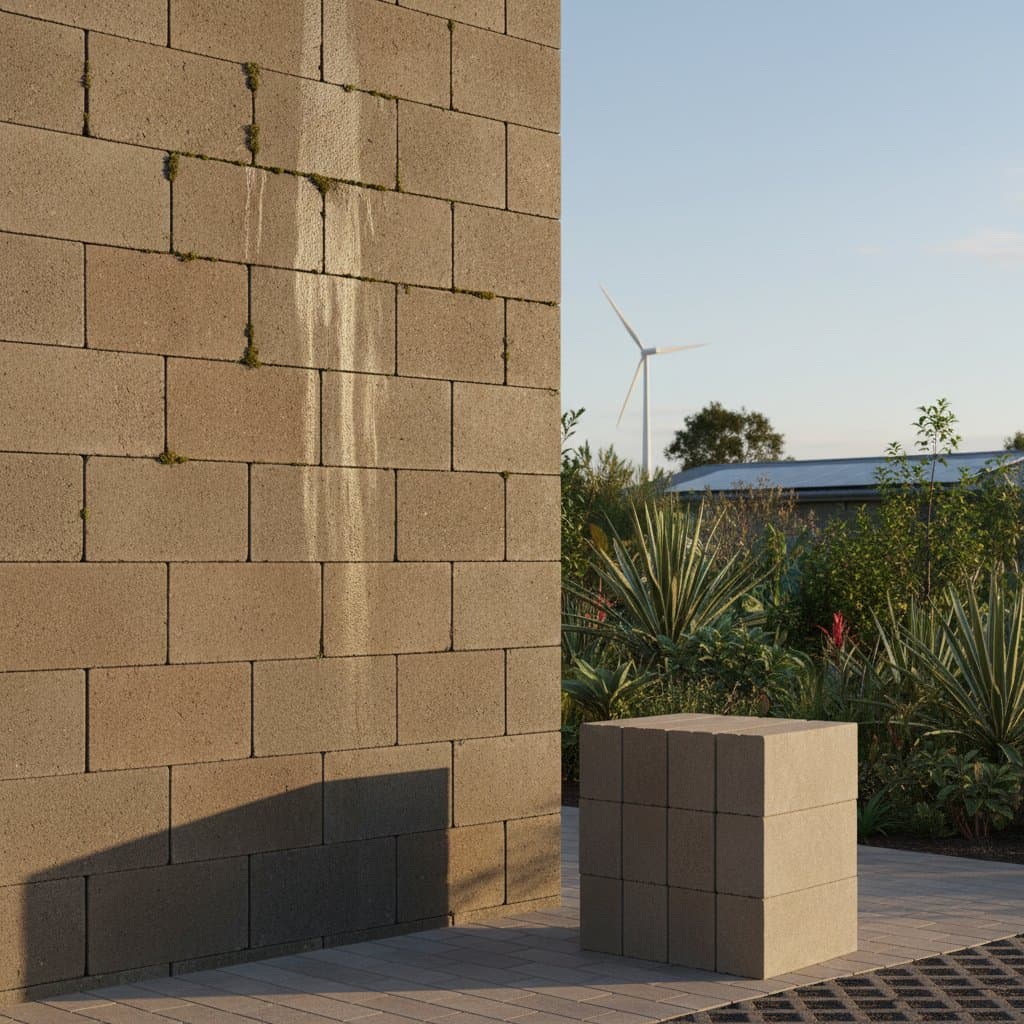
Understanding Geopolymer Masonry Blocks
Geopolymer masonry blocks emerge as a superior choice for construction due to their remarkable durability and reduced environmental footprint. These blocks form through a reaction between aluminosilicate precursors, such as fly ash or metakaolin, and an alkaline activator, creating a dense matrix comparable to natural stone in hardness and endurance. Production avoids the energy-intensive firing process of clay bricks, relying instead on ambient-temperature curing that slashes carbon emissions.
The inherent chemistry of geopolymer blocks shields them from thermal extremes, persistent moisture, and corrosive substances, ensuring a service life that often spans 50 years or more. In climates prone to severe freeze-thaw actions or elevated humidity, this resilience minimizes maintenance demands and prevents common failures like spalling or efflorescence. Property owners and contractors value how these blocks deliver enduring performance while aligning with green building principles throughout their lifecycle.
The Importance of Durability in Construction Materials
True durability extends beyond surface-level resistance to encompass a material's ability to withstand prolonged exposure to environmental forces and structural stresses. Conventional fired bricks may initially perform well but often succumb to water infiltration, leading to expansion, cracking, and diminished load-bearing capacity over time. Geopolymer blocks counter these issues with their impermeable, low-porosity composition, which maintains integrity under repeated wetting and drying cycles.
This extended lifespan directly supports sustainable practices by lowering the frequency of replacements and associated waste generation. Architects focused on longevity incorporate geopolymer blocks into designs for both new constructions and renovations, balancing aesthetic appeal with practical, cost-saving benefits. Selecting such materials advances projects toward certifications like LEED by emphasizing resource efficiency and minimal ecological disruption.
Deciding Between DIY and Professional Installation
Individuals with prior masonry experience may tackle geopolymer block projects independently, provided they possess the necessary tools and understand the material's properties. These blocks weigh more than standard bricks and demand precise cutting techniques to achieve clean edges. Suitable DIY applications include modest garden walls, raised planters, or ornamental features where loads remain light and non-structural.
For substantial endeavors, such as load-bearing walls, retaining structures, or foundational elements, engage certified professionals to ensure compliance with building codes. Expertise in structural engineering, soil dynamics, and precise load assessments proves essential to avoid risks like instability or uneven settlement. Evaluate personal capabilities by considering tasks like mortar preparation, course leveling, and material handling; enlist assistance for safe lifting and positioning. Prioritize safety gear, including gloves, eye protection, and stable footwear, to mitigate hazards during all phases.
Planning a Geopolymer Block Project
Site Assessment Essentials
Effective planning begins with a thorough evaluation of the construction site to identify potential challenges. Examine soil composition, as clay-heavy types prone to swelling require deeper footings, while sandy variants offer better drainage but less stability. Verify drainage patterns to direct water flow away from the build, preventing pooling that could undermine the foundation.
Account for terrain slope by designing stepped or reinforced bases on inclines to support even block placement. Identify and mark underground utilities through services like 811 to avoid disruptions or safety issues during excavation. These steps lay the groundwork for a stable, long-lasting installation free from future complications like shifting or water damage.
Key Measurements for Accuracy
Determine the precise dimensions of the intended structure by measuring length, height, and thickness. Calculate the required block volume by multiplying these figures, then incorporate a 10 percent allowance for cuts, breakage, and adjustments. Document footing specifications, including depth and width, based on local soil conditions and project scale.
Double-check measurements on-site before procurement to align with supplier availability and minimize excess material. Accurate planning streamlines the build process and optimizes resource use, contributing to both efficiency and budget control.
Accounting for Environmental Influences
Curing success hinges on managing ambient conditions during initial setup. Optimal temperatures range from 50 to 85 degrees Fahrenheit, with moderate humidity aiding the chemical bonding process. Shield fresh installations from heavy rain, intense sun, or gusty winds using temporary covers to promote uniform hardening.
In variable climates, monitor weather forecasts and schedule work during favorable periods. These precautions enhance the blocks' natural resistance, ensuring the final structure performs reliably across seasons.
Selecting the Right Geopolymer Block Type
Standard Geopolymer Blocks
- Overview: Produced from fly ash or metakaolin via ambient curing for general-purpose use.
- Advantages: Superior compressive strength exceeding 5,000 psi; outstanding resistance to fire and heat.
- Drawbacks: Increased weight necessitates careful handling; availability may vary by region.
- Pricing: Mid-range, typically $2 to $4 per block.
- Required Expertise: Intermediate masonry skills.
- Ideal Applications: Exterior walls and fire-rated assemblies.
Lightweight Geopolymer Blocks
- Overview: Incorporate aerating agents to lower density while preserving core properties.
- Advantages: Simplified transport and installation; enhanced insulation values for energy savings.
- Drawbacks: Reduced strength suits non-critical uses only.
- Pricing: Mid-range, around $2.50 to $3.50 per block.
- Required Expertise: Intermediate level.
- Ideal Applications: Interior partitions, infill walls, and aesthetic elements.
High-Density Geopolymer Blocks
- Overview: Formulated for demanding environments with added reinforcements.
- Advantages: Exceptional toughness against impacts and chemicals; supports heavy loads.
- Drawbacks: Bulkier sizes demand machinery for placement.
- Pricing: Higher end, $4 to $6 per block.
- Required Expertise: Professional installation mandatory.
- Ideal Applications: Industrial foundations and exposed structural components.
Essential Tools and Supplies
Manual Implements
- Trowel designed for masonry to apply mortar uniformly.
- Spirit level and taut string for verifying straightness.
- Soft-faced mallet to tap blocks without damage.
- Tape measure and chalk reel for marking precise lines.
Powered Devices
- Diamond-blade saw or grinder for smooth block sectioning.
- Paddle mixer attachment for drill to blend mortar thoroughly.
Equipment to Rent
- Vibratory compactor to firm up the sub-base.
- Portable mixer for efficient preparation of larger mortar quantities.
Core Materials
- Blocks ordered with 10 percent extra for contingencies.
- Specialized mortar formulated for geopolymer adhesion.
- Aggregates like gravel for foundational drainage layers.
- Moisture-retaining covers and water for controlled curing.
Detailed Installation Guide
- Prepare the Foundation: Dig to the specified depth, often 8 to 12 inches depending on soil and load. Compact the native earth firmly, then layer in 4 inches of compacted gravel to facilitate drainage and stability.
- Set the Initial Course: Spread a uniform mortar bed and position the first row of blocks, ensuring perfect levelness across the entire length. Frequent checks with a level prevent foundational errors that could propagate upward.
- Build Upward Layers: Offset joints between courses by half a block for interlocking strength, applying mortar to both bed and head joints before seating each piece securely.
- Maintain Precision: Every third course, employ a plumb line and level to detect deviations; make adjustments promptly to preserve plumb and alignment.
- Tool the Joints: As mortar firms to a thumbprint consistency, strike joints with a jointer for a weather-tight, professional finish that enhances both function and visuals.
- Facilitate Curing: Drape the assembly with moistened fabric or sheeting for at least 72 hours, misting periodically to sustain hydration and avoid shrinkage cracks.
- Final Cleanup: Once fully set, brush away residue with a wire tool, avoiding harsh abrasives that might etch the surface.
Practical Advice: Prepare mortar in small batches to sustain optimal consistency, as geopolymer formulations harden more rapidly than Portland-based mixes. Verification Step: Confirm each layer's squareness and front-to-back alignment; revisit the base if ground movement occurs.
Enhancing and Protecting the Finished Structure
Upon curing completion, consider applying a penetrating sealer compatible with geopolymer to bolster resistance to stains and UV degradation without trapping moisture. Install protective caps, such as precast concrete or natural stone, atop walls to deflect rainwater and extend joint longevity. Complement the build with integrated features like embedded lighting, adjacent plantings, or built-in benches to elevate functionality and curb appeal.
These additions not only safeguard the investment but also harmonize the structure with its surroundings, promoting a cohesive landscape design.
Ongoing Maintenance Strategies
Regular inspections form the cornerstone of preserving geopolymer block installations. Annually scan for signs of erosion, joint separation, or vegetation intrusion, addressing issues promptly to prevent escalation. Clean surfaces with low-pressure water and mild detergent to remove dirt buildup, steering clear of acidic cleaners that could compromise the material.
Reapply sealers every five years or after major exposure events to maintain protective qualities. In high-salt environments, flush walls seasonally to mitigate corrosive buildup. These routines ensure the structure retains its weather-resistant performance, minimizing long-term costs and disruptions.
Avoiding Pitfalls in Geopolymer Projects
- Neglecting Base Compaction: Results in differential settling and potential wall lean; always verify firmness before proceeding.
- Incompatible Mortar Selection: Standard cement fails to bond effectively, leading to delamination; use geopolymer-specific mixes exclusively.
- Inadequate Curing Measures: Exposes fresh work to cracking from rapid moisture loss; implement consistent protection protocols.
- Excessive or Imprecise Cutting: Generates unnecessary waste and misaligns courses; measure twice and employ sharp tools for efficiency.
By sidestepping these errors, builders achieve reliable outcomes that fully leverage the material's advantages for enduring, low-maintenance constructions.