
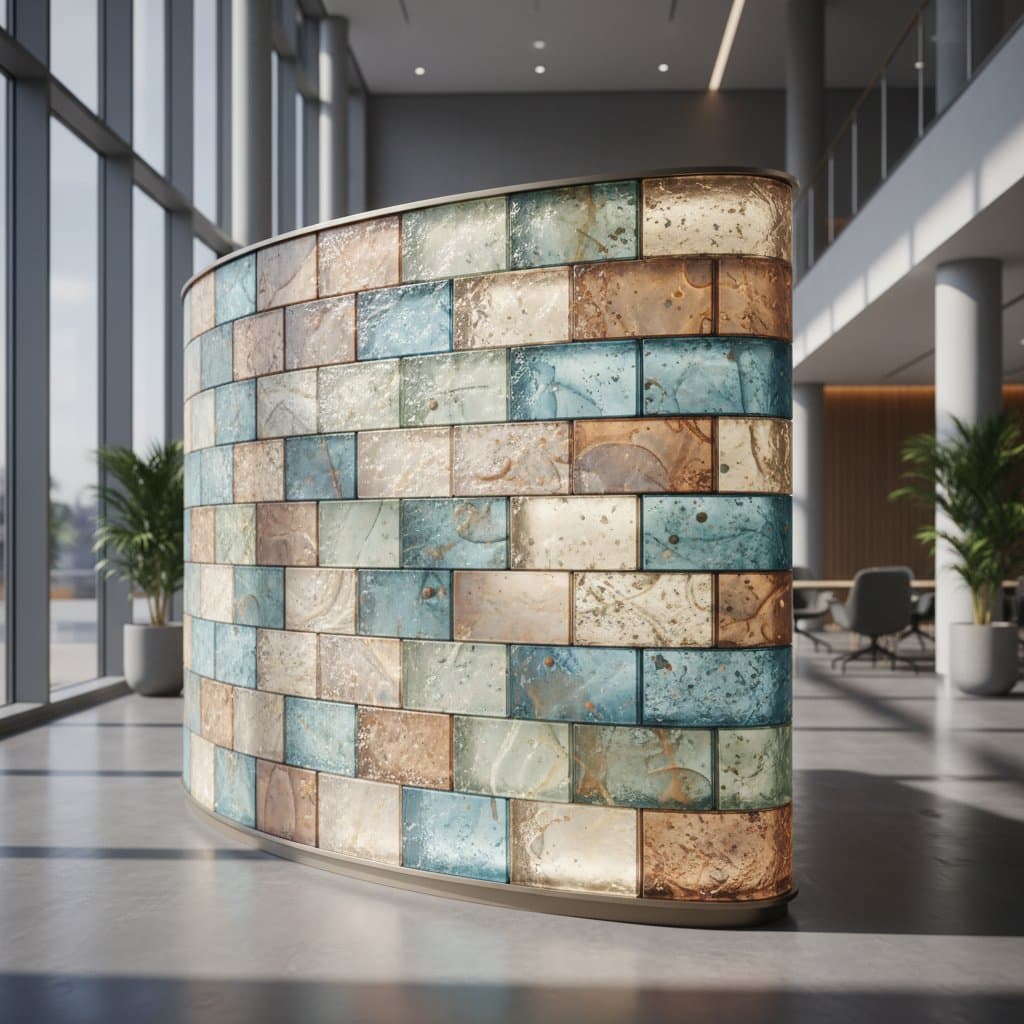
Key Decision Factors for Recycled Glass Masonry
Several elements guide the selection of recycled glass masonry for your project. Climate exposure influences durability and insulation needs, while wall thickness affects both structural integrity and light transmission. Lighting objectives determine whether to incorporate backlighting or rely on natural glow, and budget constraints shape material and labor choices. Evaluate these aspects early to align the material with your vision for performance and sustainability.
Planning Your Project
Thorough preparation ensures a successful recycled glass masonry installation. Begin by verifying compliance with local building codes, as many areas mandate permits for exterior walls or electrically enhanced features. Consult structural engineers to confirm that your design meets safety standards, particularly for load-bearing applications.
Site and Design Considerations
Address foundational elements to optimize the wall's longevity and appeal.
-
Structural Load Management: Recycled glass bricks weigh approximately 20 to 25 pounds per square foot. Reinforce supporting frameworks with appropriate beams or columns to distribute this weight evenly and prevent settling issues over time.
-
**Thermal Performance ** Glass offers modest insulation compared to traditional masonry, with base R-values around 1.0. Enhance efficiency by specifying double-walled bricks with integrated air pockets, achieving R-values of 1.5 to 2.5, suitable for moderate climates.
-
Lighting Integration Planning: Decide on illumination methods upfront, such as embedded LEDs or natural daylight diffusion. Route electrical wiring through concealed channels during the design phase to simplify construction and maintain a clean appearance.
-
Moisture Control Strategies: Protect against environmental hazards in damp or cold regions. Install vapor barriers behind the wall and incorporate weep holes in the mortar joints to allow drainage and mitigate risks of condensation or frost damage.
Cost Planning Essentials
Budgeting requires attention to multiple variables that impact total expenses. A typical accent wall spanning 100 square feet incurs costs from $2,500 to $6,000, depending on brick quality, pattern complexity, and regional labor rates averaging $50 to $100 per hour. Factor in additional outlays for reinforcements, lighting systems, and sealants, which can add 15 to 30 percent to the base price.
Professional installers provide expertise in achieving precise alignments, essential for uniform light play and structural stability. For those pursuing a DIY approach, potential savings of up to 25 percent arise from eliminated labor fees, though investments in tools like diamond-tipped saws and laser levels often recoup only part of those gains. Always obtain multiple quotes to compare value and secure warranties on materials.
Step-by-Step Installation Guide
Follow these structured steps to construct a robust recycled glass masonry wall. Assemble all materials and tools in advance, including mortar mix, spacers, levels, and safety gear, to maintain workflow efficiency.
-
Prepare the Foundation Course: Level the base surface meticulously using a concrete slab or reinforced frame. Spread a 1/2-inch mortar bed and position the first row of bricks, verifying plumb and level with a spirit tool every few units to establish a solid reference line.
-
Build Subsequent Courses with Precision: Apply mortar to brick ends and beds, maintaining 1/8-inch joints for expansion allowance. Use plastic spacers to ensure uniform gaps, and construct in manageable 2-foot-high sections to manage mortar set times effectively.
-
Incorporate Reinforcement Measures: For structures exceeding 6 feet in height, insert galvanized steel ties or mesh every other course. These elements anchor the assembly, accommodating thermal movements and resisting shear forces from wind or seismic activity.
-
Embed Lighting Elements Seamlessly: As courses rise, install LED strips or fiber-optic lines within designated voids. Secure conduits in mortar joints or adjacent framing to protect wiring and facilitate future access without compromising the wall's integrity.
-
Finalize with Cleaning and Sealing: Allow 24 to 48 hours for mortar curing before gentle cleaning. Remove residue using a vinegar-water solution on a non-abrasive cloth, then apply a penetrating silicone sealant to joints, selecting UV-resistant formulas to preserve translucency over years of exposure.
Troubleshooting Common Installation Challenges
Anticipate and resolve issues to safeguard your project's quality.
-
Cloudy or Streaked Surfaces: Excess mortar residue often causes haze. Gently scrub with a 1:1 vinegar and water mix, followed by rinsing, to restore clarity without scratching the glass.
-
Cracked Bricks: Uneven settling or excessive pressure during placement leads to fractures. Inspect and replace affected units promptly, ensuring the substrate remains stable through ongoing monitoring.
-
Internal Condensation: Poor sealing in humid environments traps moisture. Retrofit with improved ventilation slots or interior vapor barriers to equalize pressure and prevent fogging.
-
Inconsistent Glow: Variations stem from uneven backlighting or pigment inconsistencies. Adjust light sources for uniform output and test brick batches for color matching prior to full assembly.
Maintaining Recycled Glass Masonry
Regular upkeep preserves the vibrancy and durability of your installation. Schedule annual inspections to check for joint cracks, sealant degradation, or loose elements, addressing minor repairs immediately to avoid escalation.
Clean surfaces quarterly with a soft brush and pH-neutral cleaner, avoiding harsh chemicals that could etch the glass. For illuminated features, inspect electrical components biannually, replacing bulbs or LEDs as needed to sustain even luminescence. In outdoor settings, trim nearby vegetation to prevent shading and promote natural light enhancement, extending the wall's aesthetic lifespan to decades with minimal intervention.
Expert Tips for Optimal Results
Elevate your project with these practical recommendations.
-
Acclimate bricks in shaded, stable conditions for 48 hours pre-installation to minimize handling stresses.
-
Select neutral-toned mortar to amplify light reflection within translucent units, boosting visual impact.
-
Position exterior walls to leverage soft dawn or dusk illumination, maximizing the material's inherent glow.
-
Construct and evaluate a 2x2-foot test panel to assess adhesion, light diffusion, and overall harmony with your design scheme.
Integrating Light and Sustainability in Modern Builds
Recycled glass masonry not only reduces landfill contributions by repurposing post-consumer glass but also infuses spaces with dynamic, energy-efficient lighting. By following these guidelines, builders achieve walls that endure environmental demands while delivering enduring beauty. Embrace this material to craft structures that illuminate paths toward greener construction practices.