
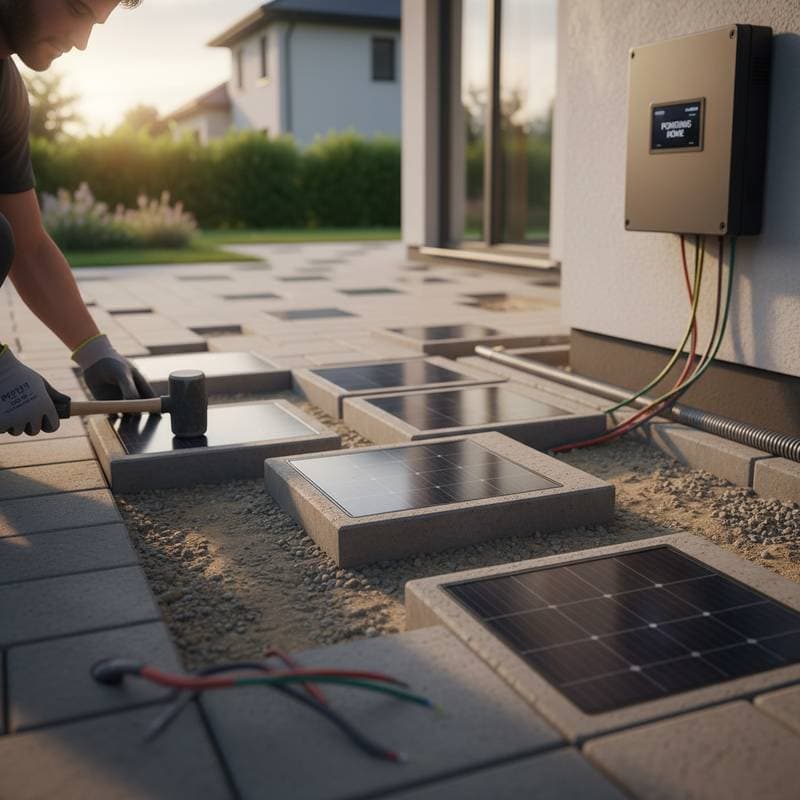
Solar Pavers Power Suburban Homes with Clean Energy
Skill level: Intermediate
Solar pavers represent a forward-thinking approach to integrating function, sustainability, and aesthetic appeal into outdoor spaces. These innovative masonry units capture sunlight and convert it into usable electricity while serving as a durable surface for walking or driving. Homeowners can incorporate them into driveways, patios, or walkways to bring renewable energy generation directly into daily living areas. Such installations decrease dependence on the electrical grid, integrate with smart home technologies, and reflect a tangible dedication to environmental responsibility.
The installation process suits homeowners with prior experience in traditional paver projects. It requires meticulous planning, careful handling of wiring, and precise alignment. Anticipate several days of work, ideally with assistance for lifting and positioning materials. A licensed electrician must manage all electrical connections to the home system. The remaining tasks, including excavation and placement, align well with advanced do-it-yourself enthusiasts who possess strong masonry and landscaping skills.
Critical Decision Point: DIY or Professional Installation
Do-it-yourself efforts typically encompass excavation, base preparation, and paver placement. Professional expertise remains essential for electrical integration to comply with safety regulations and guarantee effective power distribution. Under no circumstances should individuals attempt to connect the system to the grid without proper certification. Faulty wiring poses risks of electrical shock and may invalidate manufacturer warranties.
Engage a licensed electrician after positioning the pavers and conduits. This professional will link the wiring to the inverter, charge controller, or battery storage unit. For systems designed to return excess power to the grid, a certified solar contractor must verify adherence to local utility standards.
Choosing Materials
Option 1: Integrated Solar Pavers
Description: These units feature photovoltaic cells embedded directly within the masonry block.
Pros: They offer a streamlined visual design, optimal energy production, and robust surface durability.
Cons: Higher costs and the need for exact alignment during installation.
Cost: Falls in the premium category.
Skill level: Intermediate to advanced.
Maintenance: Requires only periodic cleaning to maintain efficiency.
Best use: High-visibility areas such as driveways and patios.
Option 2: Surface-Mounted Solar Modules
Description: Traditional pavers support removable solar panels affixed to the top surface.
Pros: Panels can be replaced individually, facilitating straightforward repairs.
Cons: Potential for minor height differences and a less uniform appearance.
Cost: Positioned in the mid-range pricing.
Skill level: Intermediate.
Maintenance: Involves replacing damaged panels as needed.
Best use: Low-traffic paths or garden walkways.
Option 3: Hybrid Solar Lighting Pavers
Description: These incorporate compact solar cells paired with integrated light-emitting diodes.
Pros: Installation proves simple, and the units operate independently without external power.
Cons: They do not support connections to the electrical grid.
Cost: Remains affordable for most budgets.
Skill level: Beginner-friendly.
Maintenance: Necessitates battery replacements every few years.
Best use: Accent lighting in landscapes or pathways.
Pro tip: Purchase approximately ten percent more pavers than required to account for cuts, breakage, and future needs. Store a few extras for potential replacements over time.
Step-by-Step Installation
1. Excavate and Prepare the Base
Excavate to a depth of eight inches for driveways or six inches for walkways. Compact the underlying soil thoroughly to establish a firm subgrade. Layer four inches of crushed stone over the area, then compact it once more. Incorporate a slope of one inch for every eight feet to facilitate proper drainage.
Purpose: This foundation ensures long-term stability and prevents issues like settling or cracking.
Quality checkpoint: Verify that the surface remains level from side to side and uniform from front to back.
2. Lay Conduit for Wiring
Prior to spreading bedding sand, install electrical conduit following the predetermined layout. Route the conduit in straight lines, with gentle curves at any turns. Secure waterproof connectors between conduit segments to maintain integrity.
Purpose: The conduit safeguards low-voltage wiring against moisture and physical damage.
Safety warning: Refrain from connecting the conduit to any power source until a professional conducts an inspection.
3. Add Bedding Sand
Distribute one inch of coarse sand evenly across the compacted base. Use a straight board and level to screed the sand smooth and even. Take care not to disturb the leveled sand by walking on it afterward.
4. Set the Solar Pavers
Begin placing pavers from one corner of the area. Maintain consistent joints measuring about one-eighth inch wide. Gently tap each paver into position using a rubber mallet for secure seating. Orient any embedded solar cells to face the primary path of sunlight exposure.
Pro tip: Proceed in manageable sections to preserve the integrity of the sand bed beneath.
5. Connect Wiring
Route the pre-attached cables from the pavers through the conduit to a central termination box. Clearly label all connections to assist the electrician. Cap all terminals securely until the system undergoes professional inspection.
6. Compact and Lock
After placing all pavers, sweep polymeric sand into the joints between them. Lightly mist the area with water to activate the binding properties of the sand. Gently compact the entire surface using a plate compactor fitted with a protective rubber pad.
Quality checkpoint: Confirm that the finished surface feels solid, remains level, and exhibits no shifting under pressure.
7. Professional Electrical Connection
The licensed electrician finalizes the setup by linking the wiring to the inverter or battery bank. This expert checks polarity, voltage levels, and grounding configurations prior to activating the system. Such verification ensures safe and efficient operation.
Common Mistakes to Avoid
- Skipping base compaction: This oversight results in uneven settling that can damage wiring and pavers.
- Incorrect slope: Poor drainage leads to water accumulation, which diminishes solar efficiency and promotes erosion.
- Ignoring shading: Partial shadows from trees or structures significantly reduce overall power generation.
- Improper sealing: Failure to seal joints adequately allows moisture to infiltrate and potentially short electrical circuits.
- DIY electrical work: Delegate all wiring tasks to qualified professionals to avoid hazards and ensure compliance.
Integrating Solar Pavers into Everyday Suburban Routines
Solar pavers extend beyond mere energy production; they enhance the practical aspects of suburban life. Homeowners gain a reliable source of clean power that offsets utility bills and supports off-grid capabilities during outages. The durable design withstands daily foot and vehicle traffic, maintaining both functionality and visual charm over years of use. By choosing these systems, individuals contribute to broader sustainability goals while enjoying modern conveniences tailored to their properties.