
Quick Overview
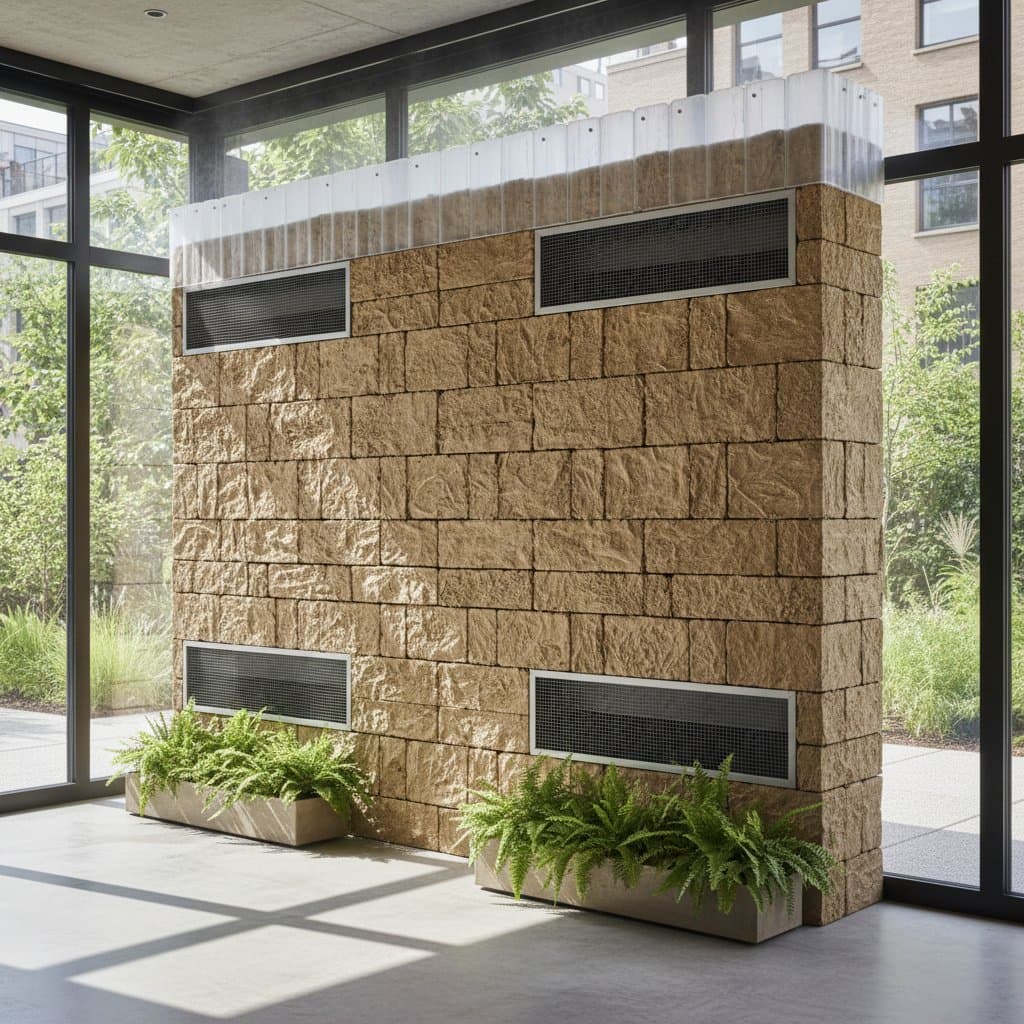
Mycelium bricks serve as a biological alternative to traditional clay masonry. These materials develop from fungal networks combined with agricultural waste. The primary challenge involves water penetration and variable curing processes, yet the advantages include reduced weight, full compostability, and minimal energy use during production. Expenses fluctuate based on manufacturing scale and regional material availability rather than the cost of base ingredients.
Essential Performance Checks
Prior to relying on mycelium bricks as a masonry solution, evaluate fundamental properties. Although they appear sturdy, their reliability relies on effective moisture regulation, material density, and protective coatings. Start with straightforward on-site assessments to gauge quality.
- Visual examination: Inspect for consistent coloration and solidity. Uneven spots or yielding areas indicate irregular development or inadequate drying.
- Manual pressure test: Apply thumb pressure to an edge. A resilient surface that springs back demonstrates strong adhesion. Yielding or friable margins suggest insufficient cohesion.
- Auditory evaluation: Strike two bricks against each other. A muted impact reveals retained dampness or unfinished curing. A sharp, resonant tone signifies optimal condition.
- Olfactory assessment: An earthy scent remains typical post-curing. Acidic or dank aromas point to post-process microbial activity.
- Moisture content tracking: Record the weight of a sample, store it in a controlled indoor environment for seven days, then measure again. Any increase signals potential absorption issues, particularly in external settings.
These evaluations require only a few minutes and help avert costly issues down the line. Mycelium-based masonry excels when shielded from prolonged rainfall and pooled water.
Critical Warning Indicators
Certain indicators reveal that a mycelium brick installation may lack readiness for load-bearing or outdoor use.
- Discoloration or evident mold development following placement.
- Deterioration or warping under elevated humidity levels.
- Surface efflorescence or mineral leaching, indicating internal moisture movement.
- Fractures or gaps at interfaces between bricks and joint compounds.
- Persistent emissions or intense smells, signaling incomplete dehydration or impurities.
- Inadequate adhesion to lime or clay mortars.
The presence of these issues warrants halting operations to review material preparation or site conditions.
Practical Solutions and Estimated Expenses
As an emerging product, mycelium bricks exhibit price variability according to vendor and volume. Artisanal production incurs higher fees due to manual effort and limited output. Large-scale cultivation can halve expenses through efficiency gains.
Standard remediation approaches:
- Protective surface treatments: Utilize permeable limewash or silicate-based barriers to curb water ingress. Costs remain moderate per unit area, influenced by application time.
- Extended drying cycles: For elevated dampness, arrange bricks to promote air circulation over multiple days. This incurs no direct expense but extends timelines.
- Unit substitution for defects: Extraction and reinstallation multiply the original material price through labor demands.
- Envelope safeguards: Incorporate projections, water-shedding profiles, or ventilated barriers to minimize contact. These investments yield substantial longevity benefits at reasonable outlays.
Impermeable options such as standard paints or synthetic films frequently exacerbate problems by retaining vapor. Such measures conceal underlying concerns and accelerate material degradation.
Strategies for Restoration or Substitution
Individuals incorporating mycelium bricks in residential settings should approach them akin to organic plasters or sun-dried earth. Superficial impairments allow for remediation, while severe compromise necessitates full exchange.
- Exterior wear: Address with a matching mycelium paste or biological adhesive overlay. This method proves economical and undoable.
- Moisture-induced harm: Swap compromised sections and enhance runoff systems. Patching alone seldom endures.
- Fissures: Seal minor openings with elastic lime or earthen compounds. Opt for replacement if separations expand or recur.
- Load applications: Refrain from primary structural roles pending standardized protocols. Employ instead for non-structural divisions, internal barriers, or thermal layers.
Proceed to substitution when integrity drops beyond 20 percent or fungal issues linger despite dehydration. Identify moisture sources prior to any reassembly.
Collaborative Roles and Procedures
Integrating mycelium bricks into construction or upgrades demands synchronized efforts. These materials respond uniquely to thermal variations, ambient dampness, and attachment methods compared to mineral-based options.
- Evaluator: Select professionals versed in non-conventional substances to detect integration challenges promptly.
- Designer: Involve from the outset to engineer configurations that exclude moisture from core elements. Systems with air circulation and moisture barriers prove essential.
- Project lead: Verify that workers grasp storage, handling, and stabilization needs. Mycelium endures brief exposure to moisture or intense light poorly.
- Technical advisor or vendor expert: Consult for insights on load capacity, compactness, and compatible adhesives.
Concurrent reviews minimize errors in communication. Expert guidance elevates preliminary expenses by 10 to 20 percent yet averts extensive corrections.
Strategic Implementation Focus
For those initiating mycelium use in residential projects, commence with modest applications and proceed based on observed outcomes.
Effective integration tactics:
- Deploy in non-load-bearing interior walls or aesthetic features.
- Layer with lime renders or earthen finishes for inherent humidity regulation.
- Merge with timber skeletons or natural fibers to lessen reliance on metals and aggregates.
- Ensure protective roofing extensions and efficient water diversion.
Inefficient applications:
- Exposed structural elements in humid regions.
- Subterranean or base-level placements.
- Ornate exteriors vulnerable to precipitation.
- Excessive thicknesses that hinder evaporation.
Target placements where utility aligns with material strengths. Steer clear of experimental configurations that introduce unnecessary hazards.
Financial Planning and Phased Execution
Mycelium brick projects succeed through deliberate progression rather than material attributes alone. Prioritize moisture exclusion and equilibrium as core principles.
- Prevent water ingress: Slope ground surfaces outward, position collection channels, and direct runoff beyond boundaries.
- Stabilize components: Confirm low moisture levels in all elements prior to joining.
- Erect foundational framework: Establish supportive structures without depending on mycelium for support.
- Assemble and coat under shelter: Exclude weather during brick placement and initial treatments.
- Finish with vapor-permeable layers post-equilibrium: Apply only after consistent ambient readings.
- Integrate utilities following enclosure: Route services once barriers secure the assembly.
Omission of these phases triggers sequential complications. Organic materials like mycelium retain fluids longer than inorganic counterparts, amplifying minor oversights.
Sustaining Longevity
Mycelium bricks endure gracefully under dry, aerated conditions. Similar to timber, they benefit from periodic review and minimal interventions.
- Yearly reviews: Scan for color shifts, tenderness, or unusual scents.
- Coating refreshes: Renew lime-based or organic barriers biennially to sustain vapor equilibrium.
- Airflow verification: Maintain circulation routes in assemblies. Restricted movement fosters breakdown.
- Climate moderation: Limit exposure to sustained cold or heat, which stress the fibrous structure.
Diligent moisture oversight extends service duration significantly. These materials degrade from inattention, not inherent aging.
Advancing Your Project
Commence with a single partition or enclosed feature to assess local responses. Monitor dehydration rates, mass variations, and manipulation ease relative to established masonry. Record successes and shortcomings systematically.
Upon positive feedback, broaden scope. Otherwise, refine preparation, barriers, or configurations. View mycelium as an adaptive element within a dynamic environment, emphasizing vitality alongside durability.
A Pacific Northwest constructor observed, You cannot fight water, you can only guide it. This principle governs mycelium applications. Thoughtful navigation of fluid dynamics and deliberate stabilization unlocks potential.
In restoration scenarios, mycelium suits internal upgrades, filler panels, or supportive layers beneath permeable finishes. Compatibility with heritage wood and lime frameworks arises from shared permeability.
Economically, viability strengthens in areas with abundant local residues. Distant shipping undermines efficiency gains. Localized fabrication from crop remnants, wood byproducts, or fiber crops maintains low impact and reliable access.
Ultimately, these builds sequester carbon without high-temperature processing. While vulnerable to fluids and quality variances, strategic measures maximize gains and curb liabilities.