
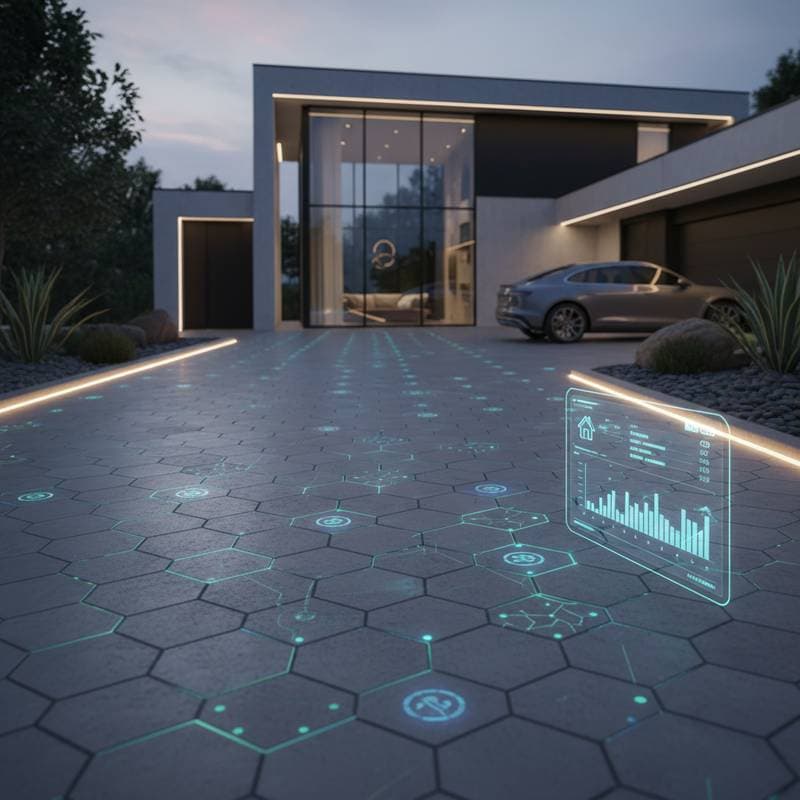
IoT Smart Pavers: Real-Time Monitoring for Driveway Durability
Smart pavers resemble conventional concrete or stone units, yet they incorporate advanced sensors to assess conditions beneath the driveway surface. These sensors measure moisture content, applied pressure, and temperature fluctuations, revealing early indicators of cracks, frost damage, or inadequate drainage. The collected data transmits to a mobile application or cloud-based dashboard, providing homeowners with an immediate overview of the driveway's condition.
The term IoT, or Internet of Things, refers to the integration of embedded chips that enable wireless communication among the pavers. Homeowners benefit from reduced unexpected repairs, prolonged pavement longevity, and greater oversight of maintenance budgets. This technology shifts driveway care from reactive fixes to proactive management.
Understanding the Costs
The material price for smart pavers typically spans $12 to $25 per square foot, influenced by the quantity of sensors, surface finish, and material thickness. In comparison, traditional concrete pavers without sensors cost between $3 and $8 per square foot. These figures reflect the added value of embedded technology.
Full installation expenses for an IoT-equipped driveway range from $20 to $40 per square foot. Factors such as labor charges, setup of wiring or wireless hubs, and integration with data platforms contribute to the total. Homeowners should budget accordingly for these enhancements.
Key elements driving costs include the type and density of sensors, the concrete's compressive strength and aesthetic finish, the wireless coverage and power supply options, site preparation requirements like excavation, and regional labor rates plus permitting costs. For a standard two-car driveway, the premium over a basic installation might reach several thousand dollars. However, the savings from data-informed maintenance often recoup this investment through fewer and less severe repairs over the years.
Essential Specifications to Evaluate
Prospective buyers should verify several critical specifications when selecting smart pavers to ensure suitability for their driveway.
- Compressive strength: Require at least 8000 psi to withstand typical vehicle weights and traffic.
- Freeze-thaw resistance: Seek compliance with ASTM C1262 or equivalent standards, particularly in regions with harsh winters.
- Ingress protection rating: Opt for IP67 or superior to safeguard sensors from dust infiltration and water exposure.
- Wireless transmission range: Ensure a minimum of 100 feet from sensors to the central hub, accommodating most residential properties.
- Battery longevity: Target five to ten years for battery-powered models, or opt for wired continuous power sources.
- Paver thickness: Select at least 2 3/8 inches for moderate use or 3 1/8 inches for areas with heavier vehicles.
Compatibility among sensor components, the control hub, and the accompanying monitoring application remains essential. Review manufacturer documentation to confirm seamless integration.
Step-by-Step Installation Process
Proper installation forms the foundation for reliable performance. Follow these steps to achieve a stable and functional smart driveway.
- Plan the layout: Define boundaries and use chalk lines to guide straight, even rows.
- Excavate the site: Remove soil to accommodate the base depth, bedding material, and paver thickness; eliminate any organic debris.
- Prepare the base: Layer crushed stone in 2-inch increments and compact each layer using a plate compactor for solidity.
- Establish drainage slope: Use a level to confirm the surface inclines correctly for water runoff.
- Apply bedding sand: Evenly screed a 1-inch layer of sand across the base.
- Position the pavers: Begin at a fixed straight edge and place each unit tightly adjacent to its neighbors.
- Integrate sensors: Connect individual smart pavers to the central hub or mesh network per the manufacturer's guidelines.
- Install edge restraints: Secure the perimeter with anchors to prevent shifting.
- Fill joints: Sweep polymeric sand into the gaps, compact it, and add more as needed.
- Activate the system: Energize the sensors and test data flow to the app or dashboard.
Permit the completed surface to cure and settle for several days prior to vehicle use. Professional oversight during this phase enhances accuracy and longevity.
Choosing Between DIY and Professional Installation
Individuals experienced in paver projects may handle DIY installation for smaller areas like patios or walkways. Plug-and-play hubs simplify sensor network setup in these scenarios. Basic tools and careful planning suffice for straightforward applications.
Engage a professional installer for more demanding situations, including:
- Extensive or sloped driveway surfaces.
- Challenging soil conditions, such as clay or poor drainage.
- High vehicle loads beyond standard residential use.
- Configurations requiring wired electricity or advanced network connections.
- Projects subject to local building codes that mandate engineered foundations.
Certified experts guarantee optimal compaction, precise sloping, and accurate sensor calibration, all vital for dependable data collection and structural integrity.
Adapting to Regional and Climate Conditions
Driveway performance varies by environment, so tailor smart paver choices to local challenges.
In cold climates, prioritize pavers rated for freeze-thaw cycles and employ waterproof sensor connections. Vigilant moisture tracking during winter prevents ice-related upheaval.
Hot areas demand UV-resistant sealers and lighter surface colors to mitigate thermal expansion. Joints may require more frequent attention to avoid rapid drying.
Coastal regions face salt corrosion risks; select robust sensor enclosures and apply salt-resistant sealers while rinsing surfaces regularly.
High-rainfall zones benefit from reinforced drainage bases and access points for inspections to avoid subsurface water accumulation.
Arid environments call for routine dust removal to maintain sensor vents and joint integrity through consistent sweeping.
Practical Strategies for Optimal Performance
To maximize the benefits of smart pavers, implement these targeted practices.
Order 5 to 10 percent additional units to account for cuts and spares. Document sensor positions in the monitoring app prior to covering them, facilitating future reference.
Position the control hub in a sheltered location close to the home's router for reliable connectivity. Conduct quarterly reviews of the driveway's physical state alongside data logs to spot trends early.
During maintenance, select cleaners and sealers that avoid corrosive acids, preserving sensor housings. These habits ensure the system delivers consistent, actionable insights.
Maximizing Long-Term Value
Investing in smart pavers equips homeowners with tools to anticipate and avert costly driveway failures. Real-time monitoring fosters informed decisions, from timely sealing to preemptive adjustments in usage patterns. Over time, this approach not only safeguards property aesthetics but also enhances safety and curbs escalating repair demands, delivering sustained financial and practical advantages.