
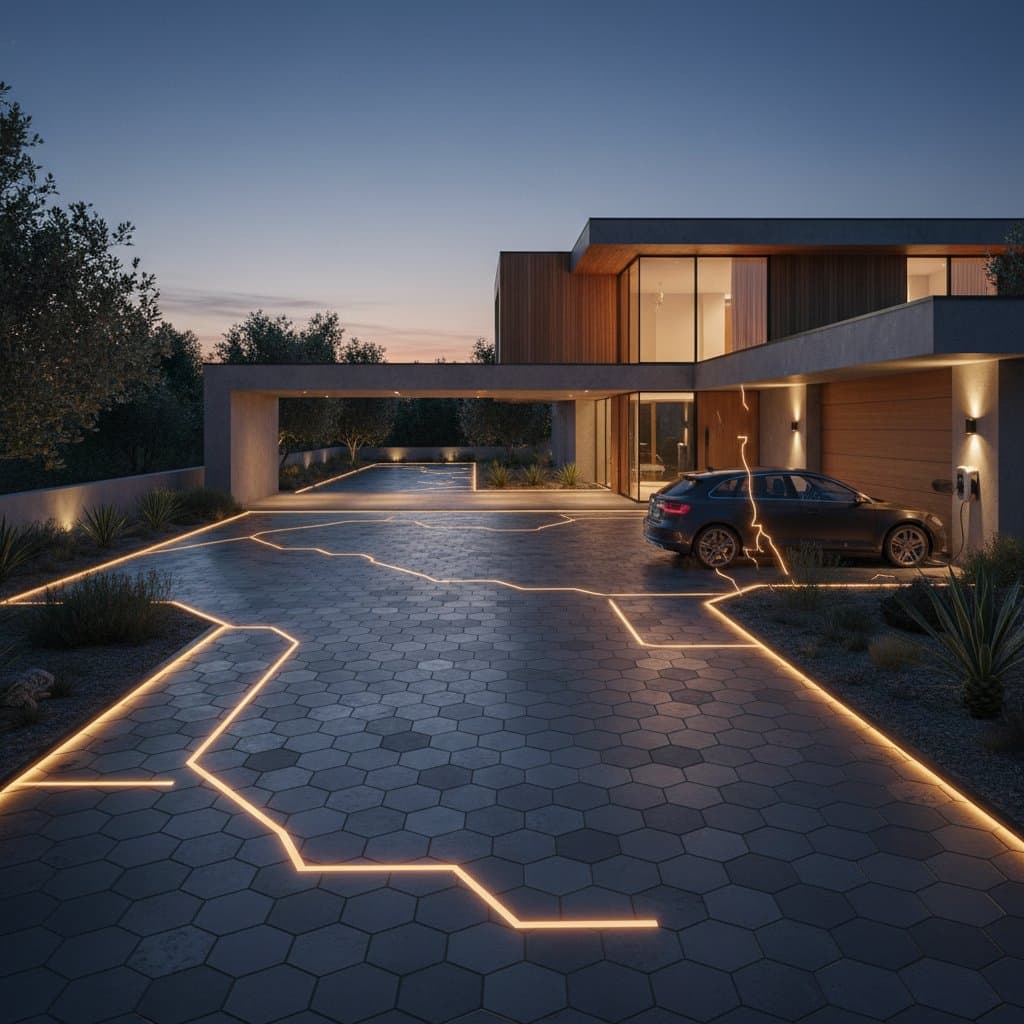
Solar Pavers: Driveways That Generate Power and Illuminate Paths
Solar pavers integrate photovoltaic cells within robust paving units, resembling traditional concrete or stone options. These units surpass basic load-bearing and drainage functions by absorbing sunlight and transforming it into usable electricity. This power supports pathway illumination, integrates with household electrical networks, or charges batteries for subsequent applications. Certain models incorporate embedded LED lights that activate at dusk, drawing from daytime solar collection.
Advantages and Drawbacks
Advantages
- Produce renewable energy on essential paved areas
- Diminish reliance on utility grids and lower electricity expenses
- Deliver integrated lighting to enhance safety and visual charm
- Integrate with intelligent systems for real-time energy tracking
- Facilitate stormwater management through permeable joint installations, akin to conventional pavers
Drawbacks
- Incur greater initial expenses compared to standard concrete or brick
- Yield lower energy production relative to rooftop solar installations
- Require direct sunlight exposure for optimal functionality
- Necessitate electrical permits and professional wiring compliance
- Demand model-specific replacements, which can prove expensive
Installation Costs
Quality solar paver materials cost between $20 and $40 per square foot. Total installed expenses range from $35 to $70 per square foot, influenced by site conditions, wiring distances, and supplementary controls. Incorporating battery storage or inverters for home integration elevates costs further. Simpler, sun-exposed driveways with straightforward wiring remain at the lower spectrum, while intricate designs, partial shading, or extended conduit paths increase expenditures.
For a 200-square-foot driveway segment, anticipate $7,000 to $12,000 for installation. Complete driveway systems may surpass $20,000, varying by layout and energy output capacity. Obtain detailed quotations to evaluate labor, electrical components, and foundation preparation separately.
Durability and Upkeep
Quality solar pavers endure 20 to 25 years with appropriate installation and care. Surfaces feature tempered glass or resin composites engineered for vehicle traffic. Conduct yearly inspections for fractures, unsecured connections, or reduced performance. Clean surfaces using mild soap and water to eliminate debris obstructing solar intake. Refrain from high-pressure washing near joints or edges. For sealed units, apply clear penetrating sealant periodically to resist staining and safeguard photovoltaic elements.
Key Specifications to Evaluate
Prior to purchase, verify the following attributes:
- Load capacity: Meets or exceeds standards for driveway vehicular weights
- Slip resistance: Includes certified traction levels for wet and dry conditions
- Ingress protection rating: IP67 or superior to prevent dust and water entry
- Power generation: Details watts per unit and circuit voltage
- Connection compatibility: Ensures alignment with controllers or inverters
- Operating temperature range: Accommodates local climate variations
Acquire 5 to 10 percent additional units to account for trimming, border adjustments, and spares.
Preparation and Design Considerations
Solar paver installations demand a stable foundation comparable to traditional hardscaping, augmented by secure electrical pathways. Review municipal regulations for conduit burial depths and materials. Identify underground utilities prior to excavation. Route wiring efficiently to inverters or junction boxes proximate to the residence. Incorporate access panels or pull boxes to facilitate ongoing maintenance without surface disruption.
Essential base components include:
- Compacted crushed stone layer, 6 to 8 inches thick, for driveways
- 1-inch bedding of coarse sand or fine aggregate
- Uniform gradient of 1/8 inch per foot to direct drainage from buildings
Effective drainage averts water accumulation beneath pavers and preserves electrical integrity.
Step-by-Step Installation Guide
- Outline the driveway boundaries and electrical pathways.
- Excavate to accommodate base, bedding, and paver depths.
- Compact the subgrade and add geotextile fabric for unstable soils.
- Layer and compact base material, verifying drainage slope.
- Embed electrical conduits beneath the bedding layer.
- Level the bedding sand evenly.
- Position pavers in the selected pattern, aligning from a fixed reference.
- Link inter-paver wiring per manufacturer protocols.
- Secure edges with restraints to stabilize the assembly.
- Fill joints with specified sand or polymeric compounds.
- Validate system operation post-assembly, then clean and seal.
Design Patterns and Variations
Available solar pavers offer diverse shapes and textures. Popular configurations encompass:
- Uniform grid arrangements for consistent driveways
- Border accents featuring illuminated edges
- Hybrid setups blending solar and conventional pavers to control costs
- Permeable designs with expanded joints for water permeation
Select patterns that harmonize energy production, financial constraints, and aesthetic goals. Comprehensive solar coverage maximizes output, yet incorporating non-solar pavers in low-light areas tempers expenses.
DIY Installation Versus Professional Services
Experienced individuals may manage small-scale walkway or patio projects with solar pavers. Driveway applications, however, involve heightened complexity due to load requirements and electrical standards. Engage a licensed electrician for all wiring and home system integrations to ensure code adherence.
Opt for professionals in scenarios involving:
- Vehicular support surfaces
- Challenging drainage or terrain
- Extended wiring beyond basic connections
- Mandatory permits or inspections
Specialized teams possess necessary compaction devices, cutting tools, and diagnostic instruments for reliable outcomes.
Troubleshooting Common Issues
Reduced Energy Yield: Examine for accumulated dirt or obstructions like foliage. Thoroughly clean surfaces and prune nearby vegetation.
Moisture Infiltration: Assess seals and junctions for integrity. Substitute compromised gaskets or redirect runoff.
Damaged Pavers: Replace affected units with identical models to preserve circuit equilibrium. Retain extras from initial procurement.
Surface Instability: Recompact underlying base and reposition pavers. Confirm conduits do not impede settling.
Climate-Specific Adaptations
In regions prone to freeze-thaw cycles, select pavers designed for thermal expansion and water resistance. Prioritize free-draining bases to mitigate frost heave. Hot, arid climates benefit from lighter hues to minimize heat buildup and sustain efficiency. Coastal installations require corrosion-proof connectors and hardware. Snowy areas demand non-abrasive clearing tools and gentle de-icers to prevent surface degradation.
Viable Alternatives
For budgets strained by solar pavers or sites with insufficient sunlight, consider:
- Rooftop photovoltaic arrays: Offer superior energy returns per investment, albeit altering roof profiles
- Solar-equipped carports: Combine shading with electricity production
- Low-voltage LED pathway systems: Provide illumination sans comprehensive solar infrastructure
- Integrated landscapes: Pair traditional pavers with adjacent ground-level panels
These options vary in visual impact, generation capacity, and expense. Blended strategies frequently achieve optimal aesthetics and performance.
Sustaining Performance Over Time
Regular cleaning and joint stabilization extend system longevity. Promptly address spills or debris to prevent residue buildup. Replenish joint sand as erosion occurs. Utilize monitoring applications or interfaces to detect underperformance early. Schedule periodic electrician evaluations to confirm efficiency. Diligent maintenance upholds both aesthetic quality and energy savings.
Steps to Proceed
Evaluate your driveway's solar potential first. Direct sunlight on at least half the area during peak hours indicates viability. Solicit proposals from multiple photovoltaic-hardscaping specialists. Request physical samples to assess illumination and texture. With thoughtful execution, solar pavers convert driveways into dual-purpose assets that enhance sustainability and home value daily.