
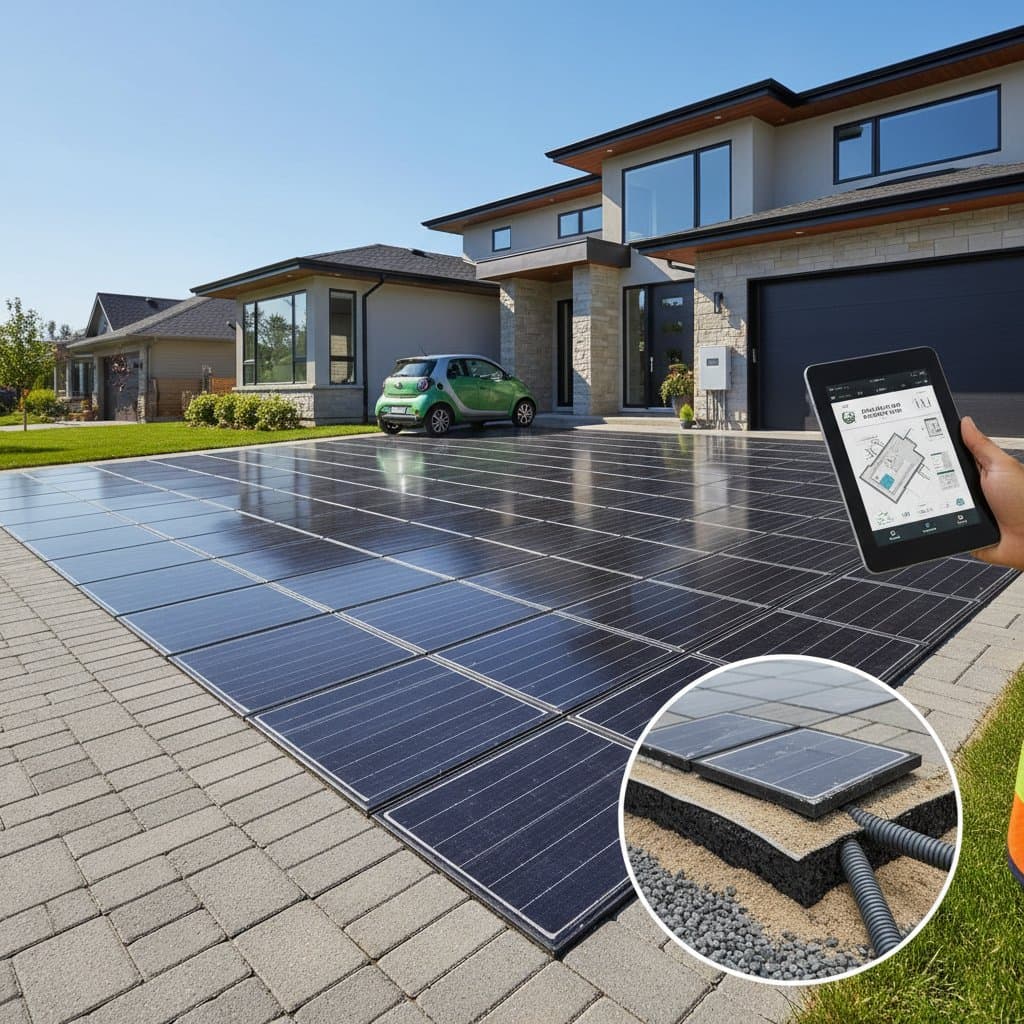
Quick Overview
Solar pavers convert driveways and patios into compact energy production units. Embedded photovoltaic cells within these pavers harness sunlight and transform it into electricity for home use. Primary challenges include initial expenses, inconsistent output from shading issues, and resilience against vehicular loads and environmental exposure. Key expense factors encompass the covered area, distance to electrical connections, and the selected monitoring and control technology.
Essential Site Assessments
Examine your driveway thoroughly to evaluate sunlight exposure, incline, and potential obstructions. Daily sunlight duration directly influences energy production levels. Positions facing south or west typically yield the highest returns. Identify sources of shade such as overhanging branches, roof overhangs, or adjacent barriers that reduce efficiency.
Evaluate drainage patterns across the surface. Accumulated water accelerates deterioration of the photovoltaic components. Verify the stability of the underlying base, checking for signs of upheaval or subsidence. Address any areas where water pools after rainfall by adjusting the grade prior to proceeding.
Locate the main electrical panel and assess the proximity to the installation site. Shorter cable routes simplify wiring and reduce expenses. Extended excavations through gardens or pathways increase both costs and potential disruptions.
Identify any pre-existing conduits or adjacent electrical lines, such as those for pathway lighting. These elements may integrate into the solar paver setup, providing pathways for controls or power lines.
Critical Warning Signs
- Persistent shading from structures or vegetation covers the driveway.
- Evidence of frost damage, surface cracks, or indentations in the base.
- Inadequate drainage leading to water accumulation during storms.
- Electrical panel operating close to its capacity limit.
- Utility connections positioned far from the proposed installation area.
- Regulations from homeowners associations or local zoning that prohibit ground-level solar installations.
- Absence of straightforward routes for underground wiring without disturbing established surfaces.
Solutions and Estimated Expenses
Solar paver installations generally cost more per watt than traditional rooftop solar systems. Expect expenses three to five times higher than a comparable roof array. For a modest driveway segment, initial outlays range from $20,000 to $30,000, influenced by electronic controls and excavation requirements.
Poor drainage or uneven grading necessitates additional investment in site preparation. Budget several thousand dollars for digging, reshaping, and reinforcing the foundation before paver placement. Electrical integration varies significantly: a nearby connection adds minimal cost, perhaps a few hundred dollars, whereas a distant link to the panel may surpass $5,000.
Bids that appear unusually low often overlook thorough base preparation or secure conduit placement. Such oversights result in early system breakdowns. Insist on detailed plans from installers covering water management, cable safeguarding, and resistance to snow accumulation.
Project expansions, like adding illuminated pathways or heated surfaces, frequently arise during construction. Plan these enhancements as separate phases after confirming the core system's performance.
Options for Upgrades: Repair or Full Replacement
When existing pavers remain in good condition and the goal focuses solely on energy generation, consider targeted replacements. Integrate solar units by substituting every third or fourth paver, forming a cost-effective hybrid layout. This approach minimizes expenses and facilitates isolated repairs if individual units malfunction.
Opt for complete resurfacing when the foundation shows instability or the design requires modifications for better incline and water flow. A total overhaul enables precise wiring arrangements and extends overall durability, though at a greater upfront price.
For ongoing care, handle solar pavers similarly to fragile glass surfaces. Regularly remove debris, dirt, and foliage to maintain clarity. Refrain from applying sealants that might obscure the photovoltaic layer. Promptly replace any damaged pavers to avoid water penetration and further issues.
If output declines in a specific area, diagnose the electrical circuit first rather than declaring a fault. Accumulated debris or increased shading often accounts for reduced performance. Simple interventions like pressure washing or trimming vegetation can revive efficiency.
Assembling the Right Team and Workflow
Engage a solar specialist experienced in ground-mounted or canopy installations, beyond just rooftop expertise. Such professionals grasp the nuances of weight distribution, burial depths for wiring, and protection against humidity. Consult an electrician at the outset to validate panel capacity and adherence to electrical codes.
If base reconstruction or regrading proves necessary, collaborate with a landscaping or hardscaping expert skilled in soil compaction and water diversion. This step prevents shifting under vehicle weight.
For expansive or communal driveways, involve a civil engineer to analyze gradients and drainage routes. Proactive teamwork averts conflicts in underground work and eliminates the need for corrections.
Professional oversight or design support typically increases total costs by 10 to 20 percent. In intricate projects, this investment averts budget overruns and errors in cabling that prove more expensive to rectify later.
Strategic Focus Areas
Allocate resources to zones with abundant sunlight and dependable drainage. Installing on the most illuminated portion of the driveway, even if partial, often delivers the bulk of energy savings at reduced cost.
Avoid shaded regions or areas with sharp inclines. Postpone additions like aesthetic lighting until the primary generation proves reliable. Position control equipment in protected, airy enclosures rather than exposed or soil-embedded locations.
Planning Budget and Installation Sequence
Structure the project in this order:
-
Correct grading and drainage issues.
-
Reconstruct and compact the foundation.
-
Place conduits and connection boxes prior to paving.
-
Position solar pavers and verify electrical links.
-
Finalize control systems and connection to the grid.
-
Restore surrounding landscapes at the end.
Trace water flow paths during planning. Ensure all conduits remain above saturated ground levels. Monitor energy production following the initial significant rainfall to assess structural integrity.
Safeguarding Long-Term Performance
Regular inspections preserve the system's efficiency and longevity. Schedule annual reviews of connections, seals, and surface cleanliness to detect wear early. Adjust shading elements seasonally, such as pruning schedules, to sustain optimal exposure. By addressing minor issues promptly, homeowners extend the lifespan of solar pavers and maximize return on investment through consistent, reliable energy output.