
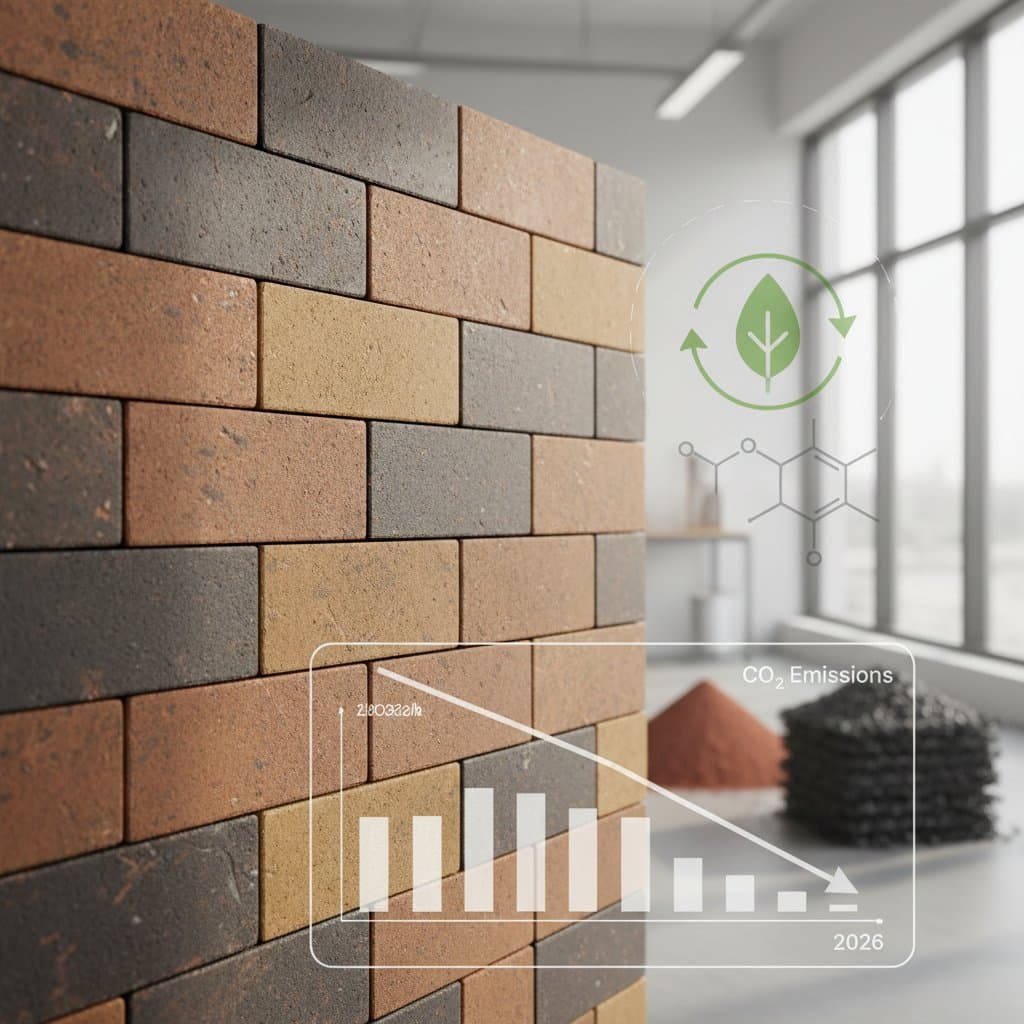
Sustainable Zero-Cement Bricks Disrupting Masonry by 2026
Zero-cement bricks represent a significant advancement in sustainable construction. These innovative materials utilize geopolymer binders in place of traditional Portland cement, which substantially reduces carbon emissions and incorporates industrial waste products. They deliver performance comparable to conventional concrete blocks while minimizing environmental impact.
Understanding Zero-Cement Bricks
Zero-cement bricks form through geopolymer chemistry, where aluminosilicate materials such as fly ash or slag react with alkaline activators to create a durable binder. This process avoids the need for limestone extraction and energy-intensive high-heat kilns associated with cement production. The resulting matrix achieves compressive strengths similar to those of cement-based materials, enabling reliable use in structural applications.
Advantages and Challenges
Advantages
- Carbon emissions decrease by up to 50 percent relative to traditional cement blocks, supporting global sustainability goals.
- Incorporation of waste by-products like fly ash and slag reduces landfill contributions and promotes resource efficiency.
- Superior compressive strength, along with enhanced resistance to chemicals and fire, ensures long-term reliability.
- Minimal shrinkage and cracking provide improved dimensional stability during construction and service life.
Challenges
- Availability remains constrained, with dependence on regional sources of raw materials.
- Production demands precise control over mixing ratios and curing environments to achieve optimal results.
- As a relatively new technology, these bricks may encounter regulatory hurdles or unfamiliarity among building inspectors.
- Initial material costs exceed those of standard bricks, though economies of scale will likely reduce prices over time.
Cost Considerations
Material costs for zero-cement bricks range from 1.20 to 2.00 dollars per unit, influenced by aggregate type and binder formulation. Installation expenses typically fall between 8 and 12 dollars per square foot, varying with project scale, local labor rates, and site accessibility. Specialty finishes or intricate patterns increase expenses, while large-scale commercial orders or simple block designs lower them. Projects in remote locations or those involving custom small batches incur higher overall costs.
Durability and Upkeep
These bricks exhibit a service life exceeding 60 years when properly installed and maintained. Their resistance to freeze-thaw cycles and chemical degradation makes them suitable for exterior walls, foundations, and paving surfaces. Annual inspections of mortar joints help detect early signs of cracking or shifting. Cleaning requires only mild detergent and water to avoid damaging protective surface layers; acid-based cleaners prove unsuitable. Optional sealing enhances color retention, particularly in regions with intense sunlight exposure.
Key Specifications to Verify
Purchasers should evaluate the following attributes when selecting zero-cement bricks:
- Compressive strength: Aim for 4,000 to 6,000 psi to support structural loads.
- Water absorption: Limit to under 10 percent for applications exposed to weather.
- Freeze-thaw resistance: Ensure certification matches the local climate conditions.
- Fire resistance: Confirm compliance with regional standards for wall assemblies.
- Dimensional tolerances: Verify uniformity in length, width, and height, with deviations not exceeding a few millimeters.
Suppliers must provide test certificates, especially for projects involving load-bearing elements.
Site Preparation Essentials
Effective preparation of the construction site guarantees the performance of zero-cement bricks. Verify subgrade stability and implement drainage features to direct water away from the foundation. For wall construction, establish a level footing or slab; for paving, excavate sufficiently to accommodate base and bedding courses. Eliminate areas of standing water or unstable soil. Store materials in a dry environment prior to use, as excess moisture can interfere with the geopolymer curing process.
When integrating these bricks into existing structures that feature cement blocks, assess compatibility between legacy mortar and new units. Opt for geopolymer or lime-based mortars rather than Portland cement to preserve overall system cohesion.
Installation Guidelines
Installation procedures align closely with traditional masonry techniques, though they emphasize stringent moisture management:
- Establish the layout and desired pattern, using chalk lines to guide alignment.
- Prepare geopolymer mortar or adhesive according to precise manufacturer specifications.
- Lightly dampen surfaces in hot or arid conditions to prevent rapid drying.
- Place bricks starting from a reference corner, maintaining consistent joint thickness and vertical plumb.
- Tool joints once the initial set occurs to promote effective water shedding.
- Protect the assembly during curing with covers or plastic sheeting to sustain required humidity levels.
- Clean hardened surfaces gently, steering clear of harsh acids.
Curing durations depend on the specific formulation and often prove shorter than those for cement products. Consistent environmental controls yield the strongest outcomes.
Available Formats and Design Options
Zero-cement bricks offer versatility across multiple configurations:
- Modular blocks ideal for efficient standard wall construction.
- Hollow units designed for integration with reinforcement or insulation.
- Pavers featuring smooth or textured finishes for durable surfacing.
- Architectural facing bricks enhanced with pigments or exposed aggregates for aesthetic appeal.
Standard modular patterns facilitate rapid installation and cost savings. Decorative or interlocking variants suit projects prioritizing visual impact over installation speed.
DIY Projects Versus Professional Installation
Individuals with basic masonry skills can manage small-scale applications, such as garden walls, edging, or pathways under 100 square feet, provided loads remain non-structural. Essential tools include a mixing apparatus, level, and trowel. Professionals become necessary for retaining walls, load-bearing partitions, or installations demanding high precision and reinforcement. Delegate such tasks if lacking specialized equipment like a plate compactor or dust-controlled cutting saw. Safety gear, including gloves, eye protection, and respirators, remains essential during cutting and mixing operations.
Addressing Common Issues
Cracking: This issue often stems from inadequate base compaction or differential settlement. Remedy by re-compacting the foundation and re-laying affected sections on a stable substrate.
Efflorescence: Surface deposits of white salts require rinsing with water and a gentle cleaner after the material dries completely.
Joint Separation: Incompatible mortar, such as Portland cement with geopolymer bricks, causes this problem. Correct by repointing with a matching geopolymer formulation.
Color Fading: Ultraviolet exposure accelerates degradation. Mitigate through application of a breathable sealer to stabilize hues.
Adapting to Regional Conditions
In colder climates, prioritize freeze-thaw certified products and incorporate robust drainage beneath pavements. Coastal environments demand formulations resistant to chloride penetration. Hot, arid areas benefit from extended curing under damp coverings like burlap or plastic. Sites with expansive clay soils necessitate deeper base layers to counteract potential heaving.
Viable Alternatives
Should access to zero-cement bricks prove challenging due to supply or budget constraints, explore these options:
- Compressed earth blocks for non-engineered structures in arid settings.
- Fly ash-enhanced concrete blocks that incorporate reduced cement content for partial emission savings.
- Recycled aggregate concrete suitable for secondary or decorative walls.
- Autoclaved aerated concrete offering lightweight insulation alongside moderate sustainability benefits.
Advancing Your Sustainable Build
Homeowners and builders alike can leverage zero-cement bricks to achieve reduced-carbon projects without compromising on durability or aesthetic choices. Begin by consulting local suppliers or precast facilities for availability of geopolymer products. Request performance data and sample units to inform decisions. Thoughtful planning, including mortar compatibility and site readiness, unlocks the full potential of this technology for enduring, eco-conscious construction.