
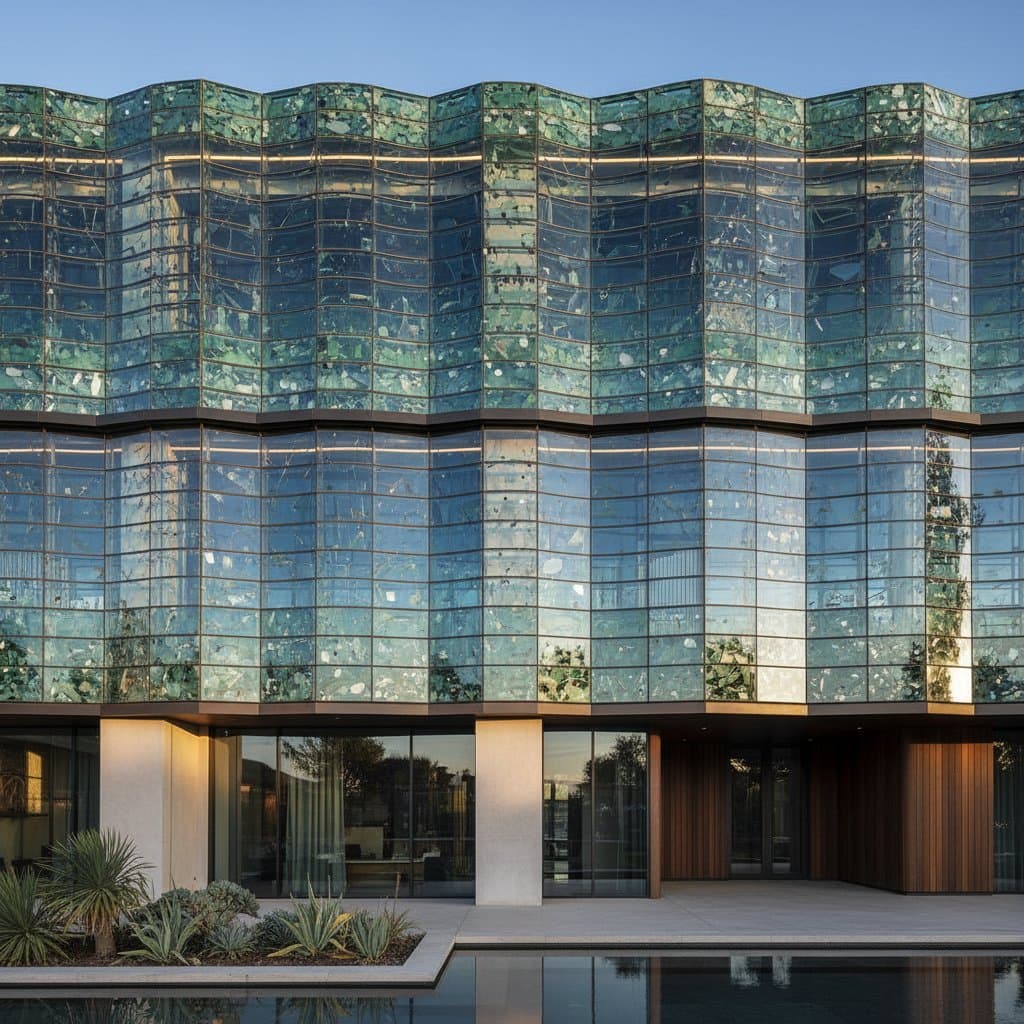
Recycled Glass in Luxury Masonry: An Emerging Standard for Sustainable Innovation
Recycled glass masonry reshapes the construction of premium environments by merging masonry's robustness with glass's inherent luminosity. This approach creates walls, exteriors, and landscape elements that diffuse natural light while minimizing environmental impact. Professionals repurpose crushed, fused, or molded glass into bricks, blocks, or panels, which serve as alternatives or enhancements to conventional stone or concrete. The outcome yields resilient, easy-to-maintain structures with compelling visual appeal.
This development aligns with increasing preferences for refined materials that prioritize ecological responsibility. Property owners and architects benefit from a solution that unites aesthetic excellence with environmental stewardship.
Cost Considerations
Prices for recycled glass masonry materials generally fall between $18 and $45 per square foot, varying by factors such as transparency levels, color variations, and surface treatments. Installation expenses typically span $35 to $85 per square foot, affected by design intricacy, site accessibility, and regional labor costs.
Key elements influencing costs include:
- Custom formulations of colors or intricate casting patterns.
- Specialized polished or textured surfaces requiring additional processing like grinding or etching.
- Increased thickness for applications involving load-bearing or structural demands.
- Small-batch production or sourcing from international suppliers.
- Integration of dedicated illumination or support frameworks for light-permeable installations.
Although upfront expenses exceed those of standard materials, the product's extended service life and low maintenance requirements offset the difference over years of use.
Essential Specifications to Verify
Prior to purchasing recycled glass bricks or blocks, evaluate these critical attributes:
- Compressive strength exceeding 3,000 psi for non-load-bearing applications, or at least 5,000 psi for structural roles.
- Freeze-thaw resistance appropriate for exterior conditions in varying climates.
- Slip-resistant properties for floors, paths, or horizontal installations.
- Dimensional accuracy within 1/8 inch to support precise alignments.
- Thermal expansion coefficients compatible with neighboring building components.
- Standard thicknesses of 2 to 4 inches for full walls, or 1 inch for cladding purposes.
Obtain manufacturer certifications or independent test reports. For light-transmitting variants, request data on light transmittance rates, particularly if backlighting is intended.
Installation Guidelines
Follow these steps to ensure a successful recycled glass masonry project:
- Plan the layout and design: Establish wall boundaries and alignment markers. Conduct a dry assembly of initial rows to verify joint spacing.
- Prepare the foundation: Construct a level base, allow it to cure fully, and remove debris before placing the bottom layer.
- Apply mortar: Spread a uniform, thin bed. Select light-colored mortar for translucent glass to avoid visible shadows.
- Position the units: Begin at edges or along a straight reference line. Maintain consistent 3/8-inch joints.
- Align components: Employ non-metallic spacers and make adjustments using a rubber mallet.
- Finish the joints: Promptly remove surplus mortar to preserve a clean appearance.
- Add boundary supports: Incorporate edge restraints where the structure adjoins soil or hardscapes.
- Allow curing and perform cleaning: Permit complete hardening before rinsing or applying protective coatings.
- Integrate lighting and sealants: Install any rear illumination features and use clear sealants as recommended.
During handling or cutting, don protective gloves resistant to cuts and safety eyewear. Operate a wet saw equipped with dust suppression to minimize silica particle exposure.
DIY Feasibility Versus Professional Installation
DIY projects suit smaller-scale endeavors, such as garden retaining walls, ornamental edging, or feature panels using prefabricated units and straightforward designs.
Engage professionals for demanding tasks like load-bearing walls, expansive exteriors, integrated lighting systems, or constructions adjacent to utilities or structural frameworks.
Required expertise ranges from medium to advanced, encompassing fundamental masonry techniques, accurate cutting, and secure management of glass elements.
Essential tools comprise a wet saw fitted with a diamond blade, spirit level, rubber mallet, mortar mixing equipment, and comprehensive safety apparel.
Potential hazards involve chipping or fracturing along glass edges from improper treatment. Inadequate mortar application may lead to moisture retention or structural weaknesses. Expert involvement guarantees optimal joint formation and reinforcement for enduring performance.
Adapting to Regional Conditions and Climates
In areas prone to freezing and thawing, select products engineered for exterior durability. Implement effective drainage and expansion gaps to mitigate fracture risks. Coastal or saline environments benefit from the material's non-absorbent nature, which counters corrosion; however, opt for stainless steel or aluminum framing.
Regions with intense sunlight may amplify glare, so choose diffused or matte finishes to soften light effects. In cooler, moist settings, the sleek surface discourages mold growth.
Strategies for Optimal Results
- Acquire 10 to 15 percent additional material to account for necessary cuts and potential damage.
- Maintain supplies of lint-free cloths and water for immediate mortar cleanup.
- Utilize non-metallic spacers to safeguard against surface abrasions.
- Test light scattering and hue consistency on a trial section prior to committing to the full assembly.
- Apply clear silicone sealant to vulnerable edges for enhanced water resistance.
- Incorporate drainage openings or ventilation in exterior walls to prevent moisture accumulation.
Preserving Long-Term Performance
Recycled glass masonry imparts a sophisticated, contemporary aesthetic with substantial enduring worth. Regular cleaning of surfaces, inspection of joints, and upkeep of lighting elements sustain its integrity. Routine checks confirm the assembly remains secure and radiant across decades.
This innovative material harmonizes aesthetic appeal with ethical considerations. By converting waste glass into radiant building components, it infuses premium constructions with environmental awareness and visual brilliance. For those committed to forward-thinking design, recycled glass masonry provides timeless sophistication and reliability.