
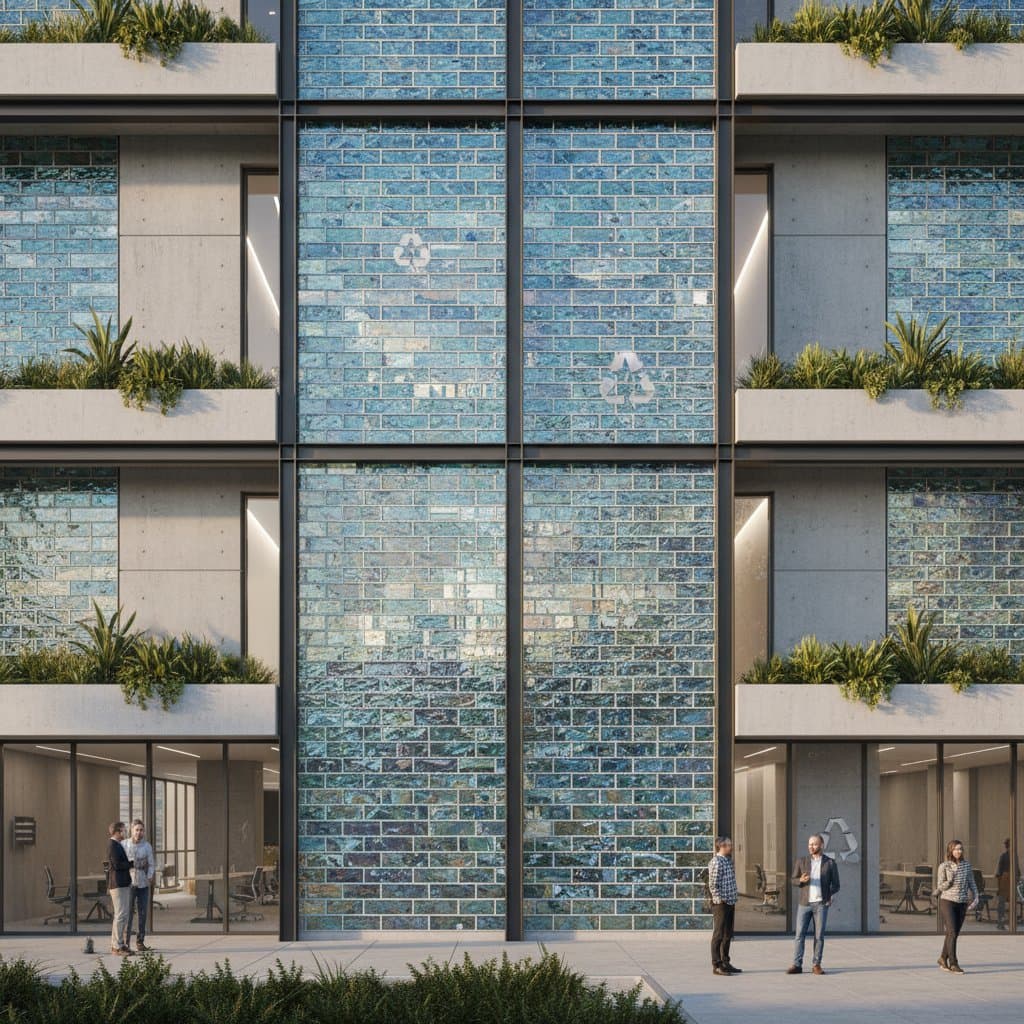
Recycled Glass Bricks: The 2026 Evolution in Eco-Friendly Masonry
Recycled glass bricks represent a significant advancement in sustainable building materials. Engineers craft these blocks from post-consumer glass waste, creating products that deliver the strength of traditional concrete masonry units with a fraction of the environmental cost. This comprehensive guide details the manufacturing process, performance advantages, and practical applications of recycled glass bricks. Readers gain insights into budgeting, installation procedures, ongoing maintenance, and scenarios where expert involvement proves essential.
Essential Project Insights
- Cost breakdown: Expect $8 to $20 per square foot, allocated as 60 percent for materials, 30 percent for labor, and 10 percent for equipment.
- Standard sizing: Bricks typically measure 8 inches by 4 inches by 2 inches, though bespoke dimensions suit specialized designs.
- Curing duration: Wall segments stabilize after 7 to 10 days, ready for subsequent treatments.
- Strength metrics: These bricks achieve 4,000 to 6,000 pounds per square inch in compression, equivalent to standard concrete blocks.
- Selection criteria: Consider visual objectives, load-bearing needs, availability of local recycling sources, and regional weather patterns.
Project Planning Essentials
Assess your project's goals, engineering demands, and compliance obligations prior to selecting recycled glass bricks.
Navigating Permits and Codes
Building authorities generally recognize recycled glass bricks as noncombustible masonry. Submit engineering reports that validate strength, fire resistance, and capacity under load. For exterior walls supporting weight, engage a structural engineer to verify adherence to seismic and wind regulations. Interior dividers demand less scrutiny but require confirmation of fire safety standards.
Budgeting Strategies
Total expenses vary based on brick variety, surface treatments, and workforce rates. Translucent or tinted bricks incur higher fees from specialized fabrication. Allocate funds as follows:
- Materials: 60 percent, encompassing bricks, mortar, and supports.
- Labor: 30 percent, influenced by local wages and contractor expertise.
- Equipment: 10 percent, covering lifts, cutting tools, and mixing apparatus.
Although upfront investments exceed those for conventional blocks, enduring benefits include lower upkeep and superior thermal performance.
Material and Finish Choices
- Brick variants: Select clear, matte, or pigmented types to control light diffusion.
- Mortar selection: Opt for stain-resistant, minimal-shrinkage formulas designed for glass-based substrates.
- Structural aids: Embed corrosion-resistant steel ties or grids for enhanced integrity.
- Protective coatings: Use silane-infused sealants to guard against water ingress and discoloration.
Detailed Installation Guide
Follow these steps to ensure a secure and aesthetically pleasing outcome.
1. Foundation Mortar Preparation
Blend mortar until it achieves a uniform, pliable texture. Apply a 3/8-inch bed over the base surface. Distribute evenly to eliminate gaps.
2. Laying the Initial Row
Position bricks carefully onto the mortar, securing them with light taps from a rubber mallet. Verify alignment using a spirit level for vertical and horizontal accuracy.
3. Forming Vertical Bonds
Apply mortar to brick ends prior to placement. Sustain uniform joint widths to promote a cohesive look.
4. Incorporating Supports
For walls taller than 4 feet, add mesh or ties at 16-inch intervals. These elements distribute forces and mitigate fractures.
5. Joint Finishing
As mortar firms, compress and shape joints with a concave tool for a refined surface. Remove surplus material promptly.
6. Curing Phase
Permit 7 days minimum for setting before adding loads or coatings. Mist surfaces intermittently during the initial 48 hours to regulate drying.
Addressing Installation Issues
- Color inconsistencies or clouding: Mortar residue often causes this; remedy with neutral pH cleaners and gentle brushing.
- Joint fractures: Rapid drying triggers cracks; sustain humidity levels throughout curing.
- Surface efflorescence: Moisture-trapped salts produce white residues; enhance runoff and seal with vapor-permeable products.
- Dislodged units: Reapply mortar to joints and add metal anchors as reinforcement.
Maintenance Protocols
Routine Assessment Protocol
- Examine for fissures exceeding 1/16 inch in width.
- Evaluate sealant condition biennially.
- Wash with diluted soap and rinse thoroughly; steer clear of harsh acids.
- Refresh exterior sealants every 5 to 7 years.
Durability Projections
Well-maintained recycled glass bricks endure 50 years or more in moderate climates, resisting weathering better than many alternatives due to inherent density. Interior applications extend lifespan further by avoiding exposure to elements. Periodic care preserves translucency and structural soundness, maximizing return on investment.
DIY or Professional Approach
Suitable DIY Scenarios
Experienced individuals with masonry background may tackle modest interior screens or accents. Such efforts yield 25 percent savings on materials versus outsourced work. Essential tools include a water-fed saw, mixer, and precision levels.
Professional Recommendations
Entrust load-bearing structures, expansive exteriors, or certified builds to licensed specialists. Verify insurance coverage and warranty provisions. Elevated costs secure regulatory alignment and superior execution.
Expert Recommendations
- Confirm supplier documentation of 70 to 90 percent recycled composition.
- Elevate stored bricks on pallets and shield from debris.
- Minimize vibrations to avoid micro-cracks during assembly.
- Integrate low-voltage lighting behind bricks for dramatic illumination.
- Reserve extras from each batch to match repairs amid potential shade shifts.
Advancing Sustainable Construction
Recycled glass bricks fuse durability, elegance, and ecological stewardship. Builders harness them to minimize waste diversion to landfills and curb energy demands in production. From accent features to full elevations, these materials enable innovative designs that uphold performance without environmental compromise.