
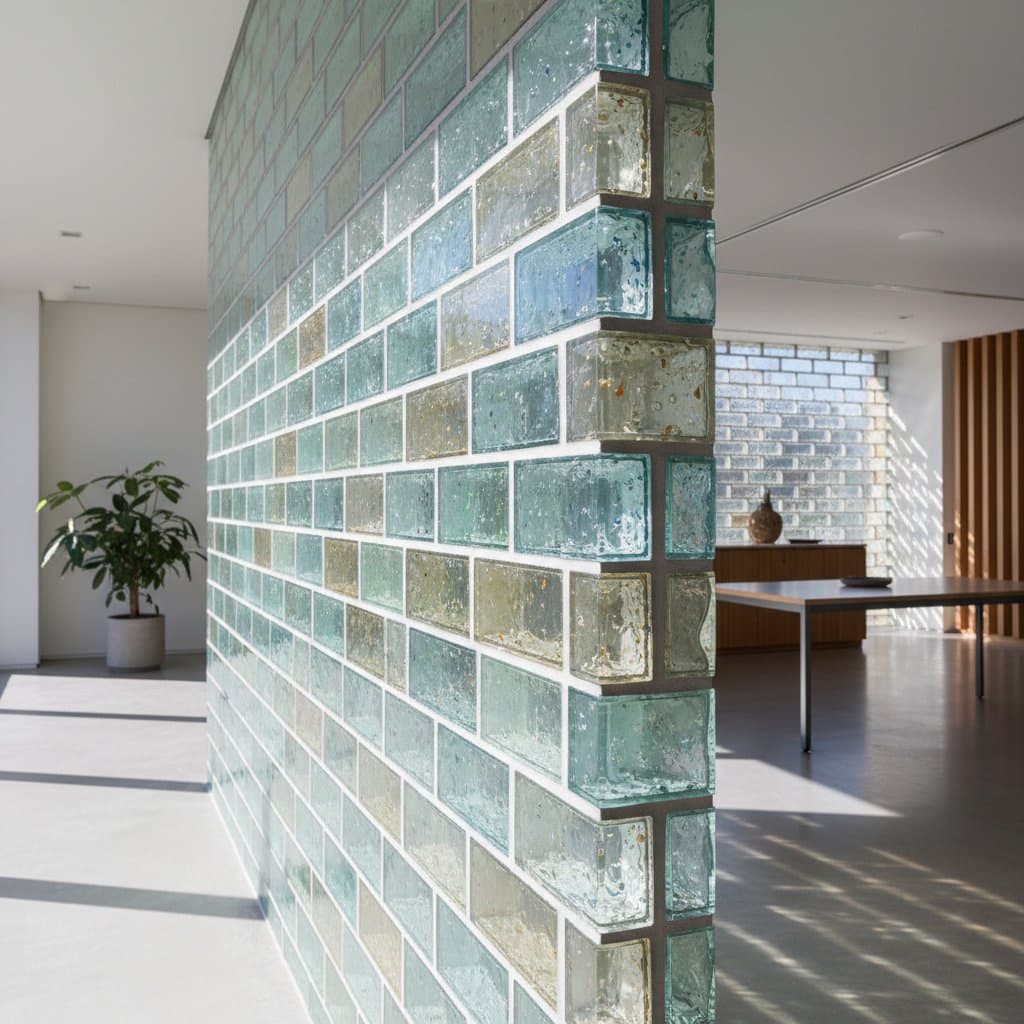
The Future of Eco-Masonry: Recycled Glass Bricks
The construction industry advances toward sustainable practices, and recycled glass bricks stand out as a leading material in eco-masonry. These blocks, crafted from waste glass, provide translucency and durability that enhance both function and aesthetics. Builders use them for load-bearing walls, ornamental panels, or partitions that allow natural light to filter through spaces. This article explores the production process, advantages, and practical integration of recycled glass bricks in homes and businesses.
Readers gain insights into material specifications, project planning, and installation techniques. With these details, individuals prepare for projects that balance environmental impact with design excellence.
Key Takeaways
- Cost Range: Installation of recycled glass bricks ranges from $15 to $45 per square foot, including 65 percent for materials, 30 percent for labor, and 5 percent for equipment.
- Dimensions: Standard units measure 8 by 4 by 2.5 inches, with options for custom dimensions to suit unique architectural needs.
- Production Time: The manufacturing process requires 10 to 14 days, encompassing melting of glass, molding into shapes, and annealing for structural integrity.
- Strength: These bricks achieve a compressive strength of 5,000 to 7,000 pounds per square inch, which matches the performance of premium clay bricks.
- Sustainability Impact: One square meter of wall built with recycled glass bricks diverts approximately 50 pounds of glass waste from landfills.
Planning Your Eco-Masonry Project
Effective planning forms the foundation of any successful installation. Assess the project's structural demands, desired light diffusion, and compliance with regional regulations before acquiring materials.
Consider the wall's role in the overall design, such as dividing rooms or creating privacy screens. Factor in environmental conditions, like exposure to sunlight or humidity, to select appropriate brick variations.
Permits and Building Codes
Authorities classify recycled glass bricks as a specialized masonry option. An engineer's evaluation often confirms that assemblies satisfy standards for load capacity and fire safety. Initiate contact with the local building authority to identify necessary permits and schedule inspections. This step avoids delays and ensures adherence to safety protocols.
In seismic zones, additional reinforcements may apply. Review codes for translucent materials to verify light transmission limits and thermal performance requirements.
Cost and Sourcing Considerations
Costs fluctuate based on brick color, surface texture, and production techniques. Domestic suppliers offer lower prices and reduced carbon emissions compared to overseas options. Evaluate vendors by inquiring about recycled content levels; select products with at least 80 percent post-consumer glass to optimize ecological benefits.
Budget for ancillary expenses, such as transportation and waste disposal. Bulk purchases from certified manufacturers often yield discounts and quality assurances.
Tools and Materials Checklist
- Recycled Glass Bricks: Select uniform colors and finishes to align with the project's aesthetic goals.
- Adhesive Mortar: Employ a formulation with low shrinkage and strong adhesion designed specifically for glass-based masonry.
- Reinforcement Mesh: Incorporate stainless steel mesh to enhance tensile strength across brick layers.
- Grout: Choose a non-staining variety resistant to ultraviolet light to preserve visual clarity over time.
- Protective Gear: Equip workers with gloves, safety goggles, and long-sleeved clothing to guard against sharp edges during handling.
Additional items include levels, trowels, and spacers for precise alignment.
Step-by-Step Installation Process
Precise execution during installation maximizes the longevity and appearance of recycled glass brick walls. Follow these steps to achieve professional results.
Prepare the site by ensuring a stable, level foundation. Clear debris and verify that supporting structures meet load specifications.
1. Establish the First Course
Apply a uniform layer of adhesive mortar across the base surface. Place bricks with 1/4-inch gaps for joints, using spacers for consistency. Verify levelness at intervals with a spirit level and adjust as needed. This initial layer sets the alignment for subsequent courses.
Secure the base to the foundation using anchors if the design requires it. Allow initial set time before proceeding to prevent shifts.
2. Build Successive Layers
Spread mortar between each course and insert reinforcement mesh every two to three rows for added stability. Apply gentle pressure to seat bricks without risking fractures. Maintain even joint widths to promote a seamless visual effect.
Monitor plumb alignment vertically and horizontally throughout construction. Pause periodically to clean excess mortar from brick faces.
3. Fill and Finish Joints
After reaching the target height, permit the mortar to cure for 24 hours. Introduce grout into joints using a rubber float, then wipe away surplus promptly. Rinse the surface with a damp sponge and clean water to eliminate residue and reveal the bricks' clarity.
Select grout colors that complement the glass tones for enhanced design cohesion. Test a small area first to confirm compatibility.
4. Curing and Inspection
Facilitate proper curing by covering the assembly with plastic sheeting for a minimum of 48 hours. This method retains necessary moisture and minimizes cracking risks. Upon completion, examine the wall for straight lines, intact surfaces, and uniform coloration. Remove temporary supports only after full stabilization.
Conduct a final walkthrough to address any imperfections. Document the installation for future reference in maintenance records.
Maintenance and Long-Term Care
Recycled glass bricks demand little routine attention due to their resistance to mold, staining, and water uptake. Perform cleaning with a gentle detergent applied via a soft cloth. Steer clear of harsh acids that might erode grout lines.
Schedule yearly inspections to detect joint cracks exceeding 1/16 inch or structural shifts. Apply a clear, compatible sealant to reseal areas as required. For outdoor installations, ensure drainage paths stay clear to avoid water buildup and pressure against the wall.
Regular upkeep preserves the material's translucency and robustness. Under optimal conditions, these structures endure for 50 years or longer without significant degradation.
Integrating Recycled Glass Bricks into Design
Architects and homeowners incorporate recycled glass bricks to infuse spaces with natural illumination and modern appeal. In residential settings, they serve as feature walls in bathrooms or kitchens, diffusing light while maintaining privacy. Commercial applications include lobby dividers that highlight sustainability commitments.
Pair these bricks with complementary materials like wood accents or metal frames for layered visual interest. Experiment with patterns, such as herringbone layouts, to elevate ordinary partitions into focal points. This approach not only reduces waste but also crafts environments that inspire and endure.