
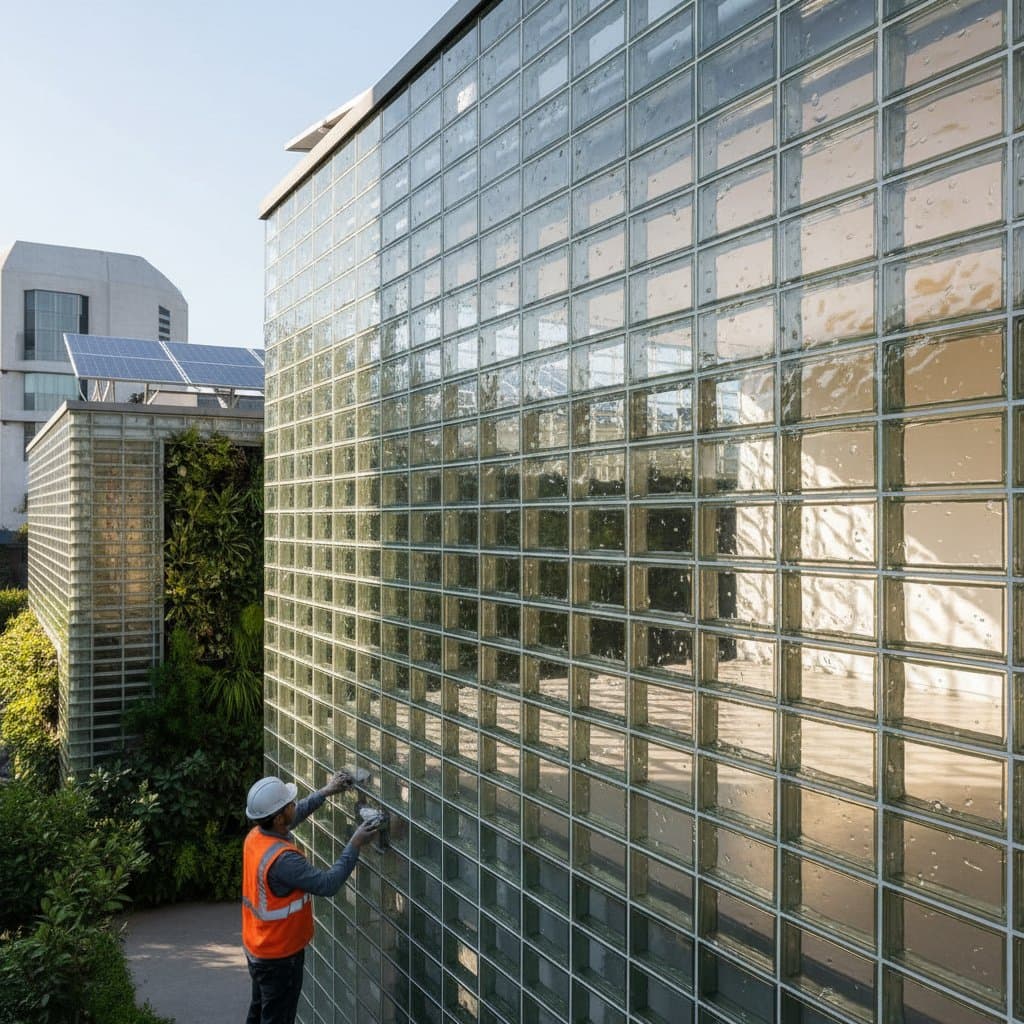
Detailed Installation Guide
1. Establish a Firm Base
Construct a reinforced footing or sill plate aligned with wall size. Level the foundation meticulously to avert glass fractures. Spread a slim mortar layer and set the initial row of bricks with care.
2. Lay the Initial Row
- Apply mortar evenly with a notched trowel to 3/8-inch depth.
- Seat each brick firmly for complete adhesion, avoiding mortar squeeze into joints.
- Insert plastic spacers for consistent grout spaces.
3. Verify Alignment and Supports
Every two rows, add horizontal stainless steel rods for reinforcement. Regularly confirm vertical and horizontal accuracy with levels.
4. Build Upward Layers
Progress in manageable segments to manage load. Clean surplus mortar promptly, as hardened residue damages the glass.
5. Fill and Protect Joints
Post-setting, extract spacers and tool in flexible grout with a rubber float. Wipe with a moist sponge during workability. Seal edges with clear material for water resistance.
6. Cure and Review
Permit 48 hours for mortar and grout hardening before loading. Examine for fissures or irregularities, addressing issues prior to nearby work.
Optimizing Durability and Function
Strength Considerations
Distribute loads evenly across glass brick walls. Incorporate rods and expansion gaps to counter thermal shifts. Secure heavy attachments to frames rather than bricks directly.
Illumination and Efficiency
Units allow 60 to 80 percent light passage based on density and surface. This cuts artificial light needs, enhancing energy use. In warm regions, frosted or colored types curb solar heat while sustaining visibility.
Humidity and Heat Regulation
Non-absorbent glass may fog in moist, cool conditions. Promote airflow or humidity control indoors. For exteriors, insert thermal insulators between glass and frames to avoid conduction.
Resolving Typical Challenges
Joint Cracks or Movement: Often due to unstable bases or weak supports. Review foundations and include joints every 10 feet in extensive walls.
Clouded Surfaces: Results from installation residue. Restore with vinegar-water solution on microfiber; steer clear of abrasives.
Water Penetration: Inspect seals and flashings. Reapply as required for protection.
Preservation Strategies
Regular care sustains installations for over 50 years. Implement these routines:
- Annual Joint Checks: Repair cracks exceeding 1/16 inch promptly.
- Quarterly Cleaning: Use gentle soap and water to eliminate deposits.
- Periodic Regrouting: Refresh every 10 to 15 years based on exposure.
- Support Monitoring: Watch for settling in bearing walls.
Glass endures without decay; focus repairs on bonds and seals.
DIY or Expert Approach
Suitable DIY Projects
Experienced individuals can handle small indoor panels, accents, or low walls with masonry familiarity. Such efforts cut costs by 25 to 40 percent. Tool rentals temper savings but support feasibility.
Professional Necessity
Engage specialists for bearing, outdoor, or regulated work involving waterproofing and standards. Experts manage joints, supports, and cuts effectively. Confirm credentials:
- Certifications and Coverage: Aligned with area laws.
- Past Work: Examples of comparable quality.
- Guarantees: For products and services.
Professionals deliver reliable, visually superior results.
Realizing Enduring Value in Green Design
Recycled glass bricks yield substantial long-term gains, including 25 percent lower carbon footprints and up to 20 percent energy savings through natural lighting. They enhance property values by 5 to 10 percent in eco-markets and require minimal upkeep, often under $500 annually. These materials foster resilient structures that align with global sustainability targets, reducing landfill contributions by thousands of tons yearly.
Practical Recommendations
- Procure Surplus: Add 10 percent extra for damages and upkeep.
- Uniform Bonding: Match mortar shades for cohesive appearance in clear setups.
- Gentle Handling: Use suction or padded tools to prevent marks.
- Optimal Timing: Build in moderate weather to avoid mortar stress.
- Record Progress: Photograph stages for records and claims.
Advancing Eco-Masonry Practices
Recycled glass bricks transcend mere aesthetics; they promote mindful consumption, artistic innovation, and robust engineering. Applied in entrances, screens, or elevations, they infuse clarity and intent into contemporary builds.