
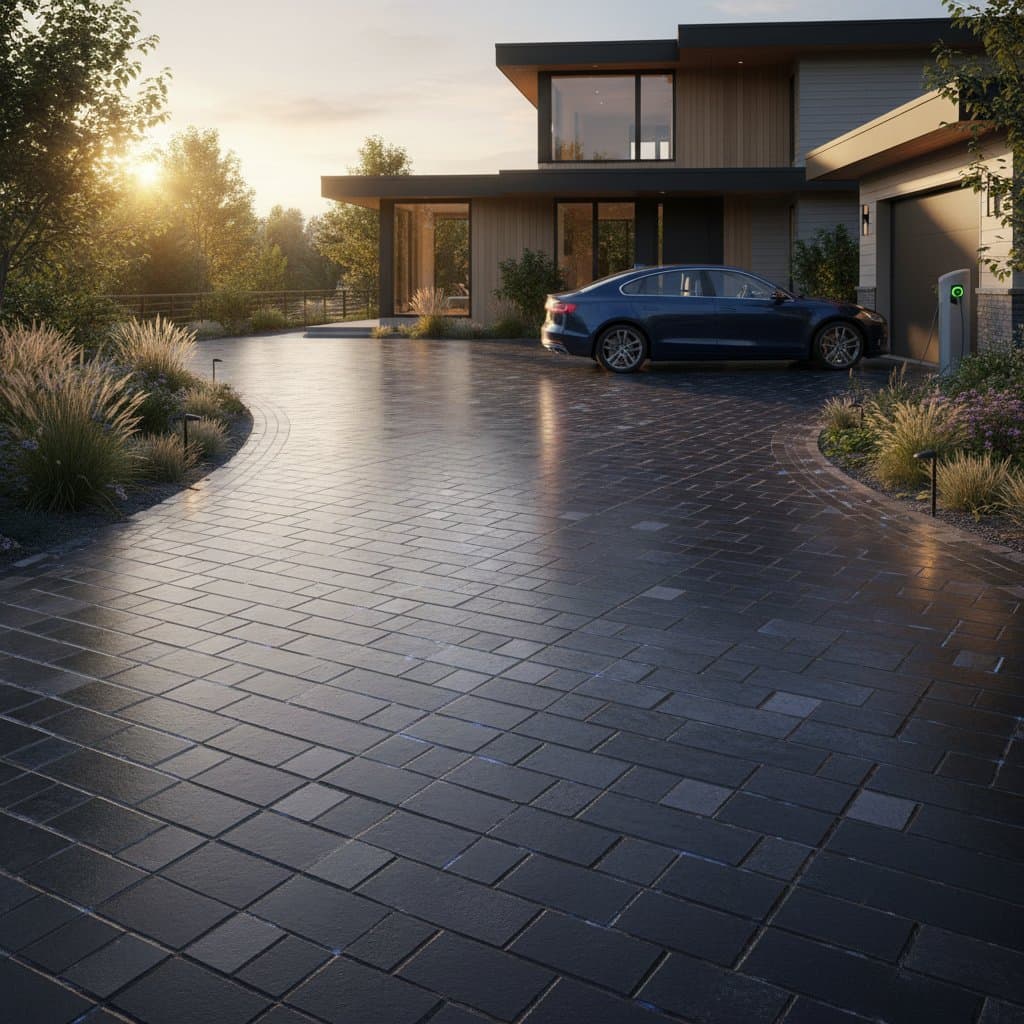
Solar Pavers: Driveways Generating Clean Home Energy
Solar pavers consist of modular paving units that incorporate photovoltaic cells sealed within durable glass or resin surfaces. These units resemble conventional pavers, yet they generate electricity from sunlight exposure. The systems connect to a home's electrical panel or battery storage, effectively converting driveways or patios into compact power generation sites.
Pros and Cons
Pros
- Generate renewable energy directly at the point of use
- Require less space than traditional roof-mounted solar panels
- Integrate seamlessly with standard hardscape designs and patterns
- Introduce a contemporary aesthetic to driveways and walkways
- Lower long-term energy expenses through on-site production
Cons
- Involve higher initial costs compared to conventional pavers
- Deliver reduced energy output per square foot relative to roof panels
- Necessitate professional wiring and necessary permits
- Face limited availability of products in certain regions
- Require replacement pieces that align with existing electrical connections
Costs
Anticipate expenses of approximately $20 to $35 per square foot for the solar pavers themselves. Fully installed systems typically range from $35 to $60 per square foot, influenced by factors such as site preparation, wiring distances, and inverter configuration. Expenses increase with extended conduit paths, shaded locations, or premium surface finishes. Driveways that are flat and unobstructed, featuring straightforward layouts, incur lower overall costs.
In comparison to rooftop solar installations, the payback period extends longer. However, hybrid configurations that combine both can mitigate this by utilizing shared inverters and storage solutions. Numerous homeowners select solar pavers for integrated setups that energize outdoor lighting or facilitate electric vehicle charging.
Lifespan and Maintenance
High-quality solar pavers endure for 25 to 30 years when maintained appropriately. The glass surfaces withstand regular wear, although efficiency diminishes if dirt or debris accumulates. Perform cleaning with a soft brush and mild soap several times annually. Refrain from using harsh chemicals or metal implements. Regularly examine wiring enclosures for signs of moisture and inspect the seals at joints where pavers adjoin.
Should efficiency decline significantly, replace individual modules without disturbing the entire installation. Employ gentle methods for snow and ice removal to avoid surface scratches.
Specifications to Evaluate
- Load rating: Ensure capacity to support vehicle weights for driveway applications
- Slip resistance: Confirm a suitable coefficient for conditions involving moisture
- Electrical output: Review rated wattage per unit or per square foot
- Ingress protection (IP) rating: Verify sealing against moisture and dust
- Connector type: Validate compatibility with current solar equipment
Planning and Preparation
Solar pavers demand the identical base and drainage preparation as traditional pavers. Excavate to accommodate base gravel and bedding sand, then compact materials in layers while establishing a subtle slope for water drainage. Protect wiring conduits by placing them in trenches or flexible channels below the base layer. Prior to excavation, contact utility services to locate and mark underground lines.
Select sites free from substantial shading. Orientations facing south, with exposure to partial morning or afternoon sunlight, perform optimally. Determine placements for junction boxes and inverters prior to commencing work.
Installation Overview
- Design the layout and map wiring pathways.
- Excavate and compact the foundational base.
- Position conduits for electrical cables.
- Apply and level the bedding layer.
- Lay pavers starting from a reference line, attaching cables progressively.
- Insert joint sand and install edge restraints.
- Verify electrical performance prior to final compaction.
Most configurations utilize low-voltage connectors that link to a compact inverter. Engage a licensed electrician for the concluding electrical integrations.
Patterns and Design Options
Solar pavers include complete modules alongside accent components. Popular arrangements encompass running bond, basket weave, and grid formations. Many property owners blend solar units with ordinary pavers, positioning active panels in areas of maximum sunlight. Transparent glass tops reveal the underlying cells, whereas frosted variants scatter light for a more understated appearance.
DIY Versus Professional Installation
Suitable for DIY: Projects limited to small patios or walkways, utilizing pre-wired kits, simple patterns, and areas without load-bearing vehicle traffic.
Common Issues and Resolutions
- Reduced output: Inspect for accumulated dirt or shading on panels; initiate cleaning procedures.
- Moisture within the lens: Address sealant degradation by replacing the impacted unit.
- Unsecured connections: Examine coupling interfaces and junction boxes for tightness.
- Fractured glass: Substitute the individual module rather than the entire segment.
Regional and Climate Considerations
In regions with cold weather, utilize bases rated for freeze-thaw cycles to minimize shifting. Hot climates benefit from lighter-colored finishes to limit heat absorption. Coastal environments require corrosion-resistant wiring and stainless steel components.
Alternatives to Solar Pavers
For budgets that cannot accommodate solar paving expenses, explore solar pathway lighting, wall-mounted panels, or rooftop arrays combined with conventional pavers. In shaded driveways, pervious pavers that capture rainwater provide alternative ecological advantages.
Integrating Solar Pavers into Your Property
Solar pavers convert routine surfaces into reliable energy sources. Through meticulous planning, they supply clean electricity without encroaching on yard or roof areas. For optimal results, many homeowners pair them with modest rooftop arrays to achieve superior cost efficiency, energy yield, and aesthetic versatility.