
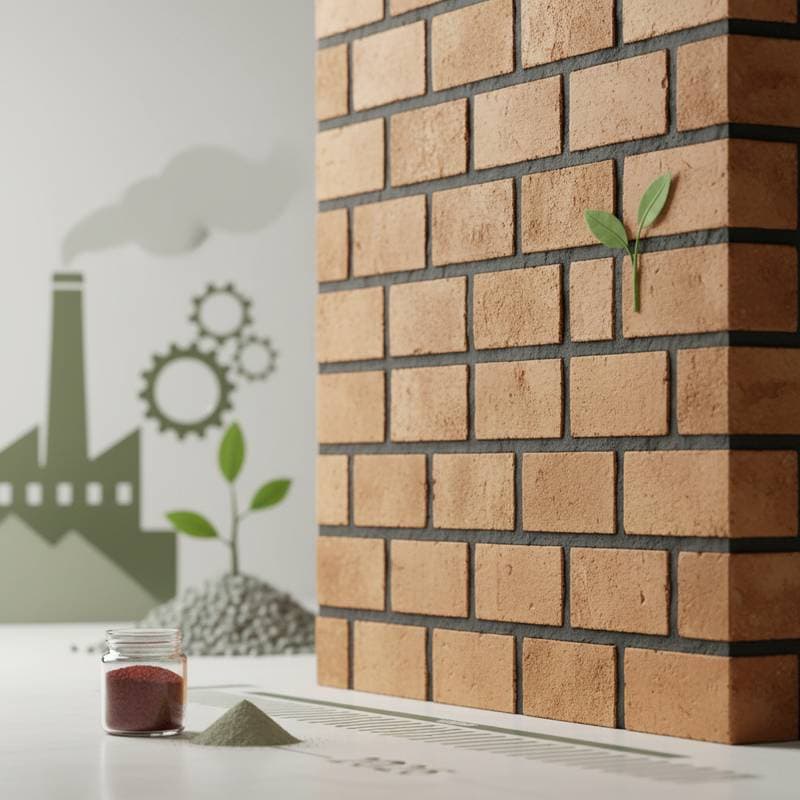
Understanding Zero-Cement Bricks
Zero-cement bricks represent an innovative class of masonry units that substitute traditional Portland cement with geopolymer binders. These binders emerge from the reaction of industrial byproducts, such as fly ash, slag, or calcined clays, with alkaline activators. The outcome yields a hardened material that rivals cement-based products in strength and durability, while generating far lower carbon emissions.
Cement manufacturing demands substantial energy and releases significant carbon dioxide. Geopolymer bricks eliminate cement usage, thereby slashing emissions and decreasing dependence on limestone extraction. Moreover, they repurpose waste materials that might otherwise burden landfills, promoting both environmental protection and resource efficiency.
The superior performance stems from the geopolymerization process, which forms a robust aluminosilicate network rather than the calcium silicate hydrates found in conventional cement. This structure provides exceptional resistance to heat, chemicals, and shrinkage. Consequently, these bricks achieve compressive strengths comparable to or surpassing standard masonry units, ensuring extended service life in demanding conditions.
The Significance of Geopolymer Technology
Geopolymer bricks extend beyond mere material replacement; they transform masonry to better support sustainability objectives. Conventional masonry offers enduring strength, but the environmental toll of cement production undermines its long-term viability. Zero-cement alternatives foster circular economy principles by converting industrial waste into valuable building components.
These bricks enable expanded creative options in design. Without cement, architects gain precise control over aesthetics, such as color and texture, without relying on excessive additives. Their production process typically consumes less water, benefiting areas prone to shortages. For professionals dedicated to green building practices, geopolymer bricks serve as a vital resource for harmonizing durability with ecological stewardship.
Deciding Between DIY and Professional Installation
Basic bricklaying suits DIY enthusiasts for non-structural elements, but fabricating geopolymer bricks demands specialized knowledge. The alkaline activators necessitate exact proportions, regulated curing environments, and protective measures unsuitable for home workshops. Procure pre-manufactured bricks from verified producers to ensure quality and safety.
Installation mirrors traditional masonry methods, allowing experienced DIYers to construct garden borders, low retaining walls, or decorative facades. Load-bearing walls or foundational elements require expert involvement. Engage a structural engineer to evaluate material substitutions in critical applications, verifying compliance with engineering standards.
Project Planning for Zero-Cement Brickwork
Thorough planning underpins successful brick projects, ensuring the sustainable material choice integrates seamlessly with site specifics and objectives.
Site Assessment
Examine soil composition, drainage patterns, and terrain slope to gauge foundation suitability. Well-draining, stable soil prevents settling or erosion issues. Identify underground utilities prior to excavation and review local regulations or association guidelines to avoid violations.
Essential Measurements
Determine wall dimensions, including length, height, and thickness. Compute brick quantity by dividing total surface area by individual brick face area, incorporating a 10 percent allowance for cuts and breakage. Note elevations for doors, windows, or steps to facilitate even coursing and precise leveling.
Climate Considerations
Geopolymer bricks adapt to diverse environments, but optimal installation occurs in moderate temperatures. Refrain from work in sub-freezing or extreme heat to protect curing integrity. Shield stored bricks from direct weather exposure to maintain dryness until placement.
Anticipated Challenges
Batch variations may introduce subtle color or texture inconsistencies. Source bricks from a single production run if feasible; otherwise, intermix units during construction to distribute differences evenly and minimize noticeable patterns.
Selecting Geopolymer Brick Types
Fly Ash-Based Bricks
These utilize fly ash derived from coal combustion as the key binder.
Advantages: High strength, minimal shrinkage, superior heat tolerance.
Drawbacks: Supply fluctuates with local power plant output.
Pricing: Aligns with moderate clay brick costs.
Required Expertise: Compatible with routine masonry skills.
Ideal Applications: Non-load-bearing walls, pathways, or ornamental exteriors.
Slag-Based Bricks
Ground granulated blast furnace slag activates swiftly under alkaline conditions.
Advantages: Rapid strength development, impermeable surface, effective moisture barrier.
Drawbacks: Demands monitored curing to avert fissures.
Pricing: Marginally exceeds fly ash variants.
Required Expertise: Involves meticulous placement techniques.
Ideal Applications: Retaining structures, outdoor cladding, or supervised structural uses.
Clay-Based Bricks
Calcined clays or metakaolin provide the primary binding agent.
Advantages: Abundant sourcing, uniform pigmentation, smooth surface quality.
Drawbacks: Compressive strength trails slag options slightly.
Pricing: Matches conventional fired brick rates.
Required Expertise: Fits residential-scale endeavors.
Ideal Applications: Aesthetic partitions, veneers, or internal dividers.
Essential Tools and Supplies
Manual Implements
- Brick trowel for uniform mortar application.
- Masonry hammer to adjust brick dimensions.
- Spirit level and plumb bob for straight alignment.
- Jointing iron to profile mortar seams.
Powered Devices
- Angle grinder or masonry saw for accurate slicing.
- Drill equipped with mixing attachment for homogeneous blends.
- Wet saw, if needed, to reduce airborne particles during cuts.
Equipment Rentals
- Mortar mixer for volume consistency on expansive jobs.
- Scaffolding systems for elevated or extended reaches.
Acquire rentals for projects surpassing manual mixing or basic access heights.
Supply Inventory
- Geopolymer bricks, plus 10 percent extra.
- Manufacturer-approved mortar or adhesive.
- Exterior joint sealant, as applicable.
- Fresh water, containers for preparation and washing.
Detailed Installation Guide
-
Foundation Preparation. Dig to approximately 6 inches deep, layer with compacted gravel base, and confirm flatness. This establishes drainage and load distribution.
-
Mortar Foundation Layer. Apply a 1-inch mortar bed with the trowel, ensuring even coverage across the surface.
-
Initial Course Placement. Position bricks end-to-end, lightly tapping into the bed. Use level and plumb tools for initial alignment.
-
Subsequent Courses. Offset joints by half a brick length per row to enhance interlocking. Sustain consistent mortar joints throughout.
-
Ongoing Verification. Assess plumb and level after every third or fourth row. Adjust minor offsets promptly to preserve integrity.
-
Joint Completion. As mortar sets, tool the joints to compress and shape them, boosting adhesion and visual appeal.
-
Curing Process. Maintain light moisture on the structure for the recommended period, if specified. Prevent accelerated drying to avoid surface cracks.
Final Inspection: Confirm wall solidity, even jointing, and true lines. Early corrections avert compounding errors in stability or aesthetics.
Advancing Sustainable Building Practices
Adopting zero-cement geopolymer bricks positions projects at the forefront of eco-innovative construction. These materials not only diminish carbon footprints but also enhance resource cycles through waste integration. As production scales toward 2026, builders gain access to durable, versatile options that elevate environmental performance without sacrificing quality. Embrace this shift to construct legacies that endure while preserving the planet.