
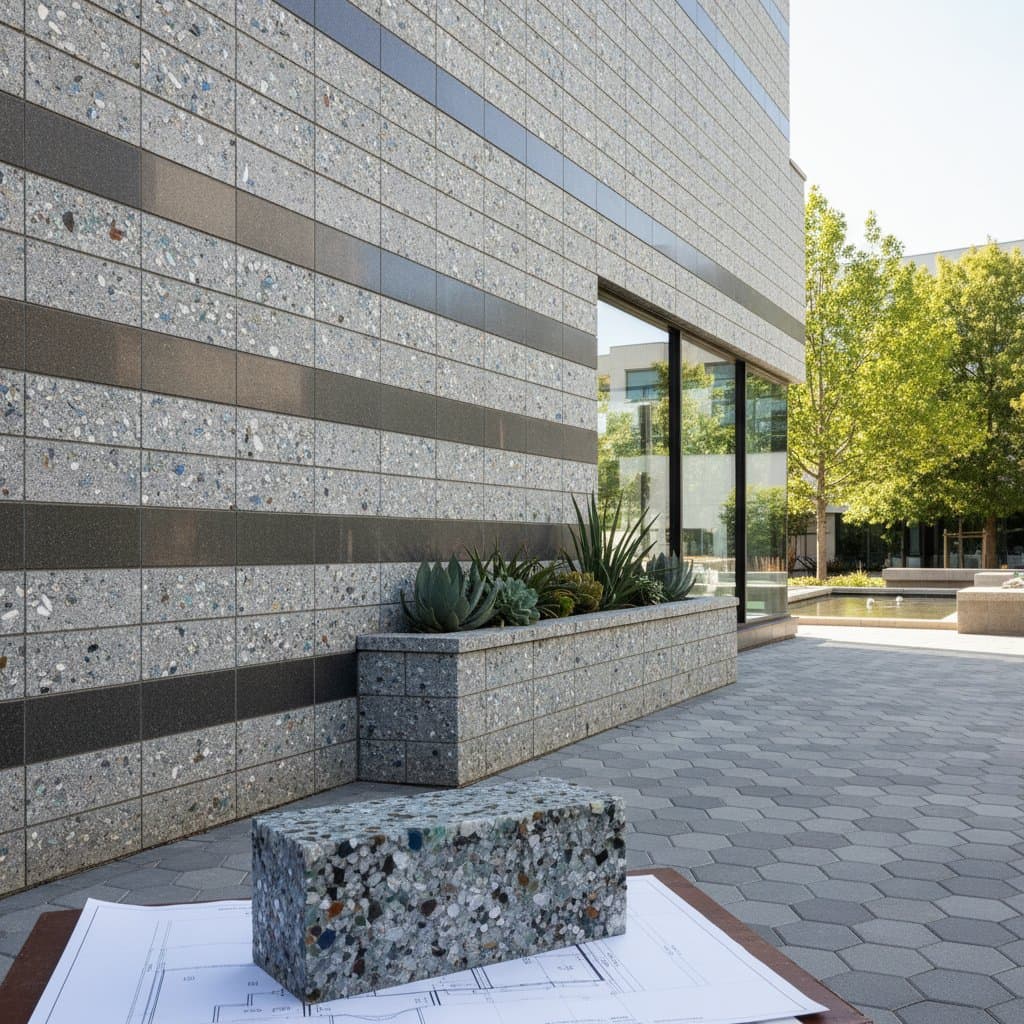
Why Recycled Glass Will Transform Masonry by 2026
Recycled glass masonry integrates finely crushed glass into traditional brick, block, and aggregate mixes, substituting for portions of sand, gravel, or cement. This approach yields a robust material with a glossy finish that enhances visual appeal while minimizing environmental waste. Builders, architects, and property owners increasingly select it for applications such as patios, pathways, building facades, and interior partitions, where it combines reliable performance with contemporary aesthetics.
The appeal extends beyond appearance to include economic efficiency, structural integrity, and ecological advantages. By repurposing glass waste, this material extends the lifecycle of discarded products and enhances key performance attributes of concrete and masonry systems.
Advantages and Drawbacks
Advantages
- Environmental Benefits: Diverts glass from landfills and decreases reliance on extracted sand and gravel resources.
- Visual Variety: Offers translucent, tinted, or light-reflective options that interact dynamically with sunlight.
- Long-Term Strength: When processed correctly, glass aggregates withstand exposure to weather and wear.
- Reduced Water Uptake: Lowers vulnerability to freeze-thaw cycles in regions with harsh winters.
- Certification Eligibility: Frequently meets criteria for sustainable construction accreditations like LEED.
Drawbacks
- Mix Compatibility Issues: Untreated glass may trigger alkali-silica reaction if the formulation lacks balance.
- Hue Inconsistencies: Variations in source materials can produce uneven colors across batches.
- Wet Surface Hazards: Polished finishes may prove slippery under moisture.
- Supply Constraints: Availability depends on nearby processing plants, potentially increasing expenses or timelines.
- Fabrication Difficulties: Materials with high glass content may fracture more readily during cutting.
Durability and Upkeep
Recycled glass masonry matches the longevity of conventional concrete or clay bricks, typically exceeding 50 years with proper installation. The glass components resist color degradation, as they do not retain stains like cement surfaces.
Routine maintenance involves these steps:
- Examine mortar joints annually for signs of cracks or deterioration.
- Wash surfaces using a gentle detergent and firm brush; steer clear of acidic or abrasive cleaners that might damage the glass.
- Apply a protective sealant to glossy areas every three to five years to preserve shine and repel water.
- Remove and reinstall compromised units by carefully chiseling them out and applying new mortar.
Site Preparation Essentials
Thorough evaluation of the project area precedes any construction.
- Water Management: Direct runoff away from the installation to prevent pooling, which heightens risks of slipping and frost damage.
- Grading: Establish a minimum slope of one-eighth inch per foot on horizontal surfaces like patios and walkways.
- Foundation Layer: Compact a base of crushed stone or recycled concrete to a depth of four to six inches for foot traffic zones.
- Soil Assessment: Identify and excavate unstable or organic subsoil, then backfill with stabilized material.
- Logistics Planning: Account for the weight and fragility of glass-infused products by designating secure zones for transport and on-site processing.
Contact utility services prior to excavation to locate underground lines. Obtain necessary permits or community approvals, particularly for prominent outdoor modifications.
Design Patterns and Selections
Recycled glass products support diverse layout configurations:
- Running Bond: Ideal for structural walls and cladding systems.
- Stack Bond: Provides sleek, linear profiles suited to minimalist designs.
- Herringbone or Basket Weave: Enhances the texture of outdoor flooring like patios and trails.
- Random Mosaic: Incorporates varied colors and particle sizes for artistic, focal-point elements.
Opt for pale tones to illuminate dim spaces. Vibrant shades create impactful accents on walls or edging. For understated elegance, blend transparent or light glass into neutral cement bases.
Troubleshooting Installation Issues
Subpar mixing or placement can compromise even resilient glass masonry. Address these frequent problems:
- Cracks on the Surface: Typically result from settling or inadequate support; remedy by adjusting levels and securing shifted components.
- Dulled Appearance: Arises from buildup or faulty sealing; restore with neutral pH cleaners followed by reapplication of sealant.
- Chipped Edges: Occurs with worn tools or rough handling; refine with diamond abrasives and substitute severely affected items.
- Efflorescence Deposits: Stem from salt leaching in joints; remove via brushing and flushing, then enhance site drainage.
- Unstable Joints: Develop from poor packing or incompatible fillers; repack using polymeric sand or mortar and compact firmly.
Comparable Materials
When recycled glass does not align with project constraints, explore these substitutes:
- Recycled Concrete Aggregates: Deliver comparable eco-gains with subdued visual effects.
- Clay Bricks: Offer enduring style and minimal care, though with greater energy use in production.
- Natural Stone: Provides timeless resilience, but demands more labor and expense.
- Permeable Pavers: Facilitate groundwater recharge to manage stormwater, perfect for parking and gathering areas.
- Polished Concrete: Achieves a refined, uniform surface without glass, often more accessible locally.
Balance factors like expense, aesthetics, and sustainability when choosing; recycled glass excels in projects prioritizing innovation and narrative.
Safety Protocols and Regulations
Processing recycled glass masonry generates respirable dust hazardous to respiratory and ocular health. Equip workers with protective eyewear, hand coverings, and breathing apparatus. Employ water-suppressed cutting or vacuum extraction systems to contain particulates.
Handle units cautiously to avoid cuts from jagged edges; use protective clothing and padded grips. Dispose of fragments in designated containers to prevent injury.
Expert Recommendations
- Procure ten percent additional stock to accommodate trimming and mishaps.
- Combine materials from various sources during mixing to uniformize coloration.
- Select alkali-resistant cements or incorporate pozzolans to mitigate reaction risks.
- Maintain moisture on fresh installations during initial setting, without allowing puddles.
- Apply sealants to seams and borders promptly to guard against discoloration and infiltration.
Integrating Recycled Glass into Your Build
For upcoming outdoor or structural enhancements, incorporate recycled glass aggregates or units into specifications. Experiment with a modest element, such as a pathway accent or retaining wall, to gauge its allure. The interplay of light on the material often inspires broader applications, positioning it as a cornerstone of forward-thinking construction.