
Introduction to Recycled Glass Concrete
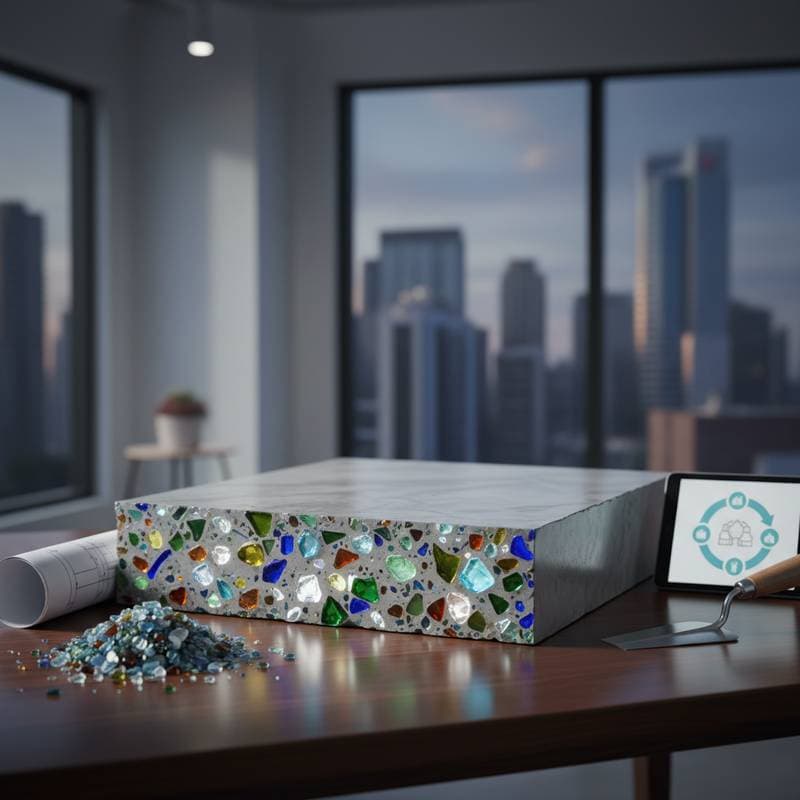
Recycled glass concrete represents an innovative approach to sustainable construction. Builders replace a portion of traditional aggregates, such as gravel or sand, with crushed recycled glass. This substitution not only diverts glass waste from landfills but also maintains or improves the material's structural integrity.
The process involves grinding post-consumer glass into aggregate-sized particles. These particles integrate seamlessly into the concrete mix, providing similar density and workability. Projects ranging from residential countertops to commercial floors benefit from this eco-conscious choice, which aligns with growing demands for green building practices.
Key advantages include reduced resource consumption and enhanced aesthetics. The glass adds sparkle or color variations, elevating plain concrete to a designer element. Performance tests confirm that well-formulated mixes achieve strengths suitable for most applications, making adoption straightforward for contractors and homeowners alike.
Essential Specifications
Successful implementation requires adherence to precise guidelines. Typically, recycled glass constitutes 10 to 30 percent of the total aggregate volume. This range balances sustainability goals with structural reliability.
Compressive strength serves as a primary benchmark. Formulations must match or exceed 3,000 psi for general use, ensuring the concrete withstands everyday loads. Testing verifies this threshold before full-scale application.
Alkali-silica reaction (ASR) poses a potential risk with glass aggregates. Mitigation involves incorporating pozzolans, such as fly ash, or lithium additives into the mix. These elements neutralize reactive compounds and prevent long-term degradation.
For safety in high-traffic areas, slip resistance remains crucial. Exterior surfaces or wet environments demand textured finishes or additives to achieve adequate friction. Compliance with local building codes ensures these standards.
Planning and Preparation
Effective planning begins with securing a reliable supply of recycled glass. Identify local recycling facilities or specialized vendors that deliver consistent particle sizes, typically ranging from 1/8 inch to 1/2 inch for optimal integration. Verify availability of desired colors, such as clear, green, or amber, to match project aesthetics.
Assess site conditions thoroughly. Ensure proper drainage to avoid water pooling, which could compromise the base. For slab installations, compact the subgrade to at least 95 percent density and install vapor barriers in moisture-prone areas to prevent upward migration.
Decorative projects require additional considerations. Plan for dust control during grinding and ensure access for polishing equipment. Budget for testing samples to confirm mix compatibility with environmental factors like temperature and humidity.
Step-by-Step Installation Guide
Installation follows standard concrete procedures with minor adjustments for glass content.
-
Prepare the subgrade or countertop base, verifying levelness within 1/4 inch over 10 feet.
-
Mix the concrete batch, incorporating the specified recycled glass proportion. Use a drum mixer for uniform distribution, adding water gradually to achieve a slump of 4 to 6 inches.
-
Place the mix into forms and consolidate using vibration tools. Avoid segregation by working in layers no thicker than 12 inches.
-
Finish the surface with a broom or trowel for uniformity. Refrain from excessive troweling, which can dislodge glass particles.
-
Allow curing for at least 28 days under moist conditions. For exposed aggregates, grind and polish after seven days using diamond pads from coarse to fine grit.
-
Clean the surface to remove residues, then apply a penetrating sealer for protection against stains and weathering.
Design Patterns and Customization Options
Versatility defines recycled glass concrete, suitable for slabs, countertops, terrazzo floors, and decorative panels. Clear glass chips create a terrazzo-like sparkle, ideal for indoor flooring. Colored variants, such as blue or red, introduce vibrant accents for artistic installations.
Frosted or crushed glass offers a subtler texture, perfect for muted exteriors. Select finer particles, under 1/8 inch, for smooth countertops that resist scratching. Larger chips, up to 1/2 inch, provide bold color contrast in patios or walkways.
Combine glass with stains or dyes during mixing for custom hues. Experiment with patterns, like borders or inlays, to personalize spaces. These options enhance functionality while promoting a narrative of environmental responsibility.
DIY Projects Versus Professional Installation
Small-scale DIY endeavors suit motivated homeowners. Projects like stepping stones, garden benches, or basic countertops require a sturdy mold, safety equipment including gloves and goggles, and a portable mixer. Follow mix ratios precisely and cure in a shaded area to avoid rapid drying.
Larger or structural applications demand professional expertise. Contractors manage complex tasks such as grinding for polished finishes, applying ASR mitigations, and ensuring code compliance. Their experience minimizes risks like uneven surfaces or premature cracking, safeguarding long-term performance.
Weigh costs against benefits. DIY saves on labor but demands time investment. Professionals deliver precision, often justifying the expense through warranties and superior results.
Troubleshooting Common Issues
Even with careful execution, challenges may arise. Cracking often stems from inadequate curing or subgrade settlement. Address by cutting control joints every 10 to 15 feet and applying flexible sealants to accommodate movement.
Surface dullness results from incompatible sealers or harsh cleaning agents. Restore vibrancy through light polishing with a 400-grit pad, followed by a fresh application of silane-based sealer.
White haze indicates alkali-silica reaction progression. Apply lithium silicate treatments topically to densify the surface and halt further expansion. Monitor annually in reactive environments.
Loose glass chips emerge from overworking the finish during placement. Repair by filling voids with an epoxy resin mixed with matching glass, then resealing the area for adhesion.
Considerations for Regional Climates
Adapt mixes to local conditions for durability. In freeze-thaw zones, incorporate air-entraining agents to create microscopic bubbles that relieve internal pressure from ice formation. Aim for 4 to 7 percent air content.
Coastal regions with high salt exposure require chloride-resistant sealers, such as siloxane formulations, to block ion penetration and prevent corrosion in embedded steel.
Intense sunlight affects colored elements. Opt for UV-stable acrylic sealers to preserve vibrancy. In humid tropics, prioritize low-absorption mixes to resist efflorescence and mold growth.
Sustainable Alternatives
When recycled glass proves scarce, explore comparable options. Crushed porcelain from discarded tiles offers similar sparkle with high compressive strength. Reclaimed masonry, like brick fragments, adds rustic texture while reusing demolition waste.
Slag aggregates from industrial byproducts provide density and reduce cement needs through pozzolanic reactions. Each alternative cuts virgin material use and diversifies finishes, supporting circular economy principles in construction.
Advancing Sustainable Builds
Incorporating recycled glass elevates projects beyond mere functionality. Homeowners and builders gain durable surfaces that reflect environmental stewardship. Pursue this material to construct resilient, attractive spaces that contribute to a greener future.