
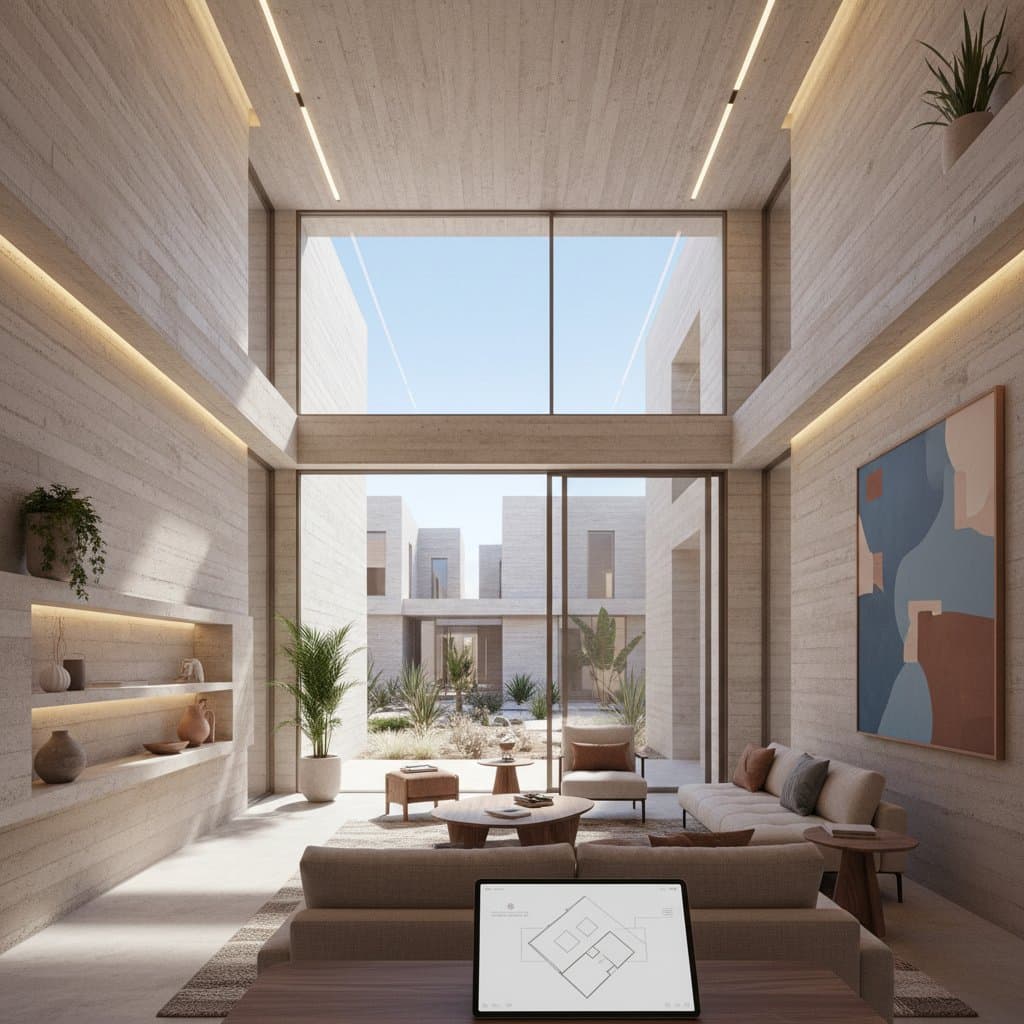
3D Printed Concrete: Affordable Housing by 2026
3D printed concrete employs computer-controlled machines to deposit layers of cement directly on-site, forming walls and structural elements. This approach eliminates manual forming and pouring, following a digital blueprint to achieve precision. The result includes accelerated timelines, decreased material waste, and lower labor demands, positioning the technology as a viable solution for cost-effective residential builds.
Understanding the Technology
A 3D concrete printer operates via a gantry system or robotic arm that follows programmed trajectories. It extrudes a specialized, quick-setting concrete mixture through a nozzle, constructing walls layer by layer and bypassing conventional framing and formwork. After the printed structure sets, professionals integrate plumbing, electrical systems, windows, and roofing using standard techniques.
The concrete blend exceeds typical viscosity to maintain form during extrusion. Specialized additives enhance fluidity, interlayer adhesion, and setting speed. Production rates differ, yet a modest home's exterior shell often completes in several days, far surpassing traditional methods that span weeks.
Advantages and Challenges
Advantages
- Rapid Construction: Assemblies complete significantly quicker than conventional builds.
- Reduced Labor: On-site personnel requirements diminish, curbing labor expenses.
- Efficient Material Use: Waste stays minimal, eliminating needs for wooden frames or temporary molds.
- Flexible Designs: Programmatic curves, angles, and bespoke forms integrate seamlessly.
- Enhanced Durability: Concrete barriers withstand fire, decay, and infestations effectively.
Challenges
- Surface Finishing: Extruded textures demand smoothing or covering for aesthetic appeal.
- Regulatory Hurdles: Building codes evolve slowly, delaying permits in certain jurisdictions.
- Initial Investment: Printer acquisition and deployment involve substantial upfront costs.
- Material Consistency: Uniform blend quality prevents vulnerabilities in layered sections.
- Environmental Constraints: Precipitation, subzero temperatures, or strong gusts halt operations.
Cost Analysis
Expenses fluctuate based on geography and specifications, with printed concrete enclosures averaging $80 to $130 per square foot for installation. This contrasts with $120 to $200 per square foot for standard masonry or framed constructions.
Material costs alone for printed walls fall between $25 and $45 per square foot, influenced by blend composition and equipment type.
Key factors affecting pricing include:
- Printer transportation and on-site assembly.
- Terrain accessibility and ground preparation.
- Structure elevation and geometric intricacy.
- Supplementary additives and environmental controls.
- Regional wages for completion and integration work.
Scaling production, particularly in clustered developments, promises further reductions as equipment utilization increases.
Longevity and Upkeep
Printed concrete enclosures endure comparably to cast-in-place variants, projecting 75 years or longer under routine care. Primary maintenance entails periodic surface sealing to block moisture penetration, vital in humid or cyclic freeze-thaw environments.
Examine for fissures following severe weather or foundation adjustments. Address small splits with conventional concrete sealants or repair compounds. Protective layers like stucco, exterior paint, or sealants prolong service life and refine visuals. Internal surfaces typically require gypsum board or plaster overlays for refined textures.
Essential Specifications
Prior to endorsing a 3D printed design, evaluate these criteria:
- Compressive Strength: At least 3,000 psi for load-bearing residential walls.
- Curing Process: Confirm self-hardening capability or misting requirements.
- Reinforcement Integration: Assess inclusion of metallic or fibrous elements.
- Insulation Performance: Review thermal efficiency based on thickness and infill.
- Precision Tolerances: Ensure positional accuracy within millimeters for structural integrity.
- Material Validation: Verify acceptance by jurisdictional oversight bodies.
Site Preparation Essentials
Effective printed construction demands thorough groundwork. Address:
- Geotechnical Stability: Conduct bearing tests and densify unstable substrates.
- Foundation Base: Establish even, compacted aggregate platforms for equipment tracks.
- Water Management: Grade surfaces to divert runoff from structures.
- Freeze Protection: Extend bases below regional frost penetration depths.
- Equipment Clearance: Provide space for machinery navigation and supply lines.
- Service Verification: Locate underground utilities prior to excavation.
These measures mitigate risks of distortion or misalignment during erection.
Construction Sequence
- Develop digital models and layouts for the residence.
- Position and align printing apparatus, adjusting nozzles and charging mixtures.
- Fabricate basal elements if compatible with the system.
- Erect primary walls along designated routes, incorporating pauses for apertures.
- Integrate supports between strata as needed.
- Safeguard curing phases against precipitation or excessive solar exposure.
- Affix roofing, fenestration, entries, and infrastructure post-strength attainment.
- Implement protective coatings, pigmentation, or veneers.
Automation dominates, though operators oversee mixture disbursement, velocity, and positioning.
Design Configurations
Various approaches suit printed edifices:
- Integrated Monolith: Uninterrupted layering for enclosures and dividers, maximizing speed and cohesion.
- Modular Segments: Prefabricated components assembled in place, facilitating mobility.
- Combined Systems: Printed bases paired with timber or metal superstructures.
- Cavity Insulation: Dual-layered prints enclosing foam or granular barriers.
Nonlinear geometries incur negligible premiums, enabling innovative aesthetics unattainable via orthodox materials.
Professional Involvement
Homeowners cannot realistically execute printing independently. While design oversight remains feasible, execution necessitates:
- Advanced machinery.
- Expertise in formulation science.
- Precision calibration and hardening oversight.
- Compliance and stability assessments.
Engage certified printing specialists or collaborate with seasoned constructors. Limit self-directed efforts to superficial treatments, groundskeeping, or internals after shell completion.
Professional assistance proves essential for:
- Multistory frameworks.
- Challenging geologies or hydrology.
- Mandated engineering endorsements.
- Utility conformity inspections.
Addressing Common Issues
Delamination: Arises from interruptions or adhesion failures; remedy via abrasion and mortar reapplication.
Fissuring: Stems from accelerated desiccation or inferior compositions; seal minor lines with resinous or polymeric compounds.
Thermal Shortfalls: Retrofit external panels or internal foams within voids.
Textural Irregularities: Level with tools or overlay slim plaster prior to decoration.
Infiltration Risks: Deploy impermeable barriers or permeable coatings externally.
Climate Adaptations
- Temperate Zones: Incorporate frost-resistant formulations and aerators; shield fresh prints from icing.
- Arid Regions: Employ hydration or coverings to curb desiccation cracks.
- Marine Environments: Select anti-corrosive armatures and saline-tolerant blends.
- Vulnerable to Winds: Bolster junctions and anchorage points against lift forces.
- Dry Landscapes: Apply ultraviolet-stable protectors to avert fading and erosion.
Comparable Methods
Should 3D printing prove unsuitable, alternatives encompass:
- Insulated Concrete Forms: Polystyrene blocks receiving poured concrete, simplifying approvals and boosting isolation.
- Structural Insulated Panels: Quick-erect assemblies with superior heat retention.
- Modular Prefabrication: Site-assembled factory units offering velocity and variety.
- Stabilized Soil Blocks: Earth-derived for minimal environmental impact.
- Conventional Bricklaying: Economical in labor-rich locales.
Selections balance robustness, efficiency, and adaptability; printing excels in pace and resilience as maturation progresses.
Compliance and Safety Protocols
Pre-construction safeguards include:
- Maintaining distance from operational components.
- Donning ocular and auditory safeguards near processing units.
- Utilizing respiratory gear for airborne particulates.
- Ensuring outdoor-rated cabling and conduits.
- Isolating fresh areas from inadvertent exposure.
Regulatory frameworks advance incrementally. Structures must satisfy zonal mandates for integrity, ignition resistance, and conservation. Engineer validations often substitute pending standardized protocols. Submit apparatus specifications and blend analyses to authorities.
Sustainability Advantages
Printing optimizes resource allocation, depositing exact volumes per stratum. Formulations may recycle aggregates or supplant cement with byproducts like fly ash. Operational energy conserves by obviating molds and superfluous fabrication.
Inherent mass moderates internal climates. Paired with barriers, these dwellings attain efficiency rivaling optimized traditional builds.
Localized production curtails haulage emissions, supplanting bulk shipments of timber or stone.
Future Trajectory
Collaboratives refine uniform protocols for printed assemblies. Lighter apparatus and dependable blends accelerate timelines. Primary barriers involve regulatory and financial endorsements.
Bulk applications in residential clusters amortize investments across units, accelerating affordability.
Steps to Implementation
Prospective builders or owners should:
- Identify proximate service providers, as equipment remains scarce.
- Validate regulatory classifications with inspectors.
- Optimize schematics for streamlined extrusion, minimizing projections.
- Integrate service pathways during fabrication to preclude retrofits.
- Allocate for aesthetic and functional completions.
- Anticipate extended vetting durations.
These residences align with contemporary efficiency and resilience benchmarks, diminishing timelines and discards. Proven initiatives propel 3D printed concrete toward conventional viability for economical shelter.
Preserving Structural Value
Post-completion, manage as standard concrete: divert moisture from bases, reseal exteriors routinely, and scrutinize interfaces. Automation, robust compositions, and streamlined engineering position this innovation for broad integration, delivering velocity and economy alongside enduring performance.