
Understanding Smart Concrete and Its Role in Structural Monitoring
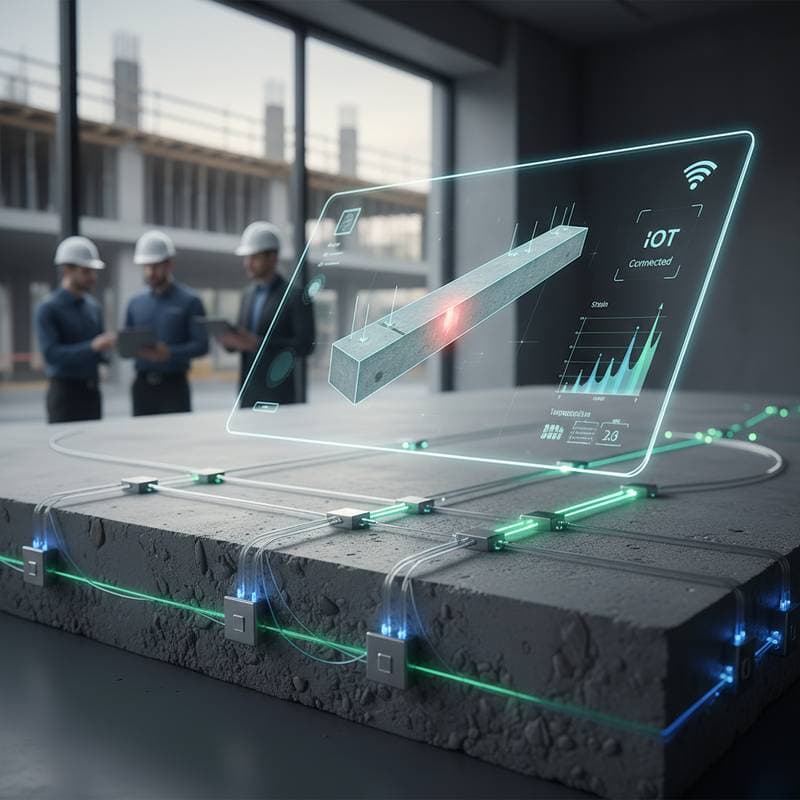
Smart concrete incorporates embedded sensors and wireless communication to monitor the internal state of structures continuously. These sensors capture metrics such as strain levels, moisture content, and temperature fluctuations, transmitting data that triggers alerts if values deviate from established norms. The primary objective remains proactive issue identification, which helps avert expensive repairs and operational interruptions.
This innovation falls under the umbrella of Internet of Things applications in construction, offering unprecedented visibility into the performance of elements like bridges, tunnels, building foundations, and retaining walls. Engineers gain access to live data streams, allowing for timely interventions that enhance overall durability and reliability.
The Mechanics of Smart Concrete Systems
Sensors, typically compact and robust, integrate into the concrete mixture or affix to reinforcing elements prior to the pour. As the concrete sets, these devices begin recording responses to applied loads and environmental influences. The collected information routes to a centralized platform, accessible via secure networks, where anomalies prompt immediate notifications.
For instance, subtle shifts in strain might indicate emerging stress points, while rising moisture could signal potential corrosion risks. Integration with broader IoT ecosystems ensures seamless data sharing, facilitating comprehensive structural health assessments across multiple sites.
Advantages and Limitations
Advantages
- Provides timely alerts for potential cracking, corrosion, or excessive loading
- Minimizes the need for urgent repairs and associated downtime
- Supports predictive maintenance strategies that extend structural longevity
- Generates historical performance data to refine future engineering designs
- Enhances safety protocols for both building occupants and maintenance personnel
Limitations
- Involves elevated initial expenses relative to traditional concrete
- Depends on consistent power sources and network connectivity for sensor functionality
- Demands specialized skills for accurate data analysis and interpretation
- Sensor longevity can vary based on concrete composition and installation precision
- Presents challenges for retrofitting into pre-existing constructions
Investment Considerations
The addition of sensors typically raises material costs by 10 to 25 percent over conventional concrete, influenced by the number and sophistication of devices deployed. Total installation expenses for structural uses often fall between 8 and 20 dollars per square foot. Advanced wireless models with extended range or finer resolution command premium pricing, with further increases in scenarios involving intricate shapes, deep embeds, or suboptimal signal environments.
Property owners frequently offset these outlays through savings on routine inspections, emergency interventions, and extended asset usability. Long-term economic analyses often demonstrate a favorable return, particularly for high-value infrastructure projects.
Durability and Upkeep Requirements
Well-integrated sensors endure alongside the concrete matrix, provided they receive adequate encapsulation against chemical exposure. Certain designs forgo batteries entirely, drawing power from ambient vibrations or thermal gradients to ensure sustained operation.
Maintenance protocols include periodic verification of data feeds, software adjustments for calibration, and occasional replacement of surface-level components. Conduct inspections biannually to validate sensor responsiveness and data integrity, with cleaning confined to accessible junctions or housings.
Key Specifications for Selection
Prior to procurement, evaluate these critical attributes:
- Sensor Capabilities: Options for strain gauging, humidity detection, corrosion monitoring, or thermal sensing
- Energy Source: Choices encompassing wired connections, replaceable batteries, or energy-harvesting mechanisms
- Transmission Distance: Ensure compatibility with gateway or relay placements for reliable coverage
- Update Interval: Frequency of data transmissions to balance detail with efficiency
- Environmental Resilience: Ratings against water ingress, alkaline conditions, and cyclic freezing
Select components aligned with site-specific demands; mismatches in corrosive salts, seismic activity, or humid climates can compromise performance.
Preparation and Design Strategies
Develop a detailed sensor placement blueprint during the planning phase, delineating positions and interconnectivity for wiring or nodes. Verify that the central monitoring station benefits from stable electricity and communication links. Safeguard devices against displacement from aggregate movement or pouring vibrations.
In extensive casting operations, conduct preliminary trials on sample volumes to assess signal propagation through unset material. Collaborate closely with material providers to uphold uniform consistency in mix properties surrounding embedded elements.
Step-by-Step Installation Process
- Assemble reinforcement framework and validate sensor positioning.
- Fasten devices using appropriate restraints to maintain stability.
- Establish wired links or validate wireless configurations.
- Execute the pour with care to encase sensors without disruption.
- Document unique identifiers and coordinates in a comprehensive site diagram.
- Initiate post-cure verification and establish reference baselines for ongoing surveillance.
Interpreting Data Trends and Setting Alerts
Systems track parameters like core temperature, mechanical strain, and resistivity changes. Escalating strain levels may indicate overload conditions, whereas resistivity spikes often denote ingress of water or corrosive agents. Customizable thresholds enable notifications via mobile or email upon threshold breaches.
Longitudinal trend analysis proves more insightful than isolated snapshots; progressive elevations might reflect soil settlement, whereas abrupt variances could herald fracture initiation. Leveraging these insights empowers engineers to implement targeted reinforcements or adjustments.
Professional Involvement Versus Self-Installation
For modest residential applications, such as monitoring slabs, patios, or driveways focused on basic environmental metrics, off-the-shelf sensor kits suffice for capable homeowners. However, substantial endeavors involving critical load paths, regulatory adherence, or system interoperability necessitate engagement of civil engineers or IoT experts.
Professionals ensure compliance with building codes and optimize integration for maximal efficacy.
Troubleshooting Common Issues
Transmission interruptions warrant checks on energy availability or connectivity strength; remedial actions include module substitutions or hub relocations. Inconsistent outputs frequently stem from fractured connections or drift in calibration settings. Maintain inventory of backups for prompt on-site resolutions during build phases.
Adapting to Climate and Regional Influences
Environmental variables significantly impact sensor efficacy. In coastal regions with saline exposure, opt for corrosion-resistant casings to mitigate accelerated degradation. Seismic zones benefit from vibration-tolerant designs that distinguish between natural tremors and structural distress.
High-humidity or freeze-thaw prone areas require seals impervious to expansion cycles. Regional building standards may dictate additional certifications, influencing material choices and deployment densities.
Exploring Alternative Technologies
Traditional non-destructive testing methods, like ultrasonic pulses or ground-penetrating radar, offer periodic assessments but lack continuous monitoring. Fiber-optic sensing provides similar embeddability with superior strain resolution, though at higher complexity. Surface-mounted accelerometers serve as retrofit solutions for legacy structures, albeit with reduced internal insight.
Hybrid approaches combining smart concrete with drone-based inspections or AI analytics further amplify predictive capabilities without full sensor integration.
Maximizing Benefits Through Strategic Implementation
Adopting smart concrete transforms reactive maintenance into a proactive framework, yielding safer, more resilient infrastructure. Stakeholders realize not only cost efficiencies but also enhanced decision-making informed by empirical data. As adoption grows, this technology promises to redefine standards in sustainable and intelligent construction practices.