
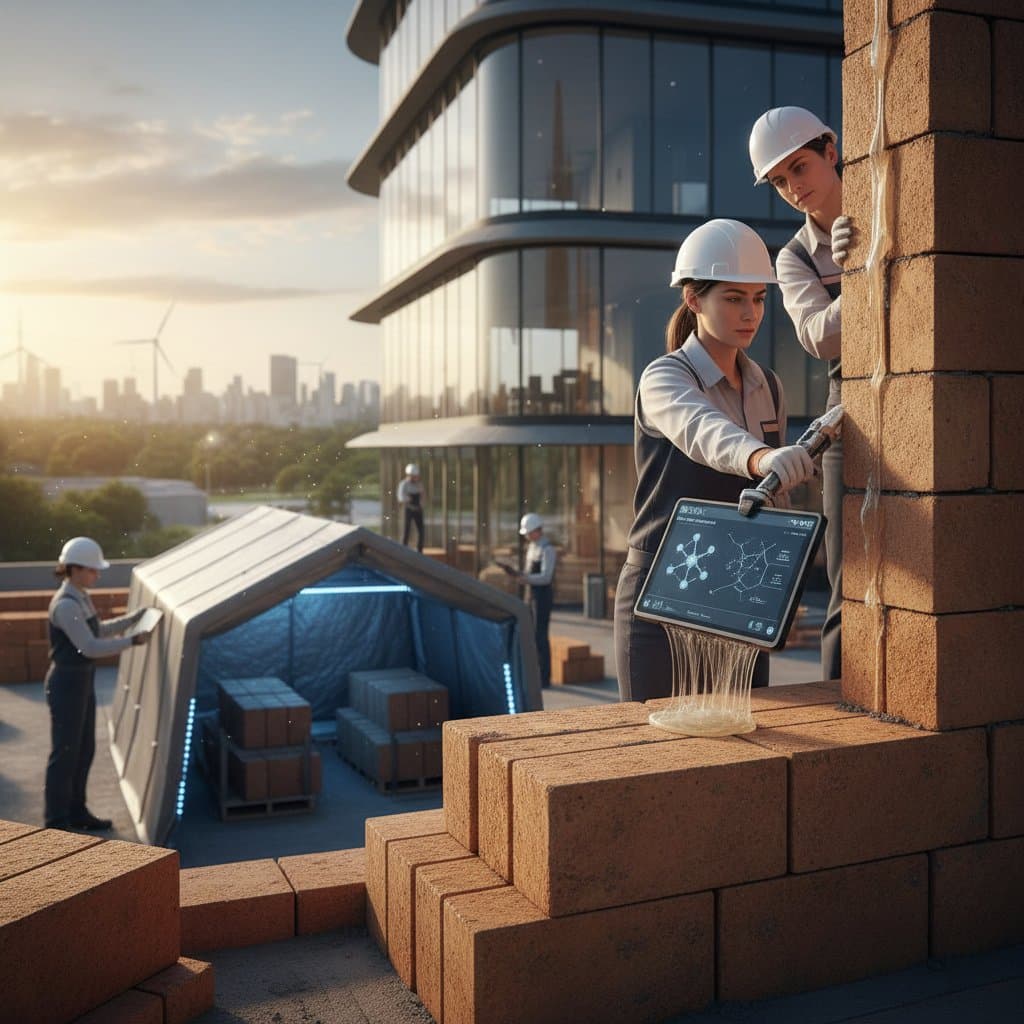
Zero-Cement Bricks Revolutionize Masonry by 2026
Introduction
Cement production has dominated masonry for over a century, yet it imposes significant environmental burdens and requires intensive curing processes. Zero-cement bricks, which utilize geopolymer binders, alter this landscape fundamentally. These bricks reduce carbon emissions directly at the material production stage and lower energy consumption during manufacturing. Key factors influencing costs include the availability of local materials, curing techniques, and the need for crew training to handle novel mixes and setting characteristics.
How Zero-Cement Bricks Function
The innovation stems from a distinct chemical process. Geopolymer binders depend on aluminosilicate reactions triggered by alkaline solutions. This creates a durable, stone-like matrix without the need to burn limestone or emit carbon dioxide through calcination. The reaction proceeds at room temperature, conserving energy and eliminating the emissions associated with high-temperature cement kilns.
Primary material sources include:
- Fly ash derived from power plants.
- Ground granulated blast-furnace slag.
- Metakaolin produced from processed clay.
- Silica-rich by-products from industrial operations.
These components, when mixed with activators like sodium silicate or hydroxide, form a robust network comparable to natural stone. Achieving optimal strength requires careful balance; excess alkali results in a caustic and fragile mix, while insufficient amounts lead to incomplete reactions and poor adhesion.
Environmental and Market Advantages
Zero-cement bricks significantly lower carbon emissions by bypassing clinker production and incorporating waste materials that might otherwise end up in landfills. The embodied energy in these bricks can decrease by more than 50 percent relative to traditional concrete. By 2026, widespread adoption could transform masonry practices, offering builders a pathway to sustainability without sacrificing performance.
Early adopters benefit from reduced material weights, which ease transportation and installation. Initial data indicates excellent durability when moisture levels and handling procedures receive proper attention. This positions zero-cement bricks as a forward-thinking choice for projects emphasizing environmental responsibility.
Ideal Applications and Project Priorities
Zero-cement masonry excels in specific contexts where its advantages surpass the initial learning curve. Builders should target areas that maximize benefits while minimizing risks.
Recommended applications:
- Non-structural interior partitions, where lighter weight supports overall building efficiency.
- Exterior veneers exposed to temperature fluctuations but not severe freeze-thaw cycles.
- Restoration efforts needing precise color and texture matches without cement-related discoloration.
- New construction integrated with local waste streams like fly ash or slag.
Applications to avoid:
- Below-grade walls or retaining structures facing constant water pressure.
- High-salt environments, such as coastal areas, without prior resistance testing.
- Temporary builds or accelerated schedules constrained by curing timelines.
In preservation projects, retain sound historical masonry. Introduce zero-cement units as complementary elements rather than full replacements until long-term field performance data accumulates.
Potential Issues and Inspection Guidelines
Although zero-cement bricks eliminate cement-related drawbacks, they introduce unique considerations. Different chemistry means distinct failure patterns. Inspect for these indicators prior to specification or installation to prevent costly interventions:
- Edges that crumble under minimal handling.
- A persistently damp texture days into the curing phase.
- Cracks appearing along mold lines or brick centers.
- Storage without protection from rain or frost prior to use.
- Inadequate batch labeling or absent quality documentation.
- Claims of self-healing or maintenance-free qualities lacking verified test results.
- Reliance on imported aluminosilicates or fly ash with unreliable supply chains.
- Surface chalking or color fading evident within weeks of exposure.
Addressing these early avoids escalation. Substandard bricks do not gain strength over time; proactive checks ensure reliability.
Repair and Replacement Strategies
Walls and Facades
Retain intact masonry that remains dry and stable. Limit interventions to repointing or patching at failed joints or units. Opt for full replacement only if substrate movement occurs or damage affects the entire system.
Mortar Compatibility
Standard lime or Portland mortars prove incompatible with geopolymer systems. Select binders or transitional mortars from the brick manufacturer. Avoid combining disparate systems to prevent adhesion failures.
Structural Elements
These bricks support loads in tested applications, though most uses involve infill or veneer. For load-bearing roles, verify compressive strength via certified lab results. Replace sections only when consistent testing reveals failures below required thresholds.
Surface Treatments
Favor the natural finish whenever feasible. Many coatings retain moisture and disrupt the geopolymer's ongoing reactions. Apply mineral-based or silicate paints solely for essential color consistency.
Water Management
Prioritize drainage corrections over wall replacements. Faulty gutters or absent cap flashing undermine all masonry types. Such fixes prove more economical than repairs and inhibit future damage.
Long-Term Care Practices
Treat zero-cement bricks akin to lime or clay masonry, with targeted additions to the routine.
Essential maintenance steps:
- Conduct inspections for cracks or moisture marks biannually.
- Clean with gentle detergent and low-pressure rinsing; steer clear of acidic solutions.
- Evaluate sealers periodically and refresh if water no longer beads on the surface.
- Observe joint integrity across seasonal changes.
Frequent errors to sidestep:
- Applying cement mortar for repairs, which forms rigid joints that retain moisture.
- Employing high-pressure washing that strips the surface binder.
- Selecting acrylic or epoxy paints that impede vapor transmission.
A mason based in New England observed, "These bricks breathe. Treat them like stone, not like concrete." Adhering to this approach sustains their integrity and appeal for years.
Future Prospects for Adoption
As supply chains stabilize and testing protocols mature, zero-cement bricks stand poised to redefine sustainable construction. Projects incorporating them today secure environmental gains alongside competitive edges in innovation. Builders who master these materials position themselves at the forefront of a greener building industry.