
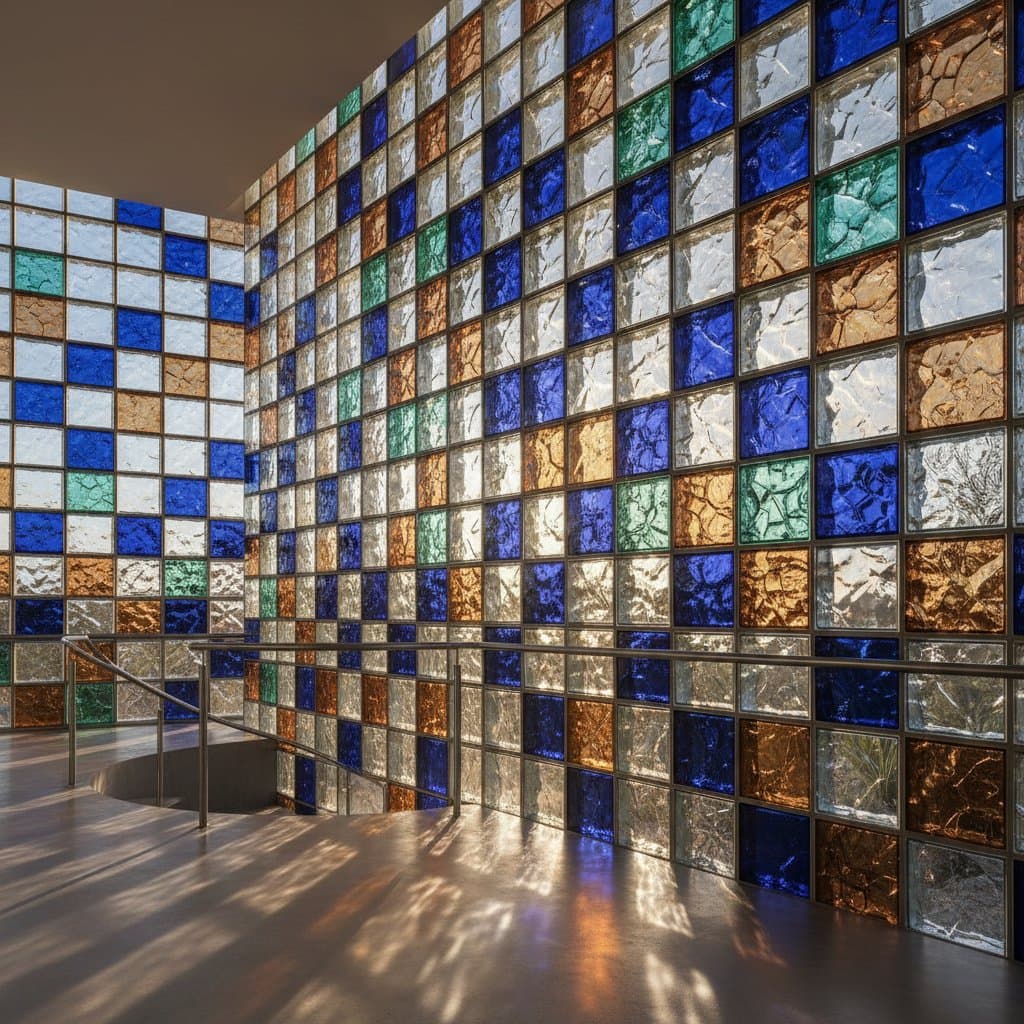
Recycled Glass Masonry in Modern Luxury Design
Recycled glass masonry converts discarded bottles and windows into luminous building blocks. Each unit captures and diffuses light in distinctive ways that stone or concrete cannot match. The result creates walls, facades, or accents that appear modern, sustainable, and distinctly premium.
Advantages and Limitations
Advantages
- Light transmission creates a natural glow and visual depth in any setting.
- Production from post-consumer glass cuts landfill contributions and conserves virgin materials.
- Tempered surfaces withstand moisture and resist stains effectively.
- Maintenance stays minimal with no need for paint or regular sealing.
- Subtle variations in each block produce an artisanal appearance.
Limitations
- Production and transport expenses exceed those of clay or concrete options.
- Solid blocks require reinforced framing due to substantial weight.
- Most installations serve decorative purposes rather than load-bearing functions.
- Cutting demands specialized diamond tools and controlled conditions to prevent damage.
Budget Considerations
Installed costs range from 35 to 75 dollars per square foot for premium systems. Materials alone account for 20 to 45 dollars per square foot based on clarity, dimensions, and surface treatment. Frosted or patterned varieties command higher prices. Intricate designs or elevated structures add to labor expenses.
Expected Lifespan and Care
A properly installed glass block assembly endures 50 years or longer. Clean surfaces with mild detergent and soft cloths. Avoid acids or abrasives that could reduce surface clarity. Check grout or silicone joints once a year for signs of wear and reapply sealer when water resistance declines.
Key Specifications
Verify these details before purchase. Block thickness typically measures 3 to 4 inches for full walls and 2 inches for veneers. Compression strength should reach at least 2000 psi for exterior applications. Confirm UV-stable additives for sun-exposed locations. Request UL-listed fire ratings for interior partitions. Select insulated or hollow-core units to improve thermal performance.
Site Preparation Steps
Assess framing strength, base level, and lighting placement at the outset. Glass masonry requires a stable foundation and non-slip setting bed. Exterior projects need weep joints or vents to manage condensation. In cold regions confirm freeze-thaw ratings and keep units clear of frost-susceptible soil.
Installation Sequence
- Dry-fit blocks and establish control lines.
- Spread setting bed or mortar in an even layer.
- Position blocks with spacers to maintain consistent joints.
- Fill joints with approved grout or silicone.
- Remove excess material before it hardens.
- Apply joint sealer where water exposure is expected.
Wear eye and hand protection during cutting. Use a wet saw fitted with a diamond blade and ensure adequate ventilation.
Design Variations
Layouts extend from standard grid patterns to curved partitions and illuminated panels. Clear blocks maximize transparency while frosted or tinted options soften light. Some systems incorporate LED channels for integrated illumination. Smaller units suit detailed accents and larger blocks cover broad facades.
Professional Versus Owner Installation
Owners can complete small interior panels with patience, a level work surface, and proper tools. Engage qualified tradespeople for exterior walls, structural partitions, or lighting integration. Incorrect support or sealant selection often leads to cracks or moisture issues.
Typical Problems and Remedies
Cracks frequently result from rigid mortar that lacks movement joints. Leaks usually trace to deteriorated seals or inadequate drainage. Begin repairs by regrouting or resealing. Replace a damaged block by removing only that unit and resetting a matching piece.
Regional Performance Factors
Glass resists salt and moisture better than metal or stone in humid or coastal environments. Freeze-thaw zones benefit from rated adhesives and flexible joints. Hot sunny climates call for tinted or coated blocks to reduce heat gain.
Comparable Options
Cast acrylic blocks or recycled resin panels offer similar appearance with reduced weight and cost when budget or structural limits arise. These alternatives scratch more readily than glass.
Project Execution
Recycled glass masonry merges artistic expression with environmental responsibility. Careful planning converts light into functional structure and waste into lasting visual impact.