
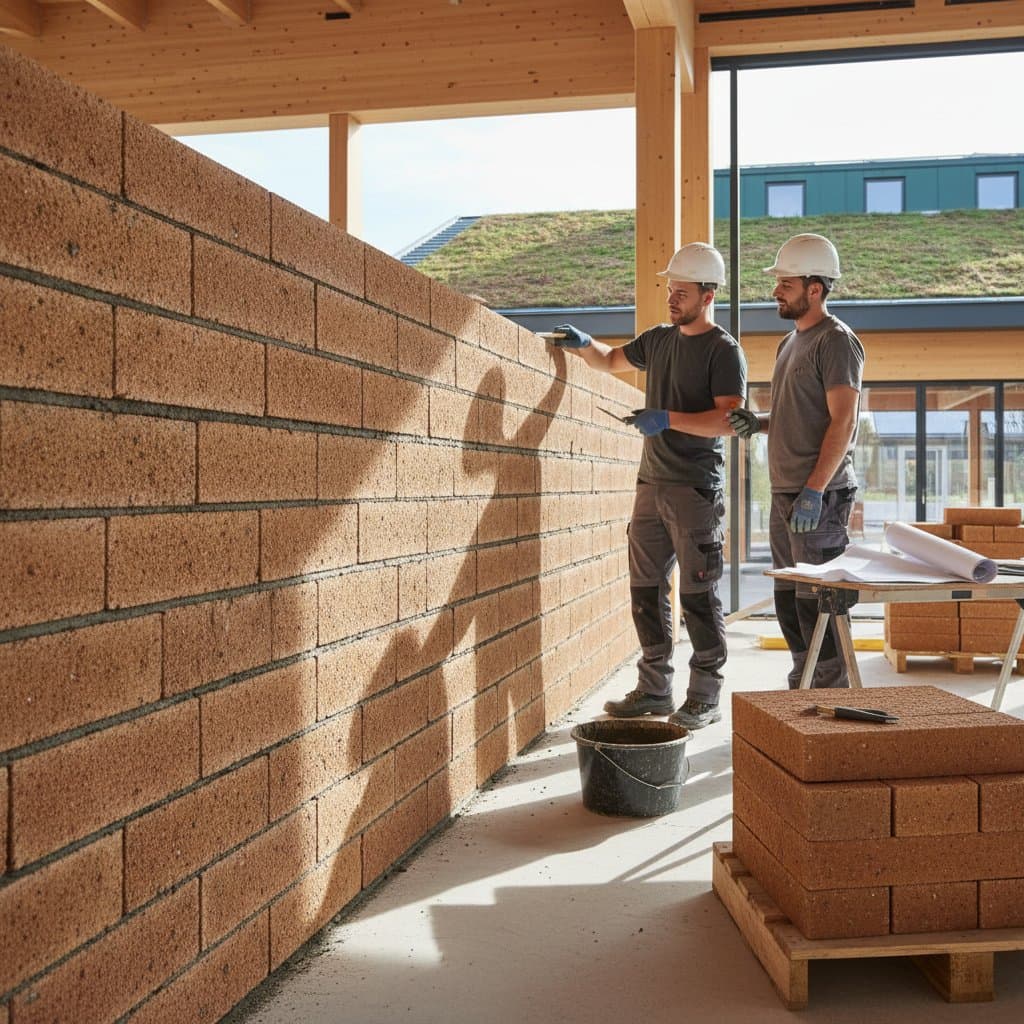
Zero-Cement Bricks Receive Code Approval for Structural Masonry
The approval of zero-cement bricks for load-bearing walls represents a significant advance in sustainable construction materials. These units, known as geopolymer bricks, replace Portland cement with industrial byproducts activated by alkaline solutions. Builders now gain a compliant option that reduces embodied carbon while meeting strength and durability requirements in residential and commercial projects.
This guide covers the composition of geopolymer bricks, their performance relative to conventional masonry, and the practical steps for specification, installation, and long-term care.
Composition of Geopolymer Bricks
Geopolymer bricks form through the reaction of fly ash, slag, or metakaolin with sodium silicate and sodium hydroxide solutions. The resulting matrix binds aggregates such as crushed stone and sand into solid units. Manufacturers may add pigments, water reducers, or fibers to adjust color, flow, and tensile performance.
Production of one ton of Portland cement releases roughly one ton of carbon dioxide. Geopolymer manufacturing cuts these emissions by as much as 80 percent because it avoids the high-temperature calcination step required for cement clinker.
Performance Comparison
| Property | Geopolymer Brick | Conventional Brick or CMU |
|---|---|---|
| Binder | Fly ash or slag | Portland cement or clay |
| Compressive strength | 4,000 to 6,000 PSI | 3,000 to 5,000 PSI |
| Water absorption | 5 to 8 percent | 10 to 15 percent |
| Fire resistance | Excellent | Good |
| Carbon footprint | Up to 80 percent lower | High |
| Curing time | 1 to 3 days | 7 to 28 days |
These values demonstrate that geopolymer bricks satisfy or exceed the structural criteria already accepted for load-bearing masonry.
Site Preparation and Material Selection
Select structural-grade geopolymer bricks that carry manufacturer certification for the intended compressive load. Pair them with a compatible geopolymer mortar or a low-alkali cementitious mortar approved by the brick producer. Include stainless-steel or galvanized reinforcement, a polyethylene moisture barrier, and standard masonry tools.
Verify that the foundation is level and fully cured before layout. Snap accurate lines for the first course and apply a leveling bed no thicker than one-half inch. Precise alignment at this stage prevents cumulative errors higher in the wall.
Installation and Quality Checks
Lay bricks with uniform joint thickness and tool the joints while the mortar remains workable. Place reinforcement at intervals specified by the structural engineer and grout cells solidly. Install flashing, weep holes, and control joints according to code requirements.
After construction, inspect for cracks wider than one-sixteenth inch and confirm that joint thickness remains consistent. Perform spot compressive tests on sample prisms to verify that results fall within the 4,000 to 6,000 PSI range.
Maintenance Schedule
Inspect mortar joints annually and repoint any joint recessed more than one-quarter inch. Clean surfaces every two years with low-pressure water and a mild detergent. Examine sealants and flashing every five years and replace damaged sections promptly. After major storms, check for moisture entry at joints and openings.
Keep vegetation cleared from wall faces to promote drying. Maintain positive site drainage away from the foundation and avoid abrasive cleaning methods that could erode the brick face.
Practical Considerations for Builders
Confirm chemical compatibility between bricks, mortar, and any applied sealers before ordering materials. Store units under cover to prevent unintended moisture exposure. Schedule work to avoid extreme temperatures that can affect geopolymer curing rates. Record ambient conditions and curing durations for project documentation.
Applying Geopolymer Masonry on Future Projects
Code acceptance removes a previous barrier to the use of zero-cement bricks in structural applications. Builders and owners can now specify these units to lower carbon impact without sacrificing performance or appearance. As supply volumes increase, material costs are expected to become more competitive with conventional masonry. Proper specification, careful installation, and routine maintenance will ensure that geopolymer walls deliver reliable service over decades.