
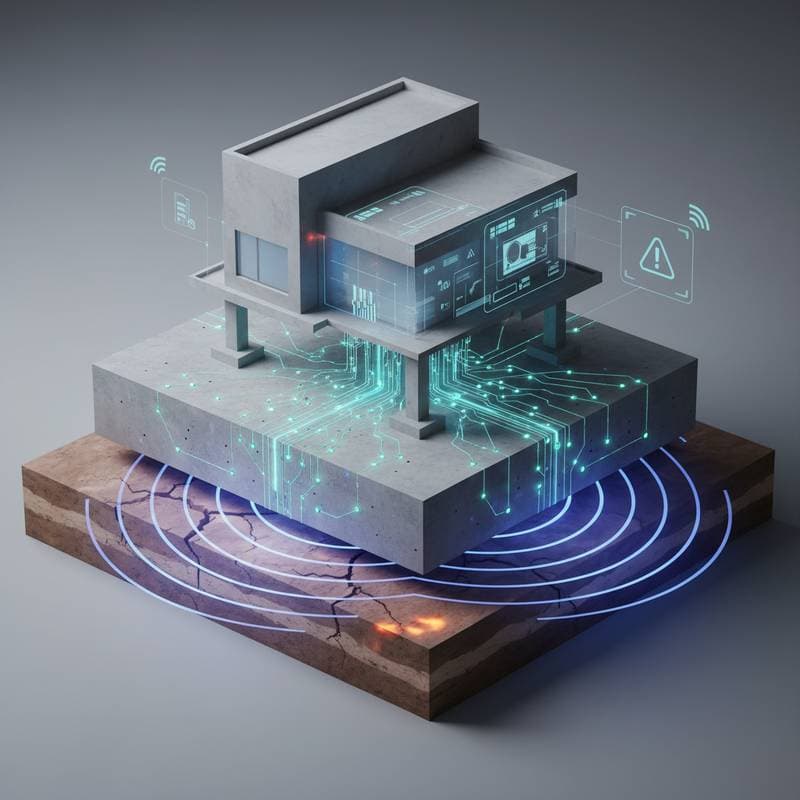
Smart Foundations Detect Earthquakes Before Damage
A smart foundation uses embedded sensors to monitor ground movement and structural stress in real time. These systems detect the first signs of seismic activity and send alerts before damaging waves reach the surface. The goal is to give homes and buildings a head start on safety measures rather than to stop an earthquake.
Core Components
A smart foundation combines concrete, rebar, and traditional footing design with a network of vibration, strain, and tilt sensors. These sensors connect to a small control unit that transmits data to a cloud platform or local alarm system. When ground movement begins, the sensors capture subtle tremors that occur seconds before the main shaking starts.
The foundation becomes an active part of the building. It listens to the earth and reacts by triggering warnings, automatic shutoffs, or safety protocols before serious damage occurs.
Advantages and Limitations
- Detects early seismic waves and sends instant alerts.
- Provides continuous structural health monitoring.
- Reduces risk of hidden foundation damage after minor quakes.
- Integrates with home automation and emergency systems.
- Can lower insurance risk ratings in seismic zones.
Higher upfront cost than a standard foundation remains the main drawback. The system also requires power, data connection, and periodic calibration. Limited benefit appears in regions with low seismic activity. Sensor replacement may require partial excavation or slab access.
Cost Breakdown
Material costs for smart foundation sensors range from 3 to 8 dollars per square foot. Installed costs usually fall between 8 and 18 dollars per square foot when integrated during new construction. Retrofit installations run 20 to 30 percent higher because of drilling, wiring, and patching.
Cost drivers include the number and type of sensors, communication method, data collection system, and software subscription fees. Access difficulty during retrofit adds further expense.
Lifespan and Upkeep
Sensors last about 10 to 20 years depending on moisture levels and installation quality. Control modules typically need replacement at 10-year intervals. Maintenance involves checking battery or power status twice a year, cleaning exterior access ports, running annual software calibration tests, and updating firmware when notified.
Inspect for cracks or water intrusion that could short out wiring. Keep drainage paths clear to limit standing moisture around the foundation.
Key Specifications
Confirm sensitivity rating in micro-g units before purchase. Verify that the compressive load limit meets or exceeds structural design loads. Choose an IP67 or higher rating for buried sensors. Match the operating temperature range to local climate extremes. Ensure data output format works with your monitoring platform.
Preparation Steps
For new builds, plan sensor placement with the structural engineer at key load points such as footing intersections. Route conduits before pouring concrete to protect cables. For retrofits, inspect foundation access points first and use ground-penetrating radar to locate rebar. Confirm stable power and internet or a cellular backup path.
Installation Sequence
- Identify sensor locations on the blueprint and mark them on site.
- Reach the planned depth for each sensor while avoiding structural steel and plumbing.
- Mount sensors with epoxy or mechanical fasteners rated for foundation use.
- Route wiring or wireless nodes through conduit to a central control box.
- Verify stable signal and voltage.
- Simulate vibration to confirm signal accuracy.
- Apply waterproof sealant before covering sensors.
Always locate utilities before digging and use proper dust collection when cutting concrete.
Configuration Choices
Grid patterns suit large slabs or commercial buildings. Perimeter layouts focus on edge stability for smaller homes. Pier monitoring places strain or tilt sensors on each deep foundation element. Hybrid setups add moisture or temperature probes for fuller insight.
Professional Installation Guidance
Basic monitoring software setup works as a do-it-yourself task when sensors are already in place. Embedding sensors inside structural concrete requires professional equipment and expertise. Hire a pro for post-tensioned slabs, limited access areas, or integration with gas or electrical shutoffs.
Troubleshooting Common Issues
Power loss usually stems from wiring connections or supply problems. Tighten mounts and run a new baseline test to resolve false alarms. Re-seal conduit ends and remove standing water to stop moisture intrusion. Add a signal repeater or switch to wired communication for data gaps. Regular calibration corrects sensor drift over time.
Climate-Specific Adjustments
In freeze-thaw regions, slope all conduits to drain and use non-corrosive fittings. Coastal areas benefit from stainless or PVC components rinsed annually to remove salt residue. Arid zones need sensors rated for heat and UV exposure. Seismic zones with soft soils require higher sensor density to capture micro-movements.
Simpler Monitoring Options
Standalone ground motion sensors mount to the structure frame at lower cost. Structural health monitoring patches use adhesive strain gauges on exposed surfaces. Smart piers focus sensors only at key load points. These partial solutions can later expand into a full network.
System Integration
Pair the foundation with smart lighting, alarms, or voice assistants to trigger safety actions such as flashing lights or automatic door unlocking. Some systems interface with public warning networks to improve regional alert accuracy. Wire the control unit into a solar or battery backup circuit for continued operation during outages.
Data Handling Practices
Understand ownership and storage of continuous property data. Select systems that allow local storage or encrypted transmission. A professional installer can explain backup procedures and credential protection.
Practical Recommendations
Plan sensor placement early in design. Label every conduit and junction box. Calibrate during calm conditions for a clean baseline. Keep one spare sensor and cable on hand. Schedule professional inspections every few years.
Ongoing Value
Unusual vibration patterns warrant a structural inspection even without visible damage. Early response prevents small shifts from becoming foundation cracks. With steady care the system quietly listens for trouble and supplies time to react before damage begins.