
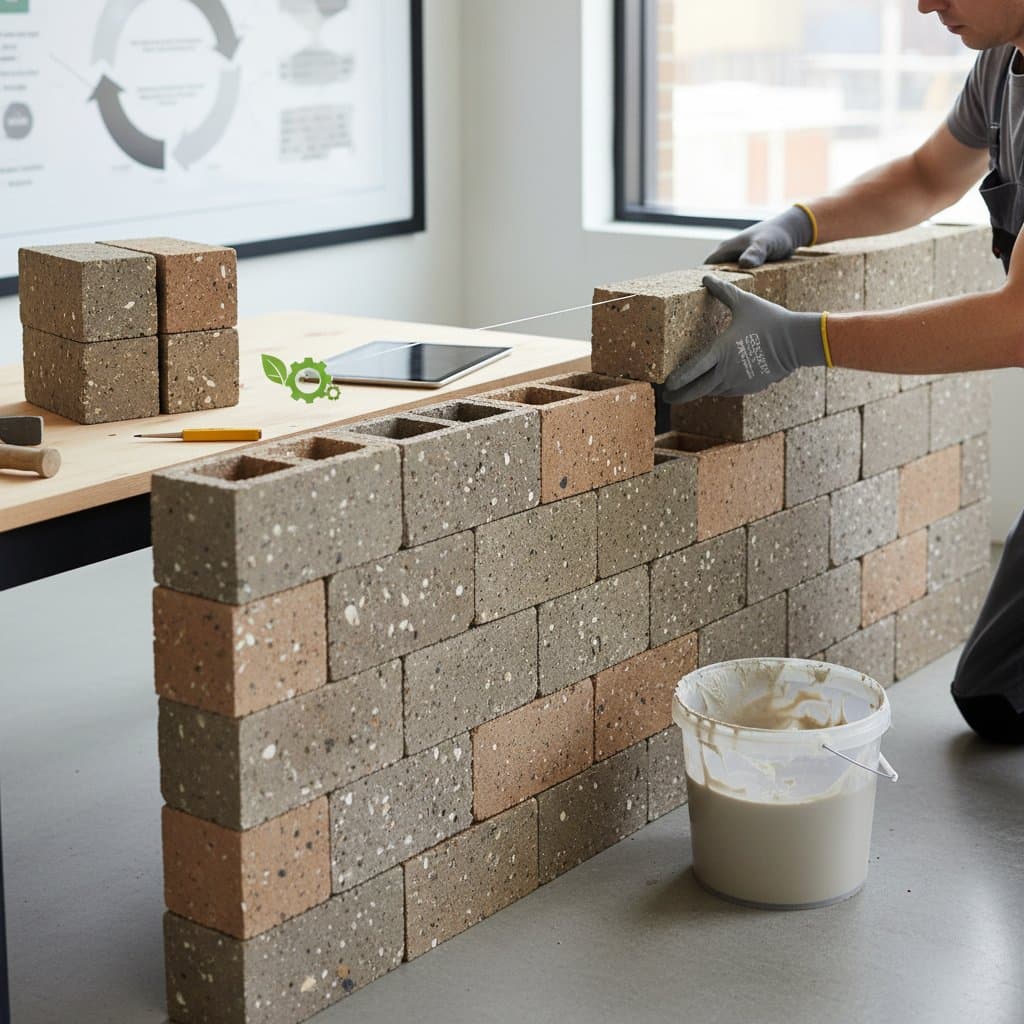
Zero-Cement Bricks Deliver Strength With Lower Emissions
Skill level: Intermediate
Physical demand: Moderate
Helper recommended: Yes for mixing and handling heavy molds
Zero-cement bricks replace Portland cement with geopolymer binders derived from industrial byproducts. The approach reduces carbon output while delivering compressive strength and weather resistance comparable to conventional masonry. This guide outlines the process for intermediate builders who want durable, low-impact units for garden walls, planters, or small outbuildings.
Project overview
Geopolymer bricks form through alkaline activation of fly ash, slag, or metakaolin. The chemical reaction creates a dense matrix without kiln firing, which lowers embodied energy. Typical production requires one to two weekends once materials are on site.
Key advantages include:
- Lower greenhouse gas emissions from the absence of cement clinker
- High compressive strength and low drying shrinkage
- Strong resistance to fire and chemical attack
- Productive reuse of industrial waste streams
- Reduced long-term maintenance needs
Practical considerations
Mixing alkaline activators demands full protective gear and careful handling. Materials are heavy, so recruit help for batch preparation. The work suits builders already comfortable with concrete mixing and basic layout.
Types of geopolymer bricks
- Fly ash-based units cure at room temperature and remain lightweight, suiting moderate climates and non-structural partitions.
- Slag-based units achieve higher density and strength, making them appropriate for retaining walls or light load-bearing work.
- Metakaolin-based units provide consistent color and texture for visible architectural finishes.
Cement manufacture accounts for substantial carbon dioxide releases. Geopolymer binders substitute that process with room-temperature chemistry and convert waste powders into structural material.
Site and material planning
Select a level, well-drained workspace with good airflow. Clay soils benefit from a compacted gravel base. Standard brick molds measure 4 by 8 by 2.5 inches; plan for roughly seven bricks per square foot of wall plus a 10 percent allowance for breakage.
Ambient temperature affects curing speed. Warm, dry conditions accelerate hardening, while cooler weather may require covered or mildly heated curing.
Material options
Fly ash formulation
Lightweight, low-shrinkage mix suitable for partition walls. Requires precise activator concentration.
Slag formulation
Denser and stronger choice for structural or retaining applications. Sets more slowly and demands advanced handling.
Metakaolin formulation
Offers predictable curing and smooth surfaces for decorative or interior masonry. Carries a higher material cost.
Tools and supplies
Hand tools include a trowel, rubber mallet, measuring containers, and a level. Power tools comprise an electric mixer, angle grinder, and optional wet saw. A vibrating table improves compaction for larger batches.
Materials with a 10 percent buffer: fly ash or alternative binder, fine sand, sodium silicate solution, sodium hydroxide, water, mold release oil, and reusable molds.
Production steps
- Clear a flat workspace and protect surfaces with plastic sheeting.
- Prepare the activator by dissolving sodium hydroxide in water, then adding sodium silicate after cooling. Never add water to dry flakes.
- Blend dry binder with sand at a 70-to-30 ratio until color is uniform.
- Add activator gradually to reach a thick, mortar-like consistency.
- Lightly oil molds, fill in layers, and tap to release air before leveling.
- Cover molds for 24 hours, then demold once firm.
- Cure bricks in shade with airflow for at least one week; mild heat near 120 degrees Fahrenheit accelerates results under controlled conditions.
- Inspect for square edges, consistent color, and a clear ring when tapped.
- Lay units with compatible mortar or geopolymer adhesive, maintaining 3/8-inch joints and checking alignment frequently.
- Apply a breathable sealer or limewash after the wall has set.
Finishing and upkeep
Acid washing highlights surface texture on visible faces. Annual inspection for dusting or efflorescence, followed by mild detergent cleaning, maintains appearance. Reapply sealer every few years in exposed locations. Walls resist rot, insects, and fire when properly cured.
Enhance projects by combining units with timber accents, adding drip edges, or incorporating vertical planting pockets. Colored aggregates or mineral pigments introduce natural variation.
Avoiding common errors
Measure activator ratios exactly to prevent soft or brittle results. Allow the activator to cool before mixing. Provide adequate curing time and avoid excess water in the batch. These steps preserve bond strength and surface durability.
For load-bearing walls beyond one story or projects in high-moisture zones, consult a licensed engineer or mason before starting.