
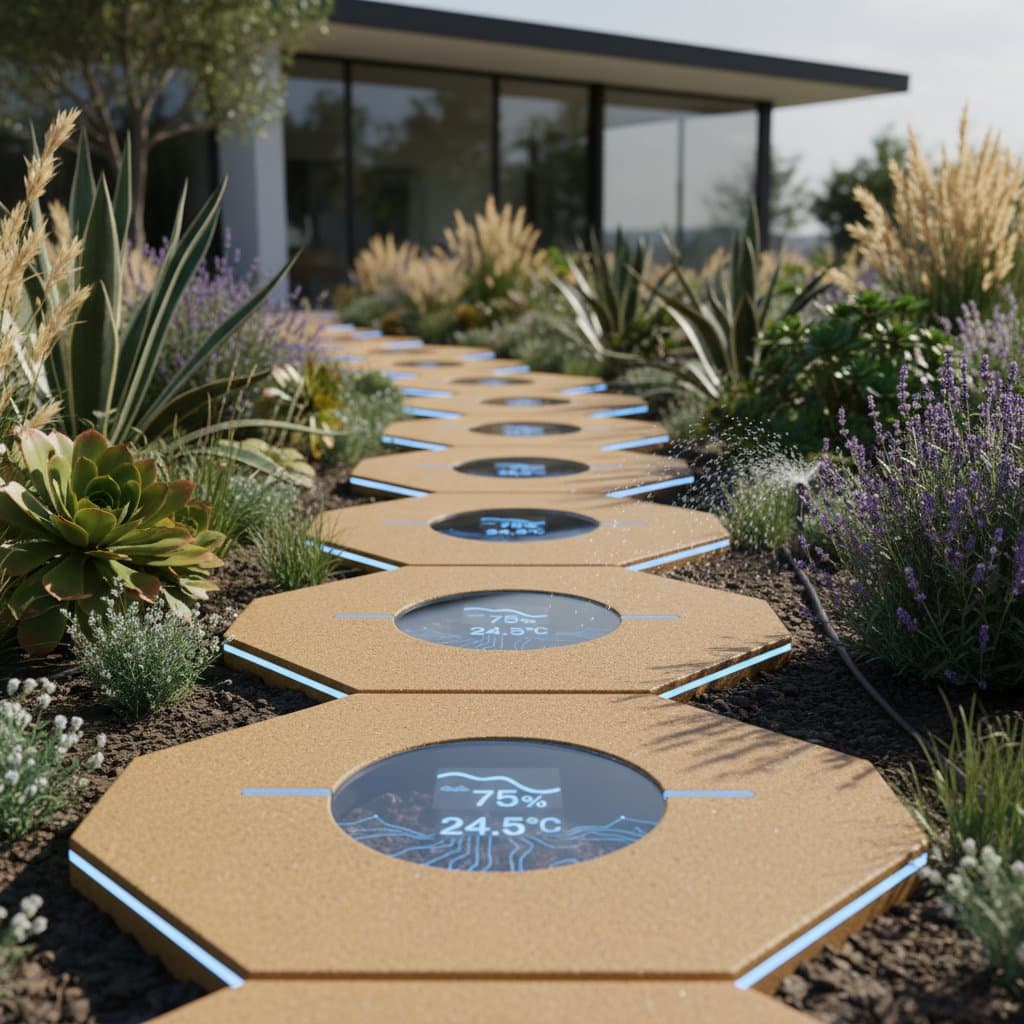
Smart Pavers Cut Water Waste With Real-Time Monitoring
- Reviewed original draft for clarity, flow, and specificity
- Replaced generic claims with precise installation and maintenance details
- Restructured sections to progress from concepts through planning to execution
- Enforced paragraph limits, removed contractions, and applied consistent markdown
- Condensed overall length while preserving all core practical guidance
- Added topic-specific closing header focused on ongoing results
Understanding smart pavers and their role in water management
Smart pavers are modular units with embedded sensors that monitor soil moisture, temperature, and water flow directly beneath paved surfaces. They transmit data to a connected controller or mobile app so irrigation runs only when and where it is needed. This localized approach prevents the overwatering that occurs when a single timer governs an entire yard.
The technology suits patios, driveways, walkways, and garden borders. Because moisture levels often differ from one zone to the next, the sensors allow each area to receive water according to its actual conditions rather than a uniform schedule.
Skill level and project considerations
The work requires an intermediate skill level that includes basic hardscaping, careful excavation, and light electrical connections. Plan on moderate physical effort and recruit at least one helper for lifting and alignment. Electrical terminations and controller integration should be completed by a licensed technician familiar with local codes.
Deciding between DIY and professional installation
Homeowners experienced with standard patio construction can prepare the base and set the pavers. Sensor wiring, waterproof sealing, and calibration are best left to a professional who understands smart irrigation systems. Sites with poor drainage or noticeable slopes warrant consultation with a landscape engineer before work begins.
Planning the system
Site assessment
Examine soil type, drainage patterns, slope, and sun exposure. Sandy soils require different sensor settings than clay soils. Mark low spots that collect water and confirm that the finished grade will direct runoff away from structures.
Measurements and layout
Calculate total square footage to determine paver quantity. Follow manufacturer spacing guidelines, typically one sensor for every few square feet. Note where wiring will run to the communication hub.
Material options
Concrete units offer durability and lower cost for high-traffic areas. Porcelain provides a refined appearance and color retention for decorative patios. Permeable versions allow water to pass through joints, reducing runoff while still supplying moisture data.
Tools and supplies
Gather a shovel, hand tamper, level, rubber mallet, plate compactor, wet saw, and masonry drill. Materials include the sensor-equipped pavers, gravel base, bedding sand, edge restraints, conduit, a smart controller, and joint sealant. Purchase ten percent extra pavers to cover breakage and future repairs.
Step-by-step installation
- Excavate to a depth that accommodates four inches of gravel, one inch of sand, and the paver thickness.
- Compact gravel in two-inch lifts until the base is firm and stable.
- Install protective conduit for sensor wires before spreading the sand bed.
- Screed the sand to a consistent one-inch depth with proper slope for drainage.
- Lay pavers row by row, maintaining tight joints and checking level frequently.
- Connect and seal sensors according to manufacturer instructions, then test each unit.
- Sweep joint sand into gaps and compact the surface.
- Apply a penetrating sealer if recommended for added protection.
Verify that each section stays within one-eighth inch of level over four feet.
Maintenance and care
Inspect sensor connections each spring and after heavy storms. Clear debris from permeable joints so water continues to reach the sensors. Recalibrate units if soil conditions change or if readings appear inconsistent.
Long-term performance gains
Once installed, the system supplies ongoing data that supports healthier plants and lower water bills. Regular review of moisture trends helps refine irrigation schedules season after season.