
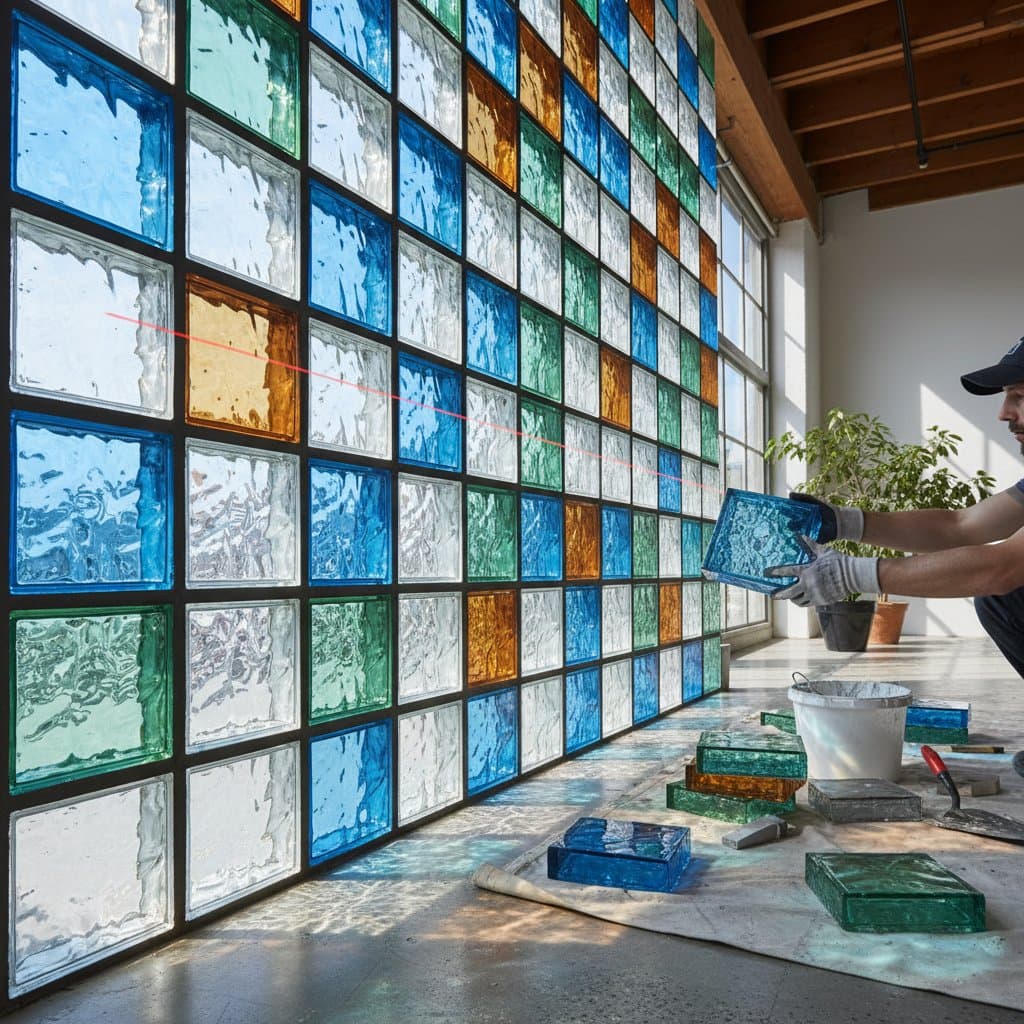
Planning Your Recycled Glass Brick Project
Thorough planning forms the foundation of any successful recycled glass brick project. This preparation minimizes material waste, promotes secure bonding, and safeguards the glass from installation-related damage.
Assessing the Site
Inspect the ground conditions, load-bearing structures, and adjacent materials. In outdoor settings, evaluate soil drainage and terrain slope; accumulated water weakens mortar joints, so incorporate a gravel base or drainage system as required. For indoor applications, verify that the subfloor or substrate remains level and capable of supporting the brick weight. Note that recycled glass bricks exceed the heft of hollow concrete blocks, potentially necessitating reinforcement on elevated floors.
Key Measurements
Determine the overall length, height, and thickness of the intended wall or feature. Include a 10 percent allowance for waste and imprecise cuts. Factor in mortar joints, which measure between one-quarter and three-eighths of an inch. Establish layout lines on the foundation or floor with a chalk line, and confirm level and plumb alignments at reference points. Initial course inaccuracies amplify throughout the structure.
Environmental Considerations
Temperature fluctuations influence mortar curing rates. Schedule work during mild weather and shield fresh joints from intense sunlight or subfreezing conditions. Airborne dust from wind may abrade glass surfaces, so protect unused materials with coverings. In areas prone to freeze-thaw cycles, choose bricks certified for superior frost resistance.
Anticipated Challenges
Glass bricks risk chipping upon impact or contact with metal tools. Opt for rubber mallets over hammers, and distribute support evenly when positioning each piece. Cutting demands a diamond-tipped wet saw, which produces fine glass particles; designate a remote cutting area away from traffic zones and don full protective equipment.
Selecting Materials
Recycled glass bricks vary in composition, each type influencing aesthetics and functionality. Choose based on project demands for optimal results.
Solid Fused Glass Bricks
These units form from melted crushed glass into dense, seamless blocks. Their nonporous nature ensures durability.
- Advantages: Exceptional strength, full waterproofing, and rich color saturation
- Drawbacks: Substantial weight, challenging to cut, demands robust mortar bonds
- Pricing: Higher than standard masonry options
- Required Expertise: Intermediate to advanced
- Upkeep: Wipe with mild detergent as needed
- Ideal Applications: Ornamental walls, outdoor facades, or feature columns
Hollow or Modular Glass Blocks
Crafted from recycled glass to mimic traditional partition blocks, these include internal voids for reduced mass.
- Advantages: Manageable weight, straightforward handling, inherent thermal insulation
- Drawbacks: Reduced structural capacity, fewer shape options
- Pricing: Balanced compared to solid variants
- Required Expertise: Beginner to intermediate
- Upkeep: Clean periodically and reseal joints
- Ideal Applications: Indoor dividers or shower surrounds
Glass-Aggregate Concrete Bricks
These integrate crushed glass with binders like fly ash or reclaimed cement, yielding textured sparkle.
- Advantages: Standard installation techniques, lower cement consumption, resilient finish
- Drawbacks: Diminished translucency, potential color inconsistencies
- Pricing: Economical for expansive projects
- Required Expertise: Accessible to most DIY participants
- Upkeep: Seal intermittently to preserve sheen
- Ideal Applications: Patios, landscape borders, or exterior stairs
Essential Tools and Supplies
Assemble the right equipment to streamline the process and uphold safety standards.
Manual Tools
- Brick trowel: Applies and contours mortar layers
- Level: Maintains even horizontal placement
- Rubber mallet: Secures bricks without surface damage
- Jointing tool: Refines mortar seams for a seamless look
- Tape measure and chalk line: Facilitates precise marking
Powered Tools
- Wet tile saw with diamond blade: Delivers clean cuts without thermal stress
- Cordless drill with mixing paddle: Achieves uniform mortar consistency
- Angle grinder with polishing pad: Refines edges post-cutting
Rental Options
- Mortar mixer: Efficient for volumes exceeding single batches; rent for larger scales
- Scaffolding: Essential for elevated or facade work to ensure safe reach
Required Materials
- Recycled glass bricks (calculated quantity plus 10 percent reserve)
- Type S or polymer-modified mortar compatible with glass
- Manufacturer-recommended grout or sealant
- Backer board or foundational footing
- Waterproof membrane for external builds
Detailed Installation Guide
Follow these steps methodically to construct a stable, visually appealing recycled glass brick feature.
Step 1: Base Preparation
Confirm the base offers level, debris-free support adequate for the load. Outdoors, cast a reinforced concrete footing at minimum six inches depth and double the wall thickness. Indoors, secure backer board to studs or masonry. Verify flatness across the full area.
Step 2: Mortar Mixing
Adhere to the producer's water-to-mix proportions. Employ a mixing paddle or dedicated mixer to reach a dense, pliable texture. Prevent excess water addition, which compromises bond strength. Allow the mixture to stand for five minutes prior to application.
Step 3: First Course Placement
Apply a half-inch mortar bed. Position the initial brick at the endpoint, press firmly, and adjust with a rubber mallet. Proceed sequentially, upholding joint uniformity. Reassess level after every three bricks and correct deviations promptly.
Step 4: Subsequent Courses
Spread mortar atop each brick before adding the next layer. Offset vertical joints to enhance structural integrity. Insert spacers for consistent gaps if alignment falters. Remove surplus mortar promptly, as hardened remnants resist removal from glass.
Step 5: Custom Cuts
Gauge openings accurately and execute cuts using the wet saw. Brace both sides of the brick to avert fractures. Polish jagged edges with the designated pad. Don gloves and eye protection throughout cutting operations.
Step 6: Joint Finishing
When mortar achieves initial set, tool the joints to compact and profile them neatly. This technique bars moisture entry and refines the visual appeal. Sponge the surface lightly with dampness, taking care to limit water exposure that might dilute bonds.
Step 7: Curing and Protection
Permit curing for no less than two days before sealer application. Select a clear, penetrating formula suited to glass masonry. Distribute evenly via brush or sprayer to guard against stains and simplify ongoing maintenance.
Quality Assurance: Inspect for uniform brick alignment, even joints, and absence of mortar residue. Examine under varied lighting from multiple perspectives to detect flaws.
Expert Recommendations
- Purchase a 10 percent surplus of bricks to accommodate cuts and mishaps.
- Incorporate a waterproofing membrane behind exterior walls in frost-heavy regions.
- Consult the manufacturer's specifications for mortar selection and curing guidelines.
Long-Term Upkeep
Routine care preserves the vibrancy and integrity of recycled glass brick installations. Clean surfaces quarterly with a soft cloth and mild, non-abrasive cleaner to remove dust or pollutants. Inspect joints annually for cracks or erosion; reseal as needed to repel moisture and maintain weather resistance. Avoid harsh chemicals or abrasive tools that could etch the glass.
In high-traffic areas, apply a protective film or coating to minimize wear. For outdoor features, clear debris promptly to prevent staining from organic buildup.
Engaging Professional Help
Consider hiring certified masons for complex projects involving load-bearing elements, intricate curves, or large-scale exteriors. Professionals bring specialized knowledge of local building codes, advanced reinforcement techniques, and efficient workflows that reduce errors. Seek those experienced in sustainable materials to ensure compliance and longevity. If structural assessments or permits arise, expert involvement streamlines the process and safeguards your investment.
Realizing Sustainable Impact
Recycled glass bricks not only divert waste from landfills but also infuse spaces with natural light and contemporary flair. These versatile elements support eco-conscious building while delivering enduring performance. By integrating them thoughtfully, you contribute to greener practices and create striking features that endure.